
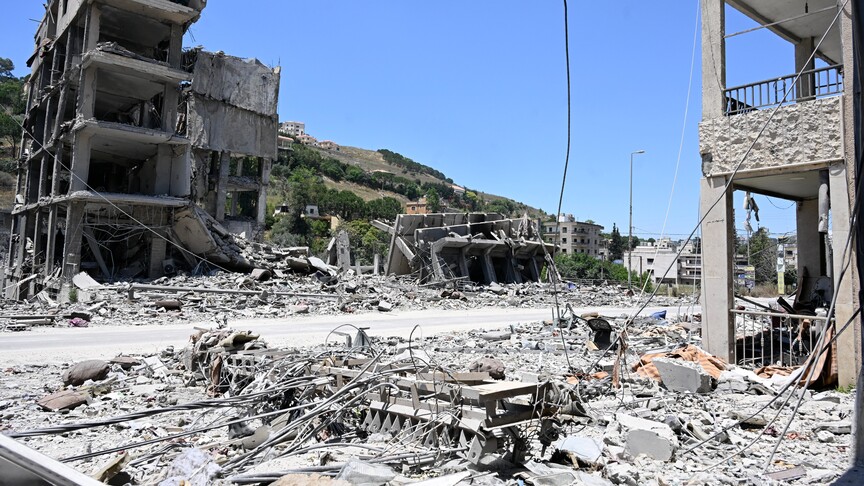
The ongoing conflict between Israel and Lebanon has escalated sharply, with the Israeli military intensifying its offensive operations. Reports from Lebanese officials indicate a series of airstrikes, artillery bombardments, and other violent actions that have led to significant casualties in Lebanon. The situation remains critical, with fears of further escalation.
Escalation in Southern Lebanon
On Saturday, Israeli forces launched a series of attacks on various locations in southern Lebanon, particularly targeting the town of Haris in the Bint Jbeil district. According to reports from the Lebanese National News Agency, these assaults resulted in injuries among local residents, although specific numbers remain unconfirmed. These military actions have created a climate of fear and uncertainty in the region, as the Israeli army continues its aggressive strategy.
In addition to shelling, Israeli forces have also carried out operations in the Tyre region, specifically targeting the town of Mansouri. Multiple missiles were fired at local neighborhoods, further contributing to the chaos and destruction. The Israeli military’s strategy includes drone operations, where sound bombs were deployed in the al-Mashaa neighborhood, intensifying the psychological impact of the conflict on civilians.
Destruction of Infrastructure and Casualties
Reports highlight that Israeli forces are systematically destroying infrastructure in the Bint Jbeil area, including cutting down trees planted along the roadside. Such actions reflect a broader strategy to weaken the local community and disrupt daily life for its inhabitants. Additionally, airstrikes targeting a region of Nabatieh resulted in a large explosion. These military maneuvers are being justified by the Israeli army as measures against what they describe as threats from Hezbollah drone operators.
According to the Israeli military, the latest strikes were executed after detecting a drone reportedly launched near their troops. They asserted that their objective was to eliminate what they termed a “threat” posed by Hezbollah operatives. Such claims, however, have been met with skepticism and condemnation from various international observers who highlight the humanitarian toll of these operations.
Humanitarian Impact and International Response
The ramifications of these military activities have been devastating for the civilian population, with the Lebanese Health Ministry reporting a death toll of 4,328 and injuries exceeding 12,227 since March of this year. The ongoing violence has led to widespread anguish, as many families are caught in the crossfire with no resolution in sight.
Despite the signing of a US-sponsored framework agreement on June 26 to facilitate a phased Israeli withdrawal from certain Lebanese territories, attacks have persisted. This agreement was meant to foster a more peaceful coexistence, yet the continuous military pressure undermines such efforts. Furthermore, recent discussions in Rome regarding the situation seem to have had little effect on the ground, as hostilities have continued unabated.
The conflict’s persistence raises pressing concerns about the future stability of the region. Israel’s long-standing occupation of southern Lebanon continues to be a flashpoint for tension, and ongoing assaults only exacerbate the situation. With each passing day, the potential for further escalation becomes increasingly probable, highlighting the urgent need for diplomatic efforts to achieve a lasting peace.