
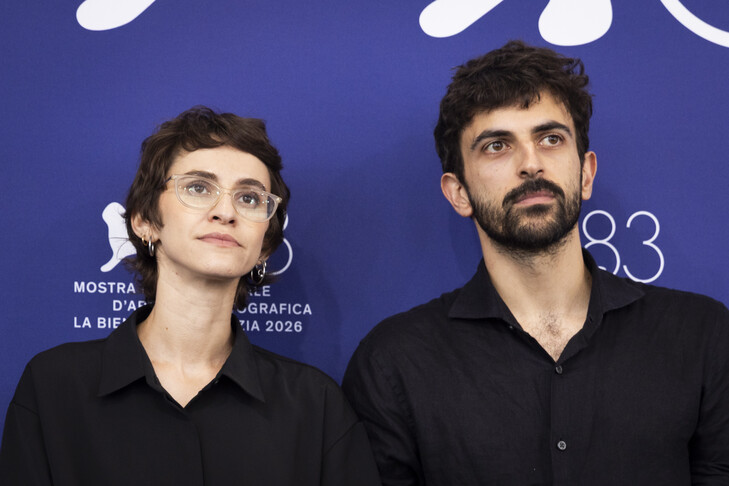
Israel’s Culture Minister, Miki Zohar, has expressed his intention to strip filmmakers Yuval Abraham and Rachel Szor of their Israeli citizenship following the success of their documentary, NAZA, which recently secured the Special Jury Prize at the prestigious Venice Film Festival. This development has stirred considerable controversy and raised questions about the intersection of art and national identity.
Controversial Accusations from Officials
In a recent statement on the social media platform X, Zohar referred to the documentary’s triumph as “shocking,” characterizing the film as “vile.” He accused Abraham and Szor of betraying their homeland for international acclaim, labeling their actions as tantamount to treason against the state of Israel. “This is precisely why I spearheaded significant reforms in the film industry,” he asserted, indicating that filmmakers should not externally fund projects that may harm the reputation of Israeli Defense Forces (IDF) or the nation itself. His comments reflect the heightened sensitivity surrounding artistic expression that critiques national policies, particularly regarding the Israeli-Palestinian conflict.
The Documentary’s Focus and Reception
NAZA aims to investigate the mechanisms behind what it identifies as systematic violence against Palestinian civilians in the Gaza Strip. The film features testimonies from individuals within Israeli military intelligence, as well as soldiers, shedding light on the often-overlooked complexities of military operations and their humanitarian impact. The documentary prompted a substantial response at its premiere, receiving a standing ovation that lasted approximately 25 minutes, a testament to its emotional and intellectual resonance among the audience.
Wider Implications for the Arts and Society
Zohar’s pledged actions against the filmmakers highlight a broader tension in Israeli society between free expression and national loyalty. Critics argue that such moves could stifle artistic voices that are essential for challenging the status quo. The debate raises important questions about what it means to be a citizen in a democracy—especially in a nation grappling with deeply entrenched political and social issues. Many believe that art should provoke thought and discussion, even when it is controversial or uncomfortable.
The backlash to Zohar’s comments reflects a growing movement advocating for unrestricted artistic expression. Supporters of NAZA and other critical works argue that cinema can serve as a vital medium for illuminating difficult truths, potentially leading to social change. They contend that labeling creators as traitors for delving into contentious topics undermines the very essence of creative freedom.
Conclusion: A Moment of Reckoning
The response to NAZA and the subsequent political fallout encapsulates a moment of reckoning for Israeli society. As the government grapples with internal and external pressures over its policies, the implications for artists and filmmakers remain profound. Whether Zohar’s threats to revoke citizenship will deter future creative endeavors or spark more intense discourse on Israeli-Palestinian relations is yet to be seen. Ultimately, the role of art in challenging narratives and fostering understanding is crucial, and the conversation surrounding it must continue. The Venice Film Festival may have awarded NAZA for its bravery, but the reaction it evoked reveals an ongoing struggle between innovation and tradition within the realms of culture and identity.