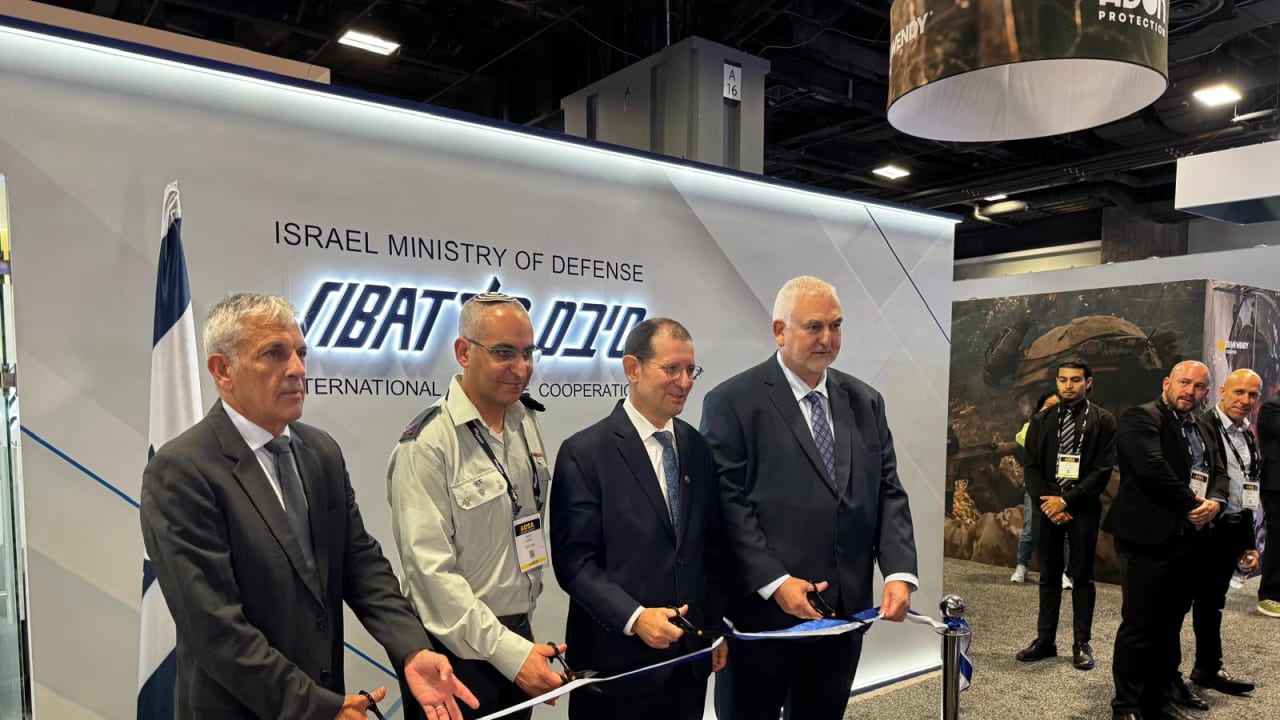
In the world of defense exports, the United States Army’s Annual Meeting & Exposition (AUSA) in Washington, DC serves as a pivotal platform for Israeli defense companies. This event not only facilitates the signing of significant contracts but also fosters crucial relationships that lay the groundwork for future collaborations and procurement strategies.
Networking at AUSA: A Catalyst for Collaboration
Brig.-Gen (ret.) Yair Kulas, who leads Israel’s Directorate for International Defense Cooperation (SIBAT), likened the atmosphere at AUSA to “speed dating.” This analogy highlights the urgency and dynamic nature of discussions between governments, military representatives, and defense manufacturers. The objective is to transform initial conversations into strategic partnerships that could evolve into contracts or formal collaborations.
Israeli defense firms view the U.S. as more than just a key customer; they see it as central to a global defense framework. As military budgets expand in regions such as Europe, the Middle East, and Asia, Israeli companies, regardless of their size, are focused on addressing new threats, such as autonomous warfare, air defense systems, and counter-drone technology. “The demand is growing,” insists Kulas, signifying the commitment to staying ahead of evolving military needs.
Identifying Opportunities in Emerging Defense Technologies
During this year’s AUSA, Israeli companies showcased innovations that have been embedded with lessons learned from years of conflict in the Middle East. For the 19 firms participating in the national pavilion, it was an opportunity to reiterate their commitment to supporting military forces through state-of-the-art technology designed to meet contemporary challenges. Kulas emphasized this “Israeli spirit” of dedication to enhancing defense capabilities.
One standout among the exhibitors was XTEND, which has transitioned from a drone manufacturer to a publicly traded company in the U.S. The firm is now focused on developing comprehensive operating systems for autonomous warfare. CEO Aviv Shapira described their XOS platform as a dynamic application framework, allowing integrations from various developers and technologies, thereby facilitating cooperation among global military operations.
His sentiment about the shift towards autonomous systems echoes throughout AUSA. Both military leaders and business executives recognized that the evolution in warfare is driving a need for integrated networks rather than isolated systems. This emphasis on software solutions signifies a transformative shift in military procurement strategies.
Strategizing to Meet Modern Warfare Challenges
The imperative to adapt rapidly to emerging threats is underscored by companies like Smart Shooter, whose fire-control technology has evolved to tackle increasingly complex aerial dangers. As threats have progressed from rudimentary devices to sophisticated drones, Smart Shooter has innovated their systems to maintain relevance in modern combat scenarios.
As Michal Mor, the CEO, notes, the integration of AI and machine learning in their flagship systems allows for precise targeting of agile threats, enhancing the effectiveness of infantry weapons. The company’s rapid growth exemplifies how defense firms are capitalizing on lessons learned in combat zones.
Through these initiatives, Israeli defense firms are not merely presenting products; they are imparting vital insights gained from real-world conflicts. This exchange of knowledge is pivotal, enabling military clients to make informed decisions about their procurements.
In summary, the AUSA event serves as a vital hub for Israeli defense technology, where innovation and strategic partnerships are critical to addressing modern threats. The collaborative spirit among Israeli firms and their U.S. counterparts is shaping the future of defense capabilities, making this event a focal point for international military collaboration.