
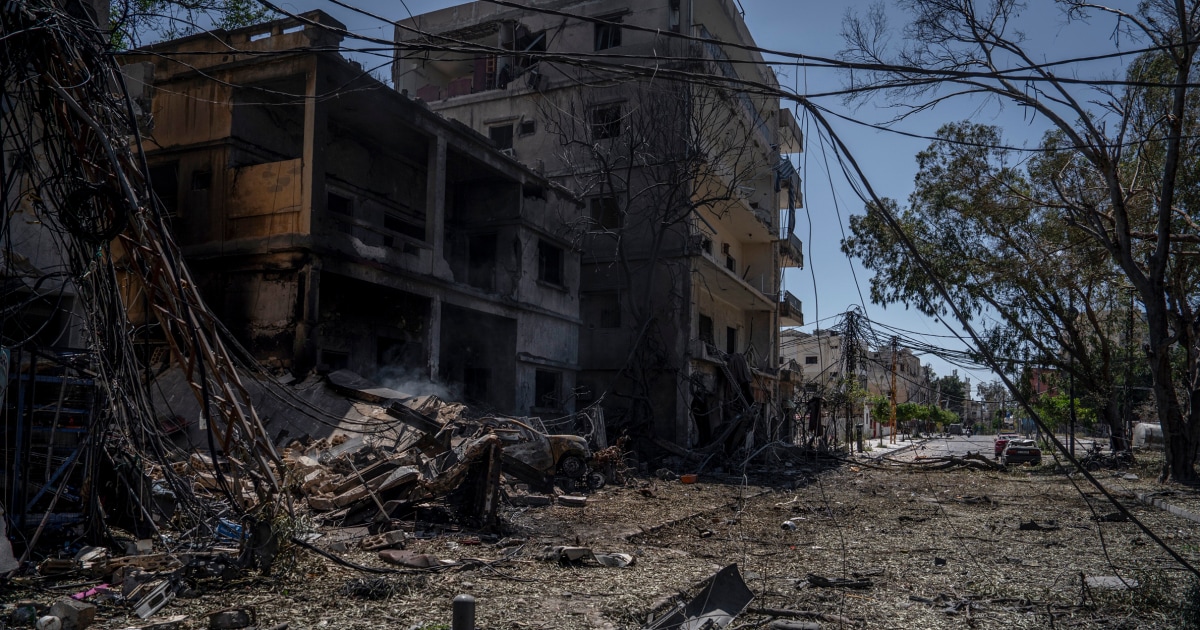
On Friday, Israeli forces advanced into a southern Lebanese village, escalating tensions in the region. This unwelcome development coincided with high-stakes talks between Lebanese and Israeli military officials at the Pentagon, aiming to address the ongoing violence and its dire implications for both nations.
Israeli Troops Enter Southern Lebanon
Israeli troops made their entry into the village of Dibbine, located near Marjayoun, following a series of airstrikes that resulted in the deaths of at least six individuals. Reports state that five fatalities occurred in strikes targeting the villages of Deir Qanoun al Nahr and Abbasiyeh, while a municipal officer was killed in Ebba. The increasing death toll and destruction associated with these strikes indicate a significant escalation in hostilities.
Significance of Direct Military Talks
In Washington, a six-member delegation from the Lebanese military engaged in direct talks with Israeli military representatives, marking a historic first in decades. The Pentagon described these discussions as “productive,” though it refrained from disclosing any concrete results. They emphasized that the talks aimed to establish practical frameworks for regional security, pointing to essential outcomes that are anticipated to influence upcoming negotiations led by the State Department.
Efforts to stabilize the situation have been complicated by the absence of Hezbollah in these discussions, as the group has notably avoided participating and has rejected the outcomes of the talks thus far. Tensions remain high, making the potential for a lasting resolution uncertain.
Ceasefire Developments
A nominal ceasefire initiated on April 17 remains in effect despite ongoing violence. Reports indicate that a senior Lebanese military official stated that the delegation would advocate for a comprehensive ceasefire. This approach includes reactivating a monitoring committee established under a previous U.S.-brokered agreement aimed at curbing hostilities between Israel and Hezbollah.
In discussing the ceasefire, another Lebanese official indicated that the delegation would push for a complete halt to ongoing conflicts while planning further talks on crucial topics, including the deployment of the Lebanese army along the border and the withdrawal of Israeli troops from southern Lebanon.
Regional Impact and Current Struggles
Israel’s military actions continue to wield a profound impact across southern Lebanon. Prime Minister Benjamin Netanyahu reiterated his commitment to ongoing operations, asserting that Israeli forces have achieved significant operational gains. The situation remains fluid, with Netanyahu claiming military advancement and control over strategic positions in and around southern Lebanon.
The humanitarian crisis continues to grow, with the Israeli military issuing evacuation orders, forcing numerous families to flee northward to escape the violence. As the conflict unfolds, the toll is steep: over 3,200 fatalities in Lebanon and over 1 million individuals displaced due to the hostilities.
The current geopolitical climate reflects the urgency of resolving the crisis, as U.S. and Iranian negotiators aim for a 60-day extension of the ceasefire amid broader discussions on Iran’s nuclear program. Nevertheless, the lack of clarity concerning agreements and the potential ramifications for the Israel-Hezbollah conflict remains a critical concern.