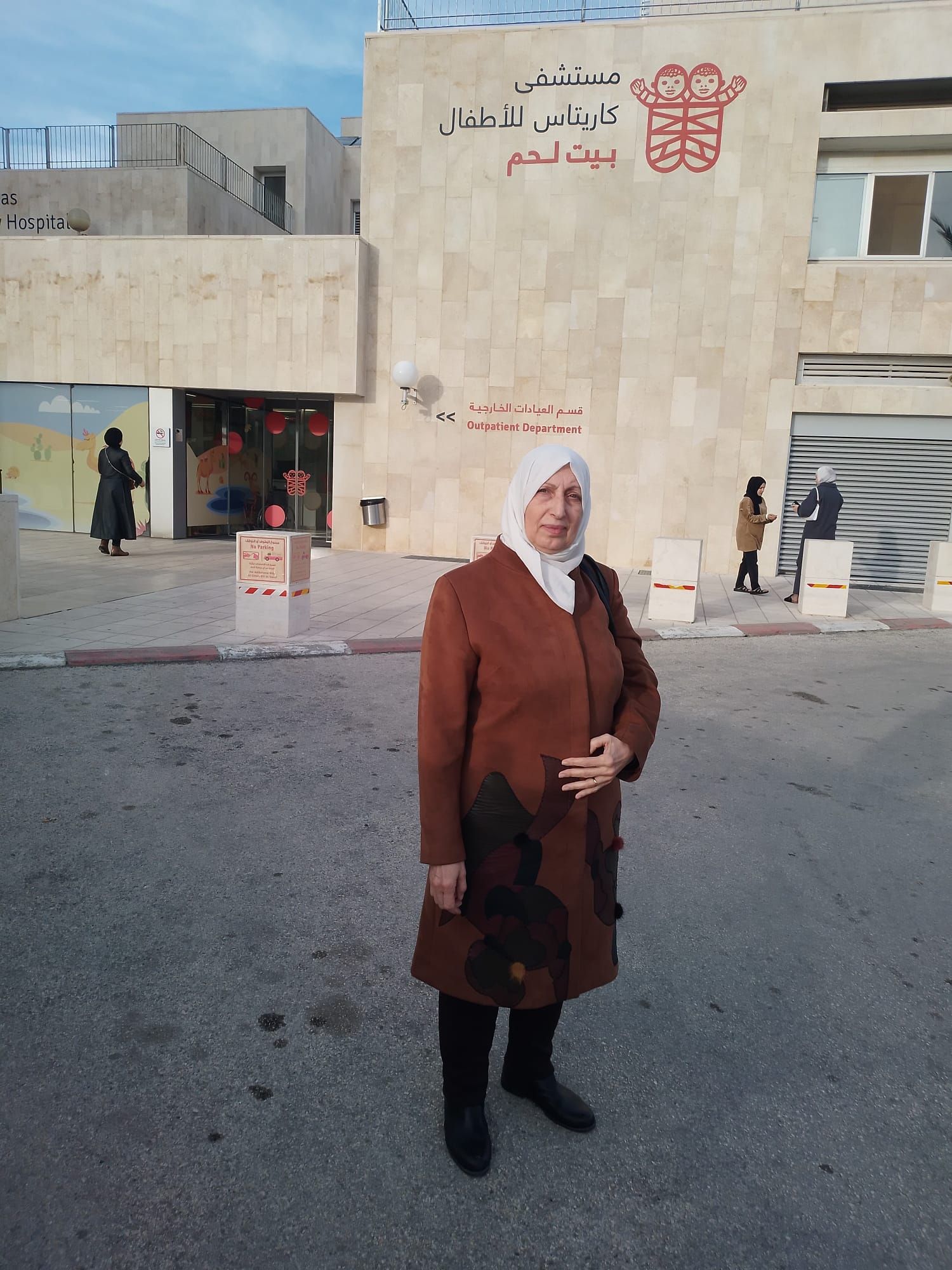
In the early hours of Wednesday morning, in Hebron, West Bank, Abdelrahman Badr experienced a disturbing interruption. Just after 1 a.m., he reported hearing steps outside his home followed by the arrival of Israeli forces searching for his wife. Itaf Badr, active in a significant health charity, was taken by Israeli security personnel for questioning, according to her husband.
Increased Detentions Among Palestinian Women
Itaf was one of five Palestinian women apprehended in a sweep by Israeli forces across various cities in the West Bank, which included Hebron, Ramallah, Nablus, and Bethlehem. Families of the detained women and Palestinian rights organizations reported these early morning raids, noting a troubling shift in the demographics of those being detained. Historically, the focus of detentions has predominantly been on Palestinian men and boys, who have often been imprisoned for activities like protests against the Israeli military. However, recent developments indicate a notable increase in the number of women and girls being targeted.
Abdullah Al-Zaghari, the head of the Palestinian Prisoners’ Club, noted that gender distinctions are increasingly blurred in the context of these arrests. Women, who previously were not the primary focus, are now being detained for various reasons, from political activism to involvement in student organizations at universities. Reports facilitate a deeper understanding of the implications this shift has on gender roles in Palestinian society amid political unrest.
Growing Numbers in Detention
According to data provided by the Israeli rights group Hamoked, women now comprise a small but increasing fraction of the approximately 9,300 Palestinians currently held in detention. Since the onset of the ongoing Israel-Hamas conflict, the number of detained Palestinian women and girls has doubled, with documented figures indicating an 80% increase since the start of 2026. The numbers reflect an alarming trend, as 15 women have been arrested since June, raising the total to 99 based on data from the Prisoners’ Club.
Several of these women were apprehended after sharing social media posts that criticized Israeli policies regarding the occupation and the ongoing conflict in Gaza. Many of them were also affiliated with political factions or student branches of various Palestinian political parties, further complicating their status under Israeli law. A significant concern arises from the use of administrative detention, a practice allowing prolonged imprisonment without formal charges, which many of these women navigate.
Last month, a broader crackdown led to the arrest of at least five young women, including members of the Palestinian national soccer team. Their apprehensions raised eyebrows internationally, especially the case of Sama Saif, a Palestinian-American, whose detention prompted several U.S. senators to call for her immediate release.
Uncertainty Surrounding Detentions
Families of the detained women express a sense of confusion and fear regarding the reasons behind the arrests. In Nablus, Wael al-Faqih reported that Israeli forces took his wife Maiser al-Faqih from their home. Having previously been detained, Maiser, like Itaf, was associated with the Union of Health Work Committees, which has faced accusations from Israel of being linked to the Popular Front for the Liberation of Palestine, labeled a terrorist organization by Israeli authorities. The charity, however, denies these allegations, making the situation all the more perplexing for those involved.
Relatives report being kept in the dark about the nature of the accusations against their loved ones. Wael shared that before his wife’s apprehension, Israeli forces searched him and his son and even insisted that Maiser wear her hijab. Abdelrahman echoed similar sentiments, expressing concern that his wife’s charitable work put her at greater risk of detention. As he witnessed her ordeal unfold, he described the distressing scene of her being blindfolded and taken away in a military vehicle, amplifying the family’s anxiety over her fate.
The ongoing detentions of Palestinian women reflect a broader strategy within the Israeli military’s enforcement of occupation and highlight the evolving landscape of gender roles in conflict-related scenarios. Families remain in limbo, seeking answers amid a climate of fear and uncertainty.