
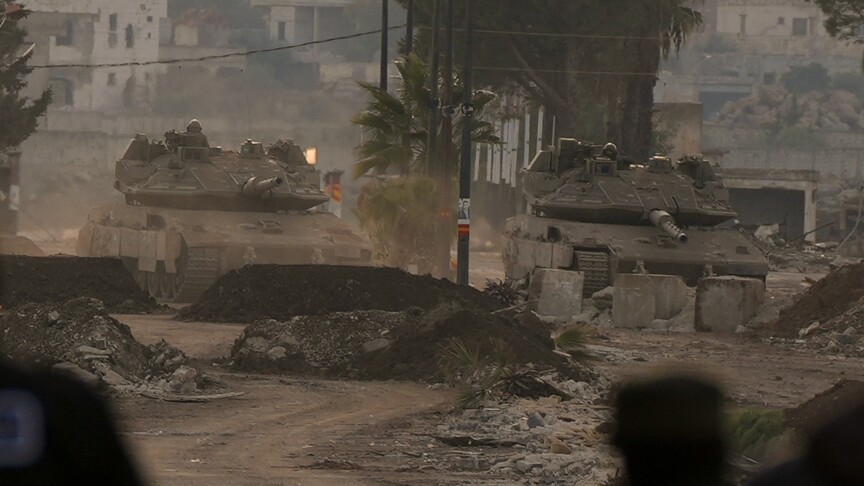
Israeli forces have recently intensified their activities in southern Syria, with a new incursion into the Quneitra province signaling a troubling development in the region. In a notable event on Friday, Israeli military units reportedly established a checkpoint in Ain Ziwan, a village nestled in this area. This move has drawn significant attention and raises questions about the ongoing situation between Israel and Syria.
Recent Developments in Quneitra
On August 7, 2026, five Israeli military vehicles entered the village of Ain Ziwan as reported by state-run media outlet Al-Ikhbariya. The establishment of a checkpoint soon followed. This latest action is part of a broader pattern of ground incursions by Israeli forces in southern Syria. Such operations often involve setting up temporary checkpoints, searching civilian homes, and detaining individuals, which Syria views as blatant infringements on its sovereignty. However, Syrian authorities have not yet issued a response regarding this specific incident.
Historical Context of Israeli-Syrian Relations
Following the ousting of President Bashar al-Assad’s government on December 8, 2024, the dynamics of Israeli-Syrian relations shifted dramatically. Israel announced that the longstanding 1974 Disengagement Agreement had lost its validity, leading the country to occupy the buffer zone in southwestern Syria. This territorial claim has added a layer of complexity to the conflict, as it presents new challenges to regional stability and diplomatic efforts.
Syrian Standpoint on Israeli Occupation
In light of these developments, Syrian officials have reiterated their commitment to the 1974 Disengagement Agreement. They have consistently called for the withdrawal of all Israeli forces from occupied Syrian land. This ongoing tension reflects a long-standing dispute that has seen various military and political maneuvers but little in the way of a sustainable resolution. The checkpoints and military presence in southern Syria are seen not just as tactical operations but as a violation of national sovereignty by the Syrian government.
Implications for Regional Stability
The recent incursion by Israeli forces into Quneitra underscores the volatility in the region. The establishment of checkpoints and military operations creates an atmosphere of uncertainty for local civilians, who bear the brunt of these confrontations. Such actions could further escalate tensions and complicate existing diplomatic efforts aimed at resolving the broader Syrian crisis. As both nations maintain opposing stances regarding territorial claims, the potential for confrontation remains high, posing risks not just for Israel and Syria but for regional security as a whole.
In conclusion, the current situation in Quneitra serves as a reminder of the deep-rooted complexities surrounding Israeli-Syrian relations. With each incursion and military action, the stakes for both nations continue to rise, leaving civilians caught in a precarious situation. As the international community watches closely, the calls for diplomatic solutions become increasingly urgent to avoid further escalation and promote regional stability.