
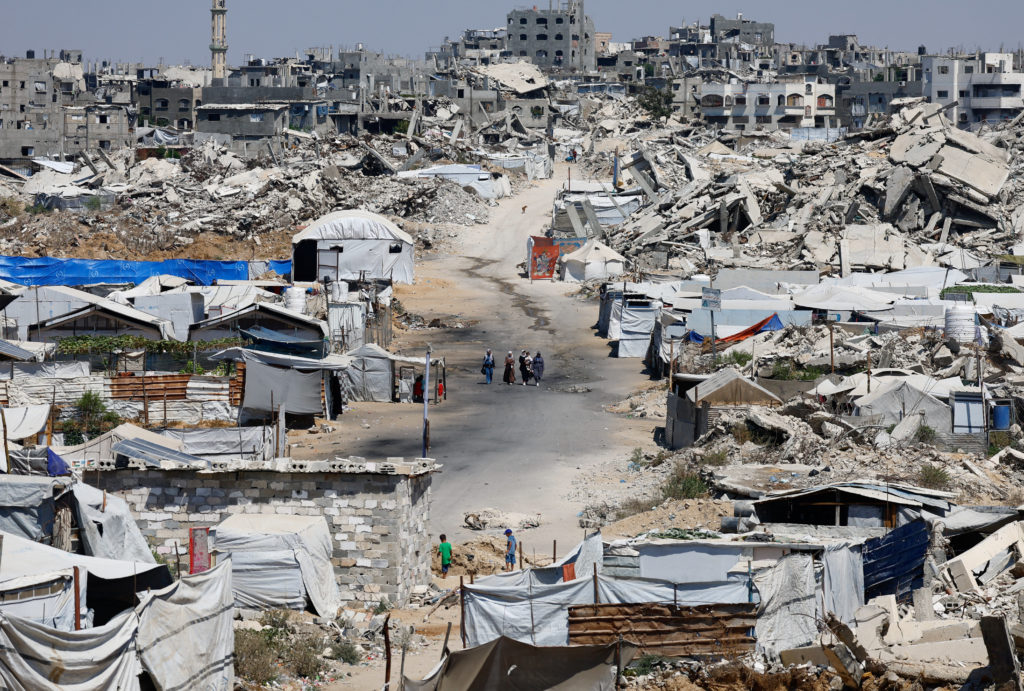
The ongoing conflict in the Gaza Strip continues to escalate, as recent airstrikes have raised concerns about the effectiveness of U.S. efforts to broker a ceasefire. Just two days after U.S. officials proposed a reduction in Israeli military actions, strikes on Wednesday resulted in the deaths of at least 10 individuals, including police officers and civilians.
Continued Violence Amid Ceasefire Talks
Two airstrikes on Wednesday hit sites in Gaza, with one taking place in the Nuseirat refugee camp, where the Israeli military claimed to have targeted a Hamas commander involved in a fatal attack in southern Israel on October 7, 2023. This attack resulted in the deaths of approximately 1,200 people, most of whom were civilians, and the abduction of an additional 251 individuals. The second strike occurred in Tuffah, targeting militants allegedly planning attacks against Israeli forces. As a result of these strikes, the Hamas-run Interior Ministry reported that eight police officers and a 13-year-old girl were among the casualties.
Despite the high death toll, the Israeli military maintains that its strikes are necessary for national security. On Tuesday, another Israeli attack on a popular seaside café claimed the lives of seven Palestinians, including a child. Since the ceasefire began in October, airstrikes have reportedly killed over 1,273 people in Gaza, as reported by health officials.
The Challenges of Ceasefire Negotiations
Diplomatically, the ceasefire seems to be struggling. Initial discussions proposed by U.S. negotiators, including Jared Kushner, aimed to de-escalate the situation and initiate a new phase of rebuilding in Gaza. However, significant disagreements remain regarding the conditions of Hamas’ disarmament and Israel’s military withdrawal. While Kushner spoke with Israeli Prime Minister Benjamin Netanyahu about reducing aggression in Gaza, the Israeli government remains firm in its stance that it will not withdraw until Hamas is fully disarmed.
Hamas has insisted that disarmament will only commence after Israel ceases its strikes and begins its withdrawal. This situation has further complicated negotiations, as Israel maintains that the disarmament of Hamas is a prerequisite for any peace process. The lack of clarity and mutual distrust continues to hinder advancements toward a lasting ceasefire.
Broader Implications of Escalated Conflict
The civilian toll in Gaza has grown alarmingly large, with health officials estimating that more than 73,400 Palestinians have died since the onset of the nearly three-year war. Although these figures have been provided by the Hamas-run Health Ministry, they are generally recognized as reliable by various international organizations. Notably, about half of the reported casualties include women and children, underscoring the devastating humanitarian impact of the conflict.
In the wake of Wednesday’s airstrikes, tensions remain high. The Israeli military also announced that it has initiated criminal investigations into various incidents, including the deaths of a young girl and her family, as well as the killings of Palestinian paramedics. This move indicates that the military is taking at least some accountability for its actions, but many in Gaza view it as insufficient amid ongoing violence.
The situation remains dire, with little sign of a peaceful resolution on the horizon. As ceasefire efforts falter, the humanitarian crisis in Gaza continues to deepen. The international community watches closely as developments unfold, hoping for a swift and effective solution that brings a much-needed end to the bloodshed in this troubled region.