
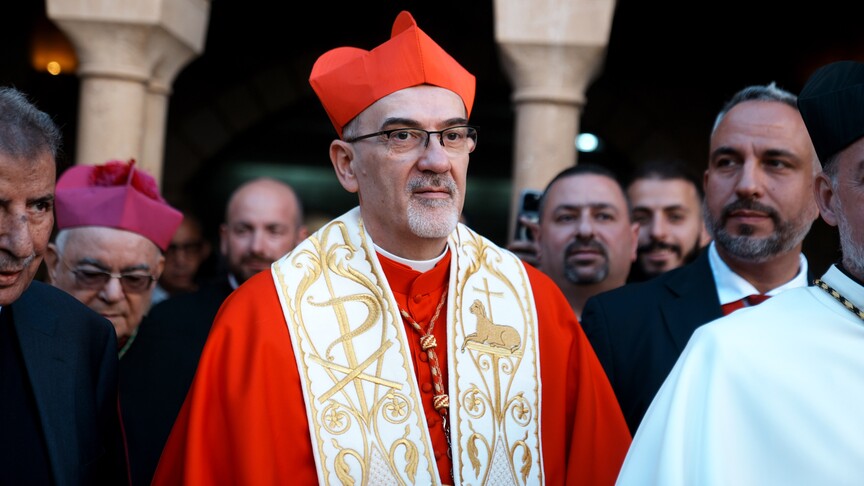
Cardinal Pierbattista Pizzaballa, the Latin Patriarch of Jerusalem, has recently expressed serious concerns regarding the rise of extremism in parts of Israeli society as a direct consequence of the ongoing Gaza conflict. He highlights a troubling trend characterized by what he describes as a growing “culture of contempt” towards Arabs and non-Jews, which is further fueled by media narratives shaping public opinion.
Rising Extremism in Israel
In a candid interview with the Italian newspaper Corriere della Sera, Cardinal Pizzaballa discussed the repercussions of the violence that erupted after the October 7 attacks and Israel’s military response. He noted that “extremism is gaining traction in this context.” While he acknowledged that this does not represent the views of the majority, it is evident in certain segments of Israeli civil society. The cardinal remarked, “The culture of contempt for everything that is not theirs, not only towards anything Arab, but also towards everything that is not Jewish, is unfortunately growing.”
This shift in attitudes, he argues, is alarming and permeates public discourse. The cardinal characterized this as a “diseased germ” that requires urgent attention to prevent it from escalating into a national crisis. By amplifying these sentiments, the media plays a significant role in perpetuating this culture, thereby endangering the fabric of society.
The Need for Political Leadership
Pizzaballa did not shy away from asserting that the escalation of violence in the region reflects a broader failure in political dialogue and leadership. He emphasized, “The gravity of the situation in the Middle East, and obviously not only there, must be addressed within the framework of international legality and without adding more victims.” Furthermore, he condemned the notion of war as a “new idolatry,” highlighting how political entities increasingly favor military action over constructive negotiations.
In light of recent events, he noted how public sentiment seems to have shifted, leading many to feel that “dialogue counts for nothing.” The cardinal lamented the perception that those with power and resources are now perceived to be unrestrained in their actions, contributing further to a cycle of violence rather than resolution.
Two-State Solution and Aspirations for Statehood
When questioned about the viability of a two-state solution in the Israel-Palestine conflict, Pizzaballa offered a nuanced perspective, stating, “Yes and no.” Although he identifies as a Franciscan, he noted a practical stance resembling Jesuit thought. The cardinal explained that the establishment of a two-state arrangement currently appears implausible due to the lack of territorial continuity. Nevertheless, he firmly believes that Palestinians are entitled to their aspirations for statehood and dignity. “You cannot tell Palestinians they have no right to a future in their own home,” he asserted, emphasizing the importance of respecting their desires.
Condemnation of Religious Justifications for Violence
In addition, Pizzaballa condemned the use of religion as a justification for violence, labeling it “the gravest sin one can commit.” He firmly stated that invoking God’s name to rationalize violent actions not only misrepresents the core values of faith but also risks allowing extremist narratives to dominate religious discourse. By doing so, he calls for a collective effort to ensure that religion serves as a source of peace, rather than a tool for division and hate.
Overall, Cardinal Pizzaballa’s insights shed light on the urgent need for dialogue, understanding, and political action to confront the challenges facing Israeli and Palestinian communities. His warnings about escalating extremism must be heeded by leaders and citizens alike to pave the way for a more peaceful and just future.