
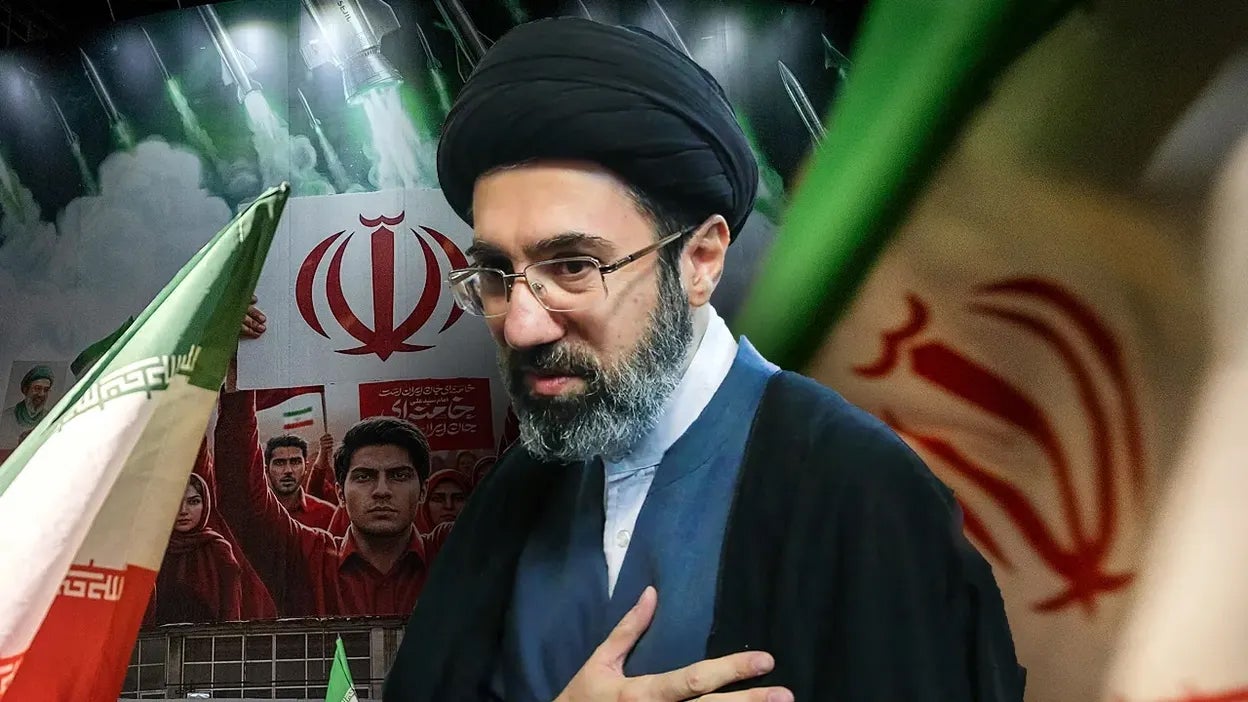
Iran’s Supreme Leader, Mojtaba Khamenei, recently made headlines by framing the conflict between Iran and the United States, as well as Israel, in ideological and religious terms. His powerful statements on X (formerly known as Twitter) illustrate a strategy to mobilize the Iranian populace against perceived foreign threats, which he describes as jihad, or a sacred religious war. Such declarations not only underscore his leadership style but also highlight the ongoing tensions in the region.
Khamenei’s Call for Jihad
Following President Donald Trump’s decision to cancel a planned strike on Iran, Khamenei’s messages have gained particular significance. He asserted that one of the major achievements of what he labels the “Third Sacred Defense” is Iran’s rise as a significant and influential power. Through this rhetoric, Khamenei seeks to unify the Iranian people around a common cause, solidifying his authority and framing the struggle against the U.S. and Israel as a religious obligation.
Counterterrorism expert Dr. Omar Mohammed emphasized that Khamenei’s language strips away euphemisms, revealing an invocation of jihad—an ideological framing deeply rooted in Shia jurisprudence. Khamenei’s choice of terminology underscores the Islamic Republic’s long-standing position on its enemies, specifically calling out “America and the Zionists” as adversaries. This not only reiterates the ideological direction of the Iranian regime but also cements a narrative that has been prevalent in Iranian politics for over three decades.
Significance of “Sacred Defense”
The term “Sacred Defense” has been integral to the Islamic Republic’s approach to warfare and conflict. Dr. Mohammed points out that this phrase encapsulates a profound sense of religious duty for the Iranian leadership, aligning it with the broader concept of jihad against foreign aggressors. As Khamenei paints the conflict as a holy war, he strategically redefines geopolitical struggles in religious terms, thus mobilizing not just military resources but also the energy and commitment of the populace.
In further remarks, Khamenei discussed a vision for the future of Iran, emphasizing the importance of population growth. He argued that this would enable the Iranian nation to make significant advances in establishing what he deemed a “new Islamic-Iranian civilization.” This additional layer to his messaging indicates an attempt to project optimism and resilience in the face of adversity, framing a long-term vision that seeks to galvanize support among citizens.
The Irony of Communication
Interestingly, Khamenei chose to disseminate his message via X, a social media platform that has been inaccessible to most Iranians for nearly 20 years. The irony is palpable: while he speaks to the world, ordinary citizens face severe internet restrictions, enduring what is described as the longest and most extensive blackout in Iranian history. This discrepancy highlights the disconnection between the leadership and the everyday realities experienced by the Iranian populace.
Experts like Dr. Mohammed voice concerns about the implications of Khamenei’s online presence. The Iranian economy has suffered tremendously due to these internet restrictions, costing billions. By using a platform that is effectively banned for his own people, Khamenei emphasizes a profound contradiction—proclaiming solidarity and strength while simultaneously isolating the nation from global discourse.
In conclusion, Mojtaba Khamenei’s framing of the conflict with the U.S. and Israel as jihad is a deliberate strategy aimed at rallying his citizens under the banner of a religious duty. This rhetoric not only seeks to consolidate his power but also signifies a warning to external adversaries about Iran’s unwavering stance amidst ongoing tensions. The combination of ideological fervor and practical political maneuvering underscores the complexities of Iran’s position on the global stage.