
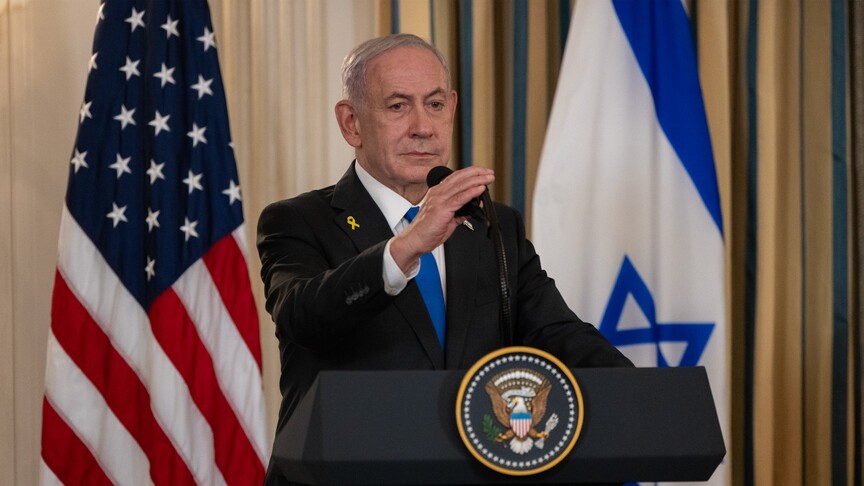
Israeli Prime Minister Benjamin Netanyahu has indicated that Israel should brace for a future decline in U.S. military assistance, which amounts to billions of dollars. He views this change as inevitable, emphasizing it as a reality that Israel must confront sooner or later.
Concerns Over Future U.S. Aid
In a recent interview with Channel 10, just days before pivotal elections in Israel, Netanyahu stated that he has initiated steps to prepare for possible economic sanctions and the exploration of new financial technologies. His comments reflect a growing concern about the shift in American political attitudes towards Israel, particularly in light of the ongoing humanitarian crisis in Gaza. He acknowledged the potential cessation of military funding, stating, “[If] you think we’re going to continue receiving what I secured… prepare yourselves because America has changed.”
Although Netanyahu did not provide a specific timeline for this anticipated decline in U.S. military aid, he highlighted the importance of readiness for what he perceives as an approaching reality. He urged Israeli officials to formulate strategies to navigate potential financial sanctions, arguing that an independent economy capable of withstanding such pressures is essential.
Sanctions and Economic Strategies
Netanyahu stressed the significance of considering alternative economic mechanisms should sanctions become a reality. “There could be sanctions, including banking sanctions; you need to prepare an economy that can get around them,” he stated. As part of this strategy, he mentioned the potential of blockchain technology to help sustain financial activities amid such restrictions. “Yes, that’s one of the ways,” he remarked, indicating that plans are already underway to develop these alternatives.
Political Opposition and Upcoming Elections
The Prime Minister’s comments have not gone unchallenged. Yair Golan, the leader of the opposition Democrats party, criticized Netanyahu’s perspective on the social media platform X, claiming it reflects a disconnect from the current geopolitical landscape. Golan asserted that to avert economic sanctions, Israel must address serious internal issues, including what he terms “Jewish terrorism,” which he believes undermines Israel’s international reputation. He advocated for a new government in the upcoming elections, distancing himself from Netanyahu and his coalition partners, Ben-Gvir and Deri.
The backdrop of this political debate is set against Israel’s imminent parliamentary elections. As citizens prepare to cast their votes, discussions about Israeli relations with its Western allies and the ramifications of possible economic sanctions are critical. Presently, according to a pact signed in 2016, Israel is receiving $38 billion in military assistance over a decade, a program scheduled to conclude in 2028.
The Future of Israeli Defense
Netanyahu has consistently emphasized the need for Israel to reduce its reliance on U.S. military aid while bolstering its domestic defense industry. His remarks underscore a strategic pivot for the nation, urging self-sufficiency in the face of impending changes. The evolution of U.S.-Israel relations will undoubtedly be a focal point in the days leading up to the elections, as leaders and citizens alike reflect on the implications of these shifting dynamics.
As Israel approaches a critical juncture in its political journey, the interplay between national security, international alliances, and domestic policy will shape the future landscape of the country.