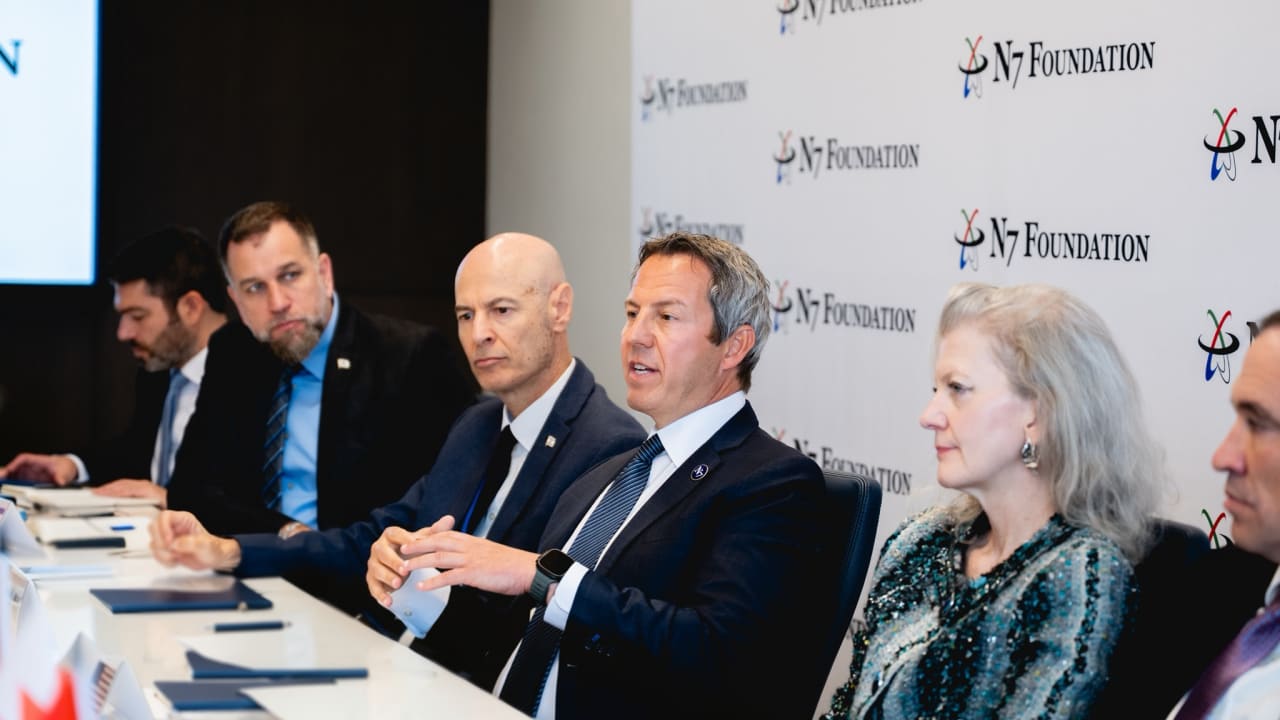
Senior officials from Israel, the United States, and various nations involved in the Abraham Accords gathered in New York on Thursday, marking their first multilateral meeting since January 2023. This event underscores a renewed commitment to enhancing regional collaboration and expanding normalization efforts after years of political turmoil.
Key Participants and the Meeting’s Significance
The high-profile roundtable was organized by the N7 Foundation and led by its chairman, Jeffrey M. Talpins. Notable attendees included U.S. Under Secretary of State Allison Hooker and representatives from Israel, Bahrain, Morocco, the United Arab Emirates, and Kazakhstan. Of particular note was Kazakhstan’s inaugural participation, as it is poised to join the Abraham Accords framework.
The timing of this meeting is significant, coming almost three years after the October 7 Hamas attack and the subsequent war in Gaza. These events drastically shifted the diplomatic dynamics in the region, hampering efforts to capitalize on the momentum established by the Abraham Accords. These agreements originated during the Trump administration, leading to the normalization of relations between Israel and both the UAE and Bahrain in 2020, later followed by Morocco.
Focus on Practical Collaboration
Unlike previous gatherings that concentrated solely on further agreements for normalization, Thursday’s meeting emphasized moving beyond mere diplomatic recognition. Participants reiterated the principles of the Abraham Accords and explored ways to strengthen cooperation among Israel, Arab and Muslim nations, the U.S., and other allies.
Jeffrey Talpins commented, “The Abraham Accords have illustrated the possibilities achievable when nations unite around shared interests and a common vision for a prosperous and integrated region.” The future focus, he suggested, should be on deepening established relationships while identifying actionable opportunities for collaboration.
The N7 Foundation highlighted discussions centering on shared objectives and tangible outcomes. Intended to lay the groundwork for stability, security, and economic growth in the region, potential collaborative areas identified included technology, trade, energy resources, food and water security, and strategic cooperation.
Kazakhstan’s Role and Broader Implications
Kazakhstan’s involvement is particularly consequential, as the country aligns its participation in the Accords with its existing foreign policy commitments. The nation has asserted that joining the Abraham Accords will not compromise its support for a two-state solution alongside relevant international resolutions. Its entry into the framework could create new avenues for cooperation, linking Israel and its Arab partners with a significant Muslim-majority state in Central Asia.
Despite these promising developments, the complexities introduced by the Gaza conflict cannot be ignored. The war has complicated Israel’s relationships within the Arab world, and regional tensions, particularly with Iran, have added additional layers of challenge for governments building ties with Israel.
In conclusion, the return of senior officials from Abraham Accords countries to a collaborative format is a momentous step. Following the tumultuous events since October 7, regional diplomacy had largely fixated on humanitarian issues and the broader Israeli-Palestinian conflict. The recent meeting signals a renewed focus on regional integration while simultaneously addressing these pressing challenges, illustrating the ongoing U.S. interest in leveraging the Abraham Accords for broader regional partnerships. The N7 Foundation aims to continue its crucial work with member states and allied partners, aiming to forge durable frameworks for strategic cooperation.