
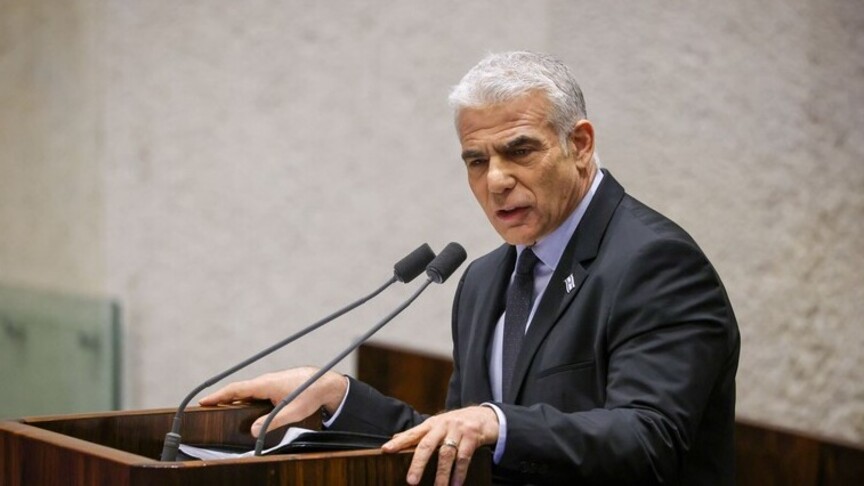
Israeli opposition leader Yair Lapid has recently addressed concerns regarding the possibility of a war with Iran ahead of the parliamentary elections scheduled for October 27. His remarks come in the context of ongoing political tension and the strategic maneuvers by Prime Minister Benjamin Netanyahu, who has been accused of using security concerns to bolster his election campaign.
Lapid’s Assurance on Upcoming Elections
In a statement on local radio, Lapid asserted that based on the intelligence briefings available to him, there is no expected military conflict with Iran before the elections. This declaration is significant, especially considering the heightened atmosphere surrounding national security issues during this critical period. Lapid emphasized the need for the electorate to critically assess how security threats are being presented and utilized by Netanyahu.
According to Lapid, the Prime Minister has often leveraged the fearful specter of conflict—whether that be with Iran or other adversaries—in his political messaging. He articulated, “The prime minister can dominate the agenda by warning of an imminent terrorist attack or a war with Iran. Whether that is good for Israel is a question voters should ask themselves.” This statement reveals Lapid’s concern that Netanyahu’s focus on security may not be solely about protecting the nation but could be a calculated tactic to sway voter sentiment.
Recent Developments and Political Implications
The context surrounding these remarks includes a recent security meeting chaired by Netanyahu, aimed at discussing the evolving situation with Iran. As the leader of the opposition, Lapid has access to important security briefings and considered Netanyahu’s narrative of impending threats as potentially manipulative. His position is underscored by the notion that alarming the populace may serve more to benefit Netanyahu’s campaign rather than provide genuine insight into national security.
With elections approaching, public sentiment is notably polarized. Recent opinion polls suggest that opposition parties, including Lapid’s, may currently have an edge over Netanyahu’s political bloc; however, none have demonstrated a clear path to forming a government due to the fragmented nature of Israeli politics. This portrays an environment rife with uncertainty, making the upcoming elections critical for both Netanyahu and opposition forces.
Calls for Calm Ahead of Elections
Lapid has also been vocal about the need to maintain stability and calm as the elections draw near. Following briefings with Netanyahu, he reassured the public that no immediate threats warranted panic and insisted that the elections should carry on as planned. His emphasis on rational discourse amid the pre-election chaos is a call for voters to focus on substantive issues rather than succumbing to fear-mongering tactics.
In conclusion, as Israel approaches its parliamentary elections, the interplay between security concerns and political strategy will likely continue to shape public discourse. Leaders like Lapid are keenly aware of the implications of security rhetoric and are working to keep the focus on governance rather than fear. This election period is poised to be a significant test for both the current administration and opposition parties, as they seek to navigate the complex dynamics of national security and political legitimacy.