
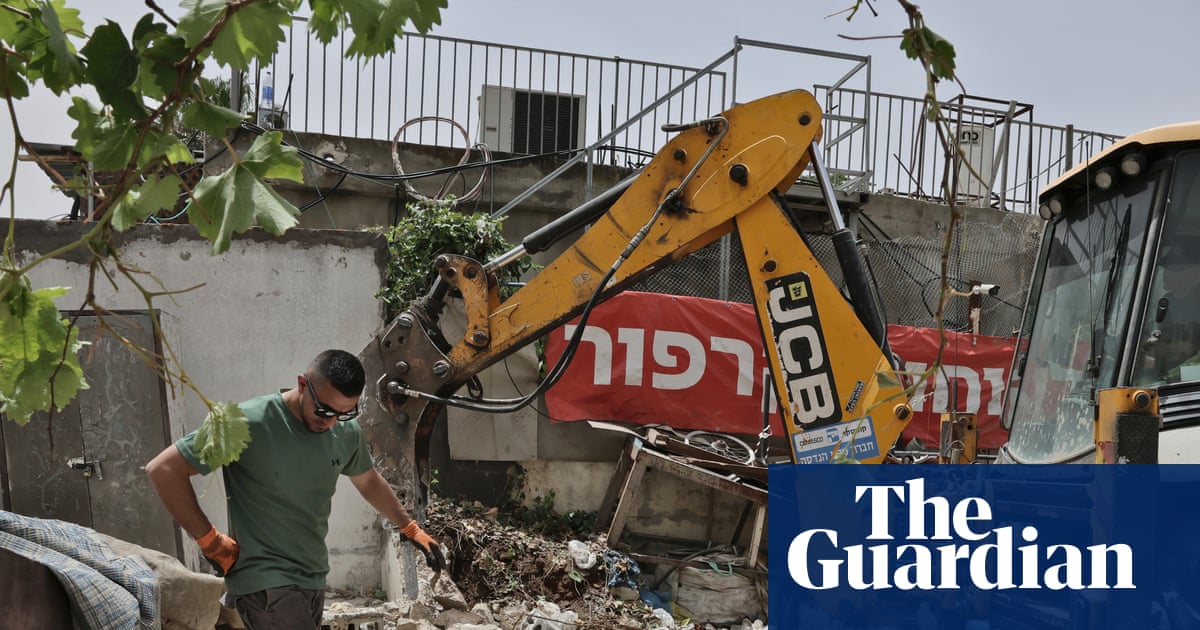
In the heart of a densely populated valley near Jerusalem, a turbulent scene has unfolded recently, marked by the relentless noise of construction equipment. This disruption is emblematic of a broader issue facing the Palestinian community, which has been battling efforts to erase its presence in East Jerusalem amid a backdrop of increasing demolition orders.
A Struggle Against Demolition
The sounds of bulldozers and jackhammers have transformed the al-Bustan neighborhood into a battleground. Residents, like Jalal al-Tawil, find themselves in the heartbreaking position of demolishing their own homes to avoid higher costs imposed by the local municipality, a situation that highlights the depth of despair and resistance within the community. “This is something really hard. This is something bitter,” Jalal lamented as he watched the remnants of his family’s ancestral home fade into rubble. His decision to undertake the demolition himself was one born of necessity, as the alternative was financially prohibitive and catastrophic for his family’s legacy.
Amidst the devastation, symbolic elements remain. Jalal chose to leave a 35-year-old grapevine standing, a poignant reminder of the past that nourished not just his family but the entire al-Bustan community. As he reflects on the loss, he acknowledges that the vine will never again yield fruit, illustrating the deep connection between nature and community that is being irreparably severed by ongoing demolitions.
The Broader Implications of Demolitions
In the last two years, more than 57 homes in al-Bustan have been destroyed, with more on the docket. This systematic erasure aligns with broader developments aimed at reshaping Jerusalem’s identity. Plans for the Kings Garden, an archaeological theme park, promise to spotlight a narrative centered on Jewish history while sidelining Palestinian experiences. Aviv Tatarsky, a senior researcher at Ir Amim, emphasized that this project exemplifies the ongoing process of rendering Palestinians invisible both geographically and historically.
The elimination of homes not only impacts present lives but also erases memories and futures. Fakhri Abu Diab, who faced similar circumstances, expressed how living in the remnants of his family’s history has taken an emotional toll. “They demolished our past. They demolished our memories. They demolished our dreams,” he said. For him, each stone of rubble is a reminder of a childhood lost and a future clouded by uncertainty.
The Palestinian Resilience
Despite the overwhelming odds, the residents continue to assert their right to exist. Mohammad Qwaider, facing the imminent demolition of his own longstanding family home, remains determined. “We will not leave,” he insists, reflecting a broader sentiment among Palestinians who refuse to surrender their land, culture, and identity. His elderly mother, a living testament to the generations of displacement endured since the Nakba, echoes this resolve, asserting, “From here, we are not leaving.”
The community’s resistance is not just about physical spaces; it’s about preserving the dreams that children have for their futures. Amina Abu Diab, a schoolteacher, expresses her anguish over the uncertainty that looms over the children she cares for. “A house is a child’s dream of the future,” she explains, underscoring how demolitions threaten to dismantle both physical safety and the emotional security that home embodies.
In the face of these oppressive circumstances, the residents of al-Bustan remain a symbol of resilience. They are grappling not only with the loss of homes but also with the broader societal and historical implications of their struggle. As bulldozers continue to roar, they stand firm, embodying a fierce determination to hold onto their identity and the legacy of their ancestors.