
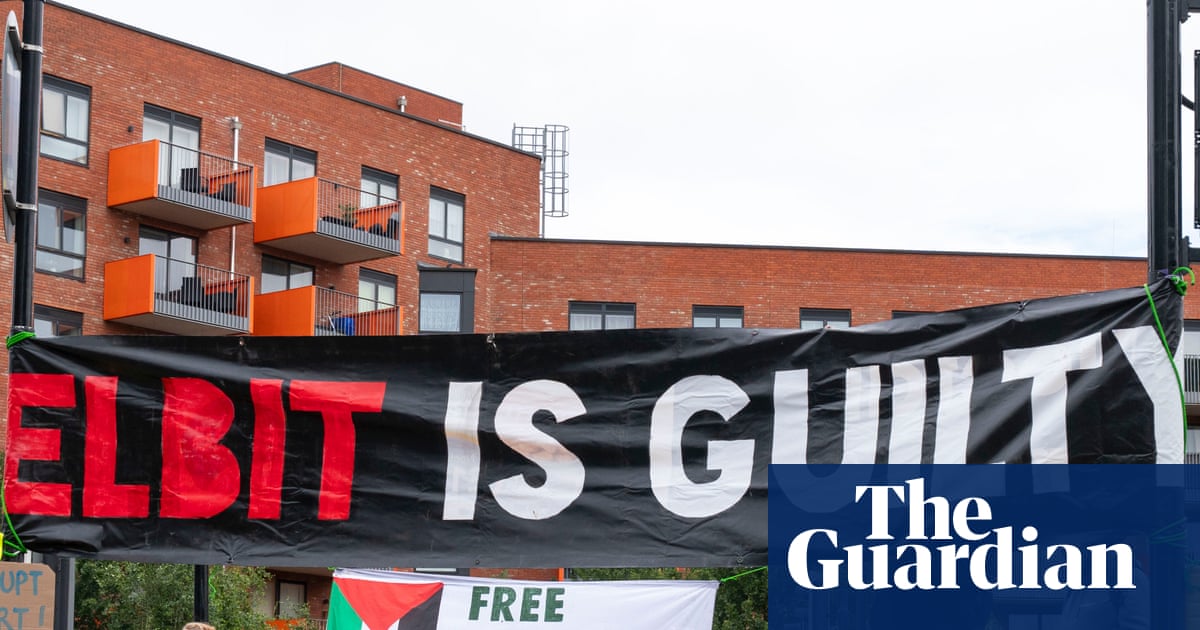
On Friday, four activists from Palestine Action faced a significant legal ruling after their actions at an Israeli arms manufacturing plant in the UK resulted in substantial damage. Their case has raised complex questions about the intersection of protest, criminality, and the definition of terrorism under the law.
Details of the Incident and Charges
The activists, identified as Samuel Corner, Charlotte Head, Leona Kamio, and Fatema Rajwani, were found guilty of criminal damage following a break-in at the Elbit Systems facility located in Gloucestershire. The incident, which took place in 2024, resulted in approximately £1.2 million worth of damage, affecting military assets and unmanned aerial vehicles. Corner was additionally charged with causing grievous bodily harm after attacking a police officer with a sledgehammer during the raid.
The prosecution pointed to a report stating that 41 military assets were damaged, including significant costs attributed to the destruction of drone units. Justice Johnson, presiding over the sentencing hearing, established that the defendants’ actions were aimed at intimidating not just the UK government but also the employees of Elbit Systems and related businesses. He classified their actions under a “terrorist connection,” emphasizing the political motivations behind their criminal acts.
Legal Representation and Arguments
The legal representation for the defendants argued against the characterization of their actions as terrorism. Rajiv Menon KC, representing Charlotte Head, noted the unprecedented nature of labeling a non-violent crime as a terrorist act and described such a move as a dangerous encroachment upon civil liberties. Similarly, Mira Hammad KC, representing Leona Kamio, highlighted the inconsistency in prosecutorial decisions, noting that the defendants had originally been arrested under suspicions of terrorism but were not formally charged with such.
Tom Wainwright KC, defending Samuel Corner, emphasized that labeling the defendants as terrorists could set a precedent that spans beyond just this case. He contended that labeling historical figures like the suffragettes or modern movements as terrorists based on their similar acts of protest would be unjust and overly broad.
Implications of the Ruling
The classification of a “terrorist connection” implies that the four defendants could face severe consequences, including longer prison sentences and strict requirements to notify law enforcement of changes in their personal circumstances. This ruling has ignited a debate about the acceptable limits of protest in the UK and raises alarm over potential overreach by authorities in handling dissent.
The incident has had lasting effects on both the defendants and law enforcement. A police officer involved in the case testified about the emotional and psychological toll the confrontation has taken on her life. Sgt. Kate Evans spoke about her diminished sense of security and the long-term impacts on her physical and mental well-being, stating that the incident has profoundly altered who she is.
Public Reaction and Ongoing Controversies
The court proceedings drew significant public attention, with approximately 500 supporters rallying outside Woolwich crown court, some carrying signs declaring, “Saving lives is not terrorism. I support Palestine Action.” The ongoing controversy surrounding Palestine Action continues, with over 70 individuals arrested during the protests, highlighting tensions between state security and rights to protest. The legal landscape remains uncertain as discussions about the group’s designation under the Terrorism Act are set to be adjudicated soon.
As these proceedings unfold, the implications for civil rights, the definition of terrorism, and the boundaries of acceptable protest are expected to remain topics of heated debate across the UK.