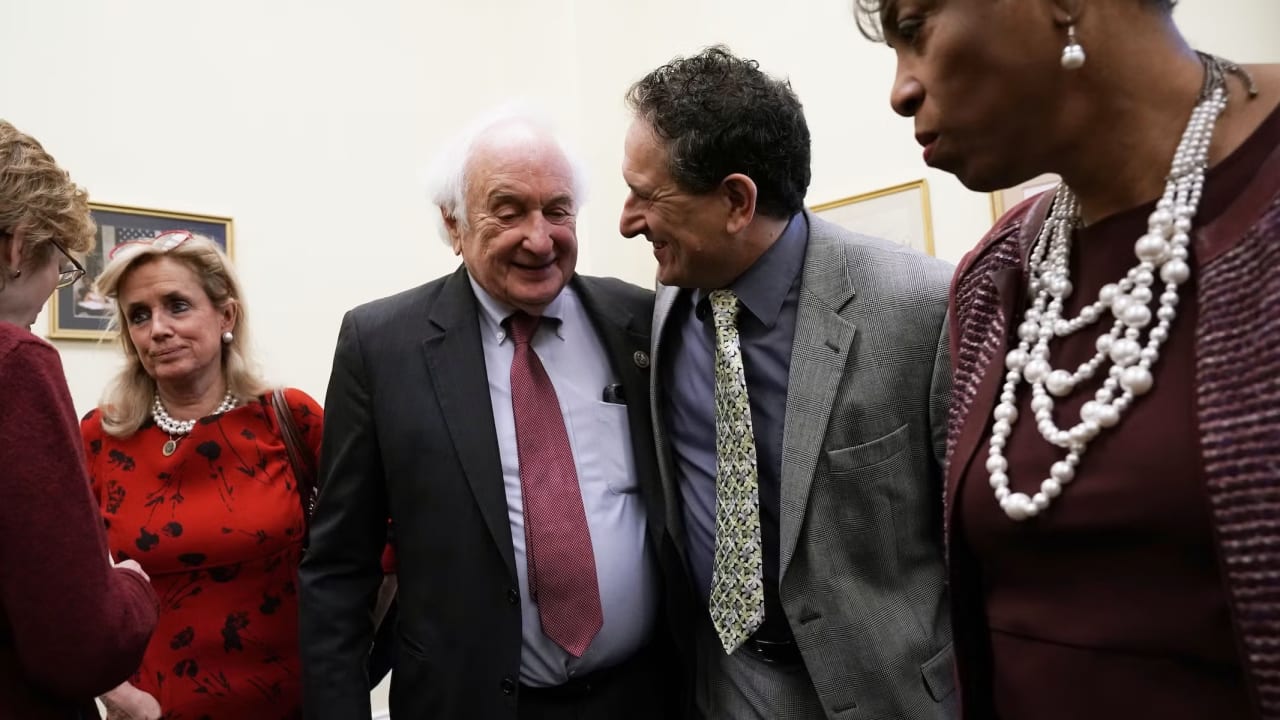
Retired Congressman Sander Levin, a significant figure in Michigan’s Jewish Democratic landscape, publicly supported Abdul El-Sayed’s Senate campaign despite existing tensions over their views on Israel. At 95 years old, Levin emphasized the importance of voting for “all Michiganders of conscience” during a time of considerable disagreement among Jewish voters and Democratic leaders regarding El-Sayed’s candidacy.
Divided Opinions Among Jewish Voters
El-Sayed’s reluctance to endorse a two-state solution to the Israel-Palestinian conflict has raised concerns within the Jewish community in Michigan. This apprehension is echoed by various Jewish voters who feel uneasy about his stance on critical issues. Notably, both of Michigan’s Democratic senators, including Elissa Slotkin, have reportedly urged their fellow colleagues to back El-Sayed despite these concerns.
The complicated dynamics surrounding El-Sayed’s nomination reflect a larger rift among Jewish Democrats in Michigan. Various political figures, including Congressional candidate Jeremy Moss, have withheld endorsements, signaling a hesitance to align with a candidate perceived as problematic on vital issues. Some Jewish leaders suggest that, despite legitimate concerns about El-Sayed’s policies, the prevailing threat posed by former President Donald Trump should encourage voters to rally behind him.
Levin’s Endorsement and Its Implications
Levin’s endorsement is particularly impactful given his history of representing a district with a substantial Jewish population near Detroit. His family’s political legacy includes both his son, Andy Levin, who succeeded him, and his late brother, Carl Levin, who served in the Senate for an impressive 36 years. Despite acknowledging “significant disagreement” with El-Sayed on Israel, Sander Levin articulated a broader alignment on various other issues, such as climate change, healthcare, and labor rights. He emphasized the necessity for Democrats to unite against rising authoritarianism and bigotry from the Republican Party.
In the past few days, a coalition of national Jewish Democrats, including prominent figures such as Andy Levin and former Senator Al Franken, also voiced support for El-Sayed, arguing that his campaign principles resonate with many Jewish values. They noted that concerns surrounding his stances on Israel and Iran may be overstated compared to the broader context of his policies.
Persisting Concerns Amid Endorsements
Despite the influx of endorsements, El-Sayed’s candidacy continues to be a polarizing factor among Michigan’s 100,000 Jewish voters. Even with public apologies from El-Sayed concerning previous remarks about antisemitism, some community members have chosen to pledge their support to his opponent, Mike Rogers. These divisions are illustrated by yard signs within Jewish neighborhoods promoting votes against El-Sayed, emphasizing sentiments of solidarity against perceived antisemitic sentiments.
Calls for engagement have emerged from Michigan rabbis, urging El-Sayed to address specific issues that they consider essential for open dialogue. Although he has distanced himself from controversial figures like Hasan Piker, his previous associations have left lasting impressions that continue to haunt his campaign.
In his recent public appearances, El-Sayed has reiterated his disavowal of Piker’s controversial remarks regarding pro-Israel advocates, aiming to clarify his stance to Jewish constituents. Despite the criticisms, El-Sayed remains committed to reaching a larger audience, hoping to focus on policy issues that resonate beyond the current electoral divides.