
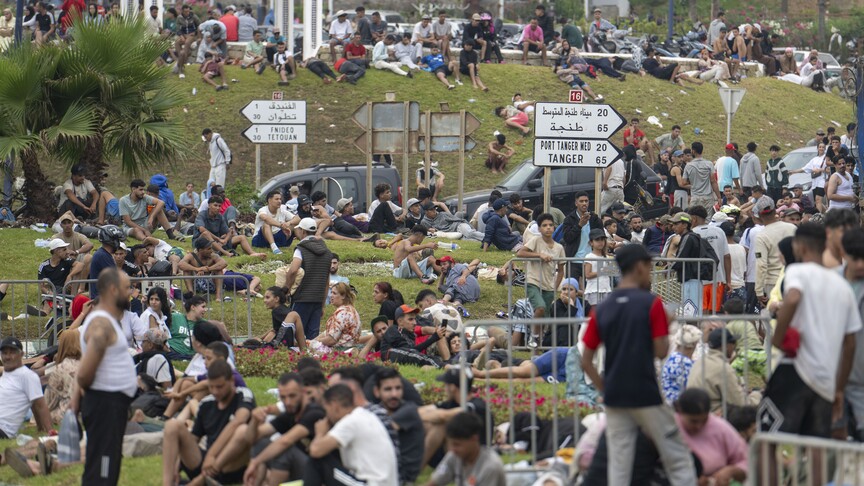
Diplomatic relations between Spain and Israel have taken a tumultuous turn amidst the backdrop of the Gaza conflict, significantly escalating tensions on social media. The latest point of contention revolves around the migration crisis in Spain’s North African enclave, Ceuta, following a heated exchange between Israeli UN Ambassador Danny Danon and Spanish Transport Minister Oscar Puente.
Exchange of Barbs on Social Media
In a recent post on X, Danny Danon expressed his frustration, accusing Spain of hypocrisy for denouncing Israel while declaring a state of emergency due to its immigration issues. He remarked, “Spain, which never misses an opportunity to lecture Israel, has declared a state of emergency in Ceuta following the crisis over its immigration policy.” His comments spotlighted a perceived double standard and called into question Spain’s colonial ties in Africa, specifically regarding the territories of Ceuta and Melilla along Morocco’s Mediterranean coast.
In response, Transport Minister Oscar Puente subtly countered Danon’s accusations by stating, “Well, it all seems to be becoming quite clear.” While he refrained from elaborating further, this remark drew significant attention amid an ongoing political debate in Spain concerning both the migration crisis and Israel’s involvement in broader regional dynamics.
Geopolitical Undertones and Political Commentary
The back-and-forth between Danon and Puente reflects a growing political discourse within Spain. Spanish commentator Carolina Alonso recently alleged that Israel is attempting to destabilize Spain’s government as retaliation against Madrid’s stance on the Gaza conflict. She suggested that the current migration challenges are being orchestrated through Morocco, with implicit support from Israel, as well as far-right factions in both Spain and Europe.
Adding to the narrative, Spanish lawmaker Gabriel Rufián from the Republican Left of Catalonia reiterated suggestions on social media that the migration crisis aligns with the interests of the U.S. and Israeli political agendas. He emphasized the need for a collective national response rather than divisive party politics, signaling the gravity of the situation.
Historical Context and Recent Events
The animosity between Spain and Israel traces back to recent events, particularly since the escalation of violence in Gaza in October 2023. Spain has emerged as one of the most vocally critical European nations regarding Israel’s military actions, formally recognizing the State of Palestine in May 2024. The Spanish government has reiterated calls for an immediate ceasefire and enhanced humanitarian access for those affected by the conflict in Gaza.
In a related context, journalist Jose Vizner highlighted a past social media post by Yair Netanyahu, citing claims of alleged Israeli support for separatist movements in Ceuta and Melilla. These assertions raised questions about whether the current strains in Spain-Israel relations are part of a more complex geopolitical “revenge” scenario impacting the Spanish populace.
Conclusion: A Divided Landscape
The evolving situation underscores the profound ramifications these diplomatic strains have on national politics within Spain and broader international relations. As the immigration crisis compounds existing tensions, the interplay between Spain’s national interests and international agendas becomes a critical point of analysis. With both countries facing increasing scrutiny, the future of Spain-Israel relations remains uncertain, highlighting the necessity for dialogue and understanding amid growing geopolitical complexities.