
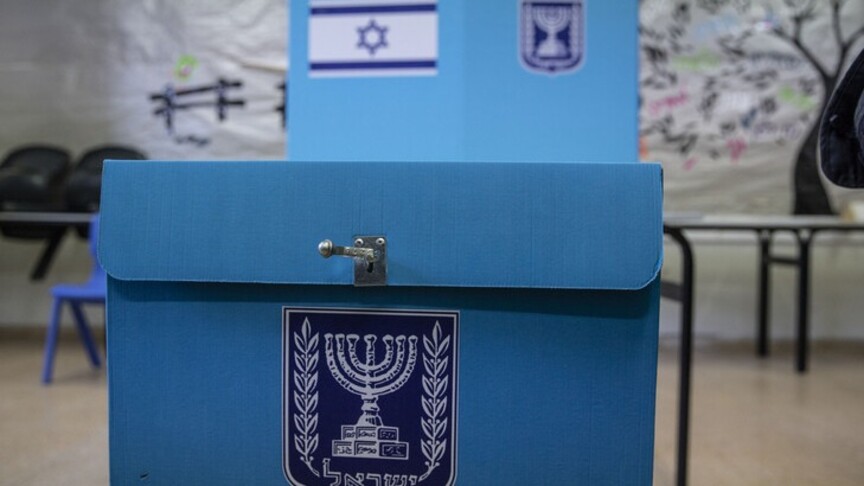
Daniel Levy holds the position of president at the US/Middle East Project and has a history as an Israeli peace negotiator, being involved in the seminal Oslo B talks in 1993 and later the Taba negotiations in 2001. As Israel approaches its elections on October 27, emotions are running high, with many dubbing this election as unprecedented and potentially the last crucial one. The campaign has devolved into accusations of betrayal between ruling and opposition parties, and there are growing concerns that political tensions could spill over into violence. Despite the apparent diversity of the 11 viable Zionist and ultra-Orthodox parties, most options at the polls reflect a grim consensus on ongoing occupation and conflict.
Understanding the Anti-Netanyahu Coalition
The Israeli political landscape is not merely split along left and right lines; it is primarily affected by a central divide represented by Prime Minister Benjamin Netanyahu and his coalition featuring far-right allies like Itamar Ben-Gvir and Bezalel Smotrich, as well as ultra-Orthodox factions. Netanyahu, currently facing a trial on corruption charges, has often been seen prioritizing personal interests over national welfare — notably exempts ultra-Orthodox youth from conscription during a critical manpower shortage while advocating for a stronger executive at the expense of judicial independence.
Leading the opposition is Gadi Eisenkot, former chief of staff of the Israel Defense Forces, whose Yashar party consistently polls ahead of Netanyahu’s Likud, serving as the largest single alternative. The anti-Netanyahu coalition comprises several parties, including Naftali Bennett and Yair Lapid’s Yachad, Golan’s center-left The Democrats, and Avigdor Lieberman’s Yisrael Beiteinu. However, these parties have yet to unite around a candidate for prime minister and share a common platform. Notably, none advocate for an end to settlements or engagement with a two-state solution. Instead, their focus rests on military enlistment issues, judicial reforms against Netanyahu’s agenda, and a thorough investigation of October 7’s security failures.
While there is criticism toward the current government’s inability to transform military victories into diplomatic strategies, there is a conspicuous absence of critique regarding the military actions taken, even amidst accumulating evidence of war crimes. Furthermore, proposed diplomatic avenues often appear impractical, lacking solutions that would be acceptable to Palestinians and neighboring countries, revealing a preference for relying on military might rather than genuine dialogue.
The Significance of the Arab Vote
The upcoming election’s outcome remains unpredictable. Polling indicates that Netanyahu’s bloc is projected to lose seats, but the opposition coalition also struggles to reach the critical 61 seats needed for a governing majority. This outlines a complex political landscape where the balance could shift to non-Zionist parties, primarily representing Israel’s Palestinian Arab citizens, who account for roughly 20% of the population. Political groups like the United Arab List (UAL) have adopted accommodating stances towards the Zionist government, creating friction within the opposition.
Most Zionist opposition leaders, except for Yair Golan, have rebuffed the idea of forming a coalition with Arab parties. Even Eisenkot, who considered collaboration, has shifted his stance under social pressures. This trend culminates in significant restrictions on Arab political representation, highlighting the limitations of democracy within the existing Israeli framework.
The Necessity for International Pressure
Given the current state of Israeli politics, outcomes could range from potential cooperation between Netanyahu’s Likud and parts of the opposition to a political stalemate that keeps the existing government in limbo. Should Netanyahu’s influence wane, there may arise opportunities for transformative political alignments and a shift away from ethnocentric policies. Hopefully, this could pave the way for discussions centered on Israel’s future in relation to the Palestinian people.
Sustainable change, however, remains contingent on external pressures and accountability measures directed at Israel. The recent actions by European nations and organizations like the Hague Group signal the possibility of a broader push for accountability regarding Israeli actions toward Palestinians. If sustained, such efforts could catalyze a move away from the entrenched cycle of violence that characterizes current Israeli policies, fundamentally altering the treatment of Palestinians and fostering a more just regional landscape.