
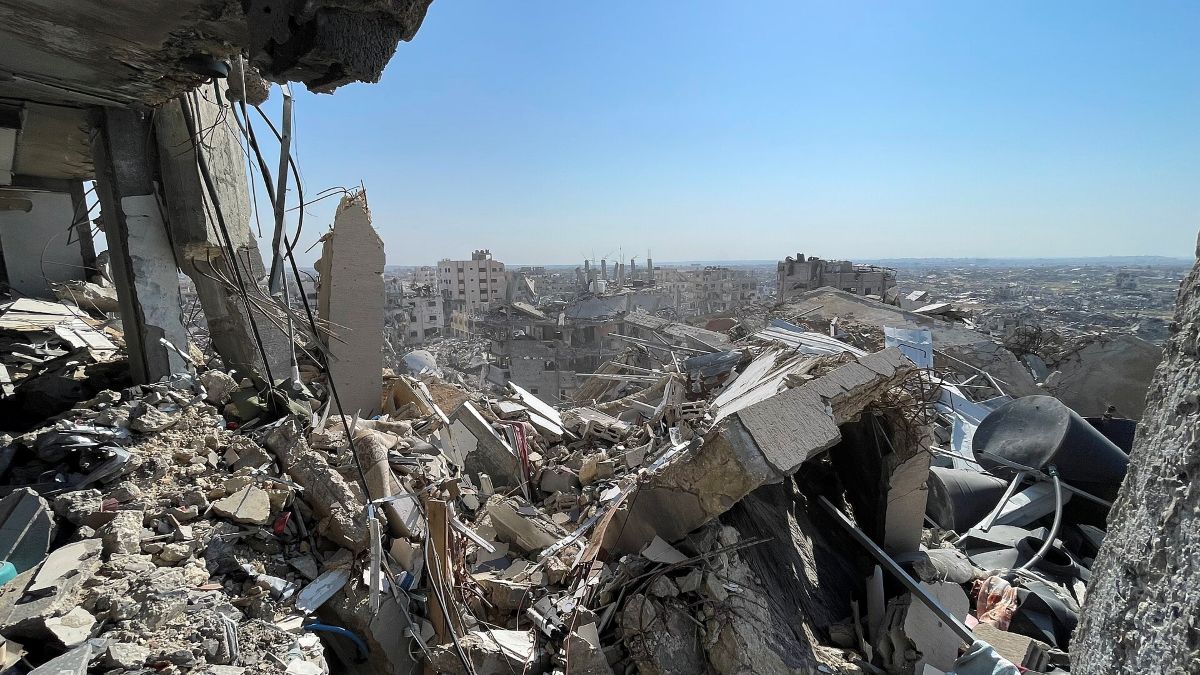
Gaza’s current state was not a foregone conclusion. This assertion is rooted not in moral debate but in operational reasoning regarding military strategy and the subsequent impact on civilians. Critics of Israel’s military tactics often posit that the extreme conditions in Gaza—such as urban warfare and the presence of hostages—necessitated widespread destruction. This perspective, though, is predicated on a misleading premise: that large-scale devastation was unavoidable rather than a choice made during operations. In fact, alternative strategies were available, which could have minimized civilian harm while still effectively addressing the objectives of recovering hostages and dismantling Hamas.
Understanding Military Necessity
In the framework of international humanitarian law, “military necessity” encompasses actions essential to achieve a legitimate military goal. However, it does not merely weigh the amount of force that can be applied; it critically examines whether the chosen methods are truly required to fulfill the mission. This leads to the question: Was the level of force exerted in Gaza essential to accomplish Israel’s strategic aims? The answer is a resounding no. A significant point of contention is the emphasis on hostage recovery, which should have called for a more restrained approach.
The presence of hostages should inherently lead to more meticulous use of force. In environments where non-combatants are held, extreme measures like heavy bombardments often result in catastrophic consequences: structural collapses, loss of intelligence, and the risk of hostages being killed or hidden away. A strategy focused on intelligence and selective engagements would have prioritized containment, prolonged surveillance, and deliberate operations against the entities holding hostages.
Hostage Recovery and Operational Strategy
Critics argue that the scale and spread of hostages made such an approach impractical. However, historically, hostage recovery missions unfold under less-than-ideal conditions, often requiring innovative intelligence-gathering and adaptive strategies rather than sheer firepower. Israel already had the necessary capabilities, including advanced intelligence assets and specialized hostage recovery teams. Still, the choice leaned toward a large-scale offensive, allowing for the stated goal of dominating the battlefield, often overshadowing the primary concern of rescuing hostages.
This fundamental misalignment between the method of engagement and the stated objectives resulted in increasing risks for hostages while undermining any prospects for actual recovery. Once hostages became casualties or were moved beyond feasible reach, the supposed tactical advantages of sheer force dissipated. Israel’s approach ultimately deteriorated into broad destruction that not only complicated intelligence gathering but also permitted Hamas to exploit the situation to its advantage.
Separation vs. Saturation in Urban Warfare
Another critical flaw was the attempt to dismantle Hamas without first securing the civilian environment. Unmanaged civilian movement and uncontrolled humanitarian aid inevitably became obstacles to effective military action against Hamas. It is crucial to isolate civilians from combat zones, which would have lessened Hamas’s operational capabilities, as the group thrives on access to the civilian population for concealment and resources. A practical approach would have involved establishing secured zones to manage population movement systematically.
Such zones would not only facilitate better situational awareness but would also make it more difficult for Hamas to operate within those areas. While separating civilians from combatants presents inherent challenges, establishing zones and designated routes could allow for more effective military operations while preserving civilian safety.
The Problem with Relying on Massed Fires
Proponents of the military campaign often assert that dismantling Hamas’s tunnel network justified widespread bombardments. However, collapsing tunnels does little to neutralize an underground network designed to withstand surface destruction. This approach only added complexity to the battlefield and obscured essential intelligence necessary for strategic planning. Effective counter-tunnel operations depend on intelligence gathering, not mass bombardments, which ultimately obstructed Israel’s ability to locate and neutralize Hamas’s subterranean infrastructure.
In conclusion, Gaza’s situation highlights a pivotal question about military necessity. The conditions may have posed formidable challenges, but these do not inherently justify the tactics employed. Shifted risk to civilians, degradation of intelligence, and strategic setbacks for hostage recovery all stem from operational choices that favored widespread destruction over more discriminative methods. A well-designed approach could have achieved the legitimate military goals while ensuring greater protection for civilians and a less chaotic battlefield environment. Choosing the right method in such complex operational scenarios is not just important; it is crucial.