
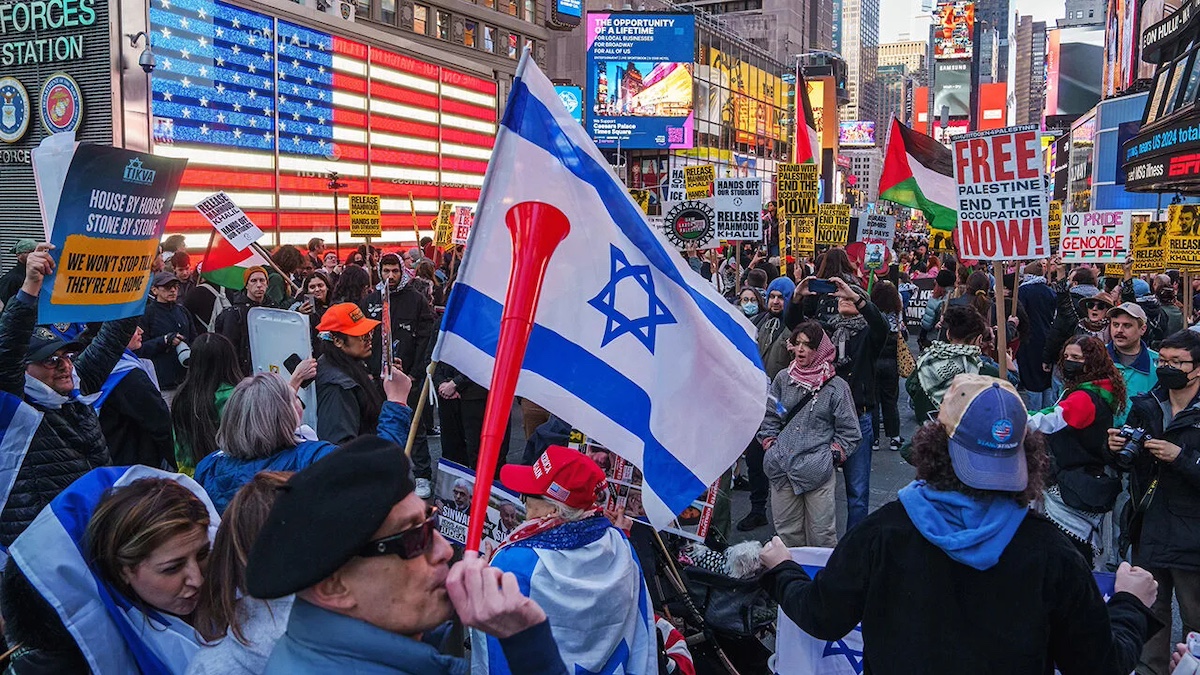
For the last eighty years, Israel has relied on a consistent assumption: American support is a permanent fixture, much like the Mediterranean coast. This steadfast belief was reinforced by successive administrations and a solid framework of congressional backing, public sympathy, and longstanding aid agreements that seemed invulnerable to change. However, the underlying truth of this relationship has begun to shift, revealing vulnerabilities previously overlooked.
Changing Dynamics of American Sympathies
Recent data indicate a seismic change in American attitudes toward the Israeli-Palestinian conflict. According to Gallup, which has been monitoring U.S. perspectives since 2001, a significant shift was noted in 2026. For the first time, more Americans reported feeling sympathetic to Palestinians than to Israelis, with 41% favoring Palestinians compared to 36% backing Israel. This change, particularly alarming for Israeli leaders, highlights an evolving demographic landscape and increasing criticism of Israel.
Pew Research paints a similar picture, revealing a growing unfavorable view of Israel among U.S. adults. The percentage of people expressing negativity towards Israel surged from 42% in 2022 to 60% in 2026. This decline is especially pronounced among younger voters, with a staggering 80% of Democrats holding unfavorable views towards Israel. Interestingly, while Republican support remains stronger for Israel, even that demographic is showing signs of faltering, particularly among younger individuals.
A Generational Divide
The generational divide has never been more clear-cut. Gallup’s findings reveal that 53% of individuals aged 18-34 sympathize with Palestinians, marking a historic high. Young Republicans exhibit only 52% confidence in Trump’s management of U.S.-Israel relations, starkly contrasting with 93% of older Republicans. A Yale survey further underscored this divide, showing Baby Boomers favoring Israel by 34 points, while Gen Z displayed an unfavorable rating of -22. Such a drastic swing—56 points in just one generation—cannot easily be rectified through political tactics or media campaigns.
Despite past events like Pearl Harbor or the October 1973 conflict, which momentarily united public opinion in favor of Israel, the landscape has shifted. The conflict in Gaza, particularly as witnessed through the lens of social media, serves as the formative experience for today’s youth, rather than the historical wars that shaped previous generations. There’s a growing realization that public support for Israel is not merely a cultural attachment; instead, it is tied to specific postwar contexts that are fading.
Future Implications and Challenges
Looking forward, significant changes loom on the horizon. The current $3.8 billion military aid package is set to expire in 2028, with negotiations for future support taking place in a Congress increasingly composed of members who came of age after October 7, 2023. The prevalent notion of automatic U.S. support, including military aid and political cover, is under threat from a younger electorate that does not inherently view it as a given.
This evolving political landscape raises critical questions about the nature of U.S.-Israel relations. Within the next decade, the Washington discourse is likely to shift from outright support for Israel to negotiations regarding the terms of that support. Israeli leadership, accustomed to unwavering backing, may soon find themselves in unfamiliar territory, needing to renegotiate their relationship with a changing American public.
In conclusion, predictions regarding the decline of U.S. support for Israel are not set in stone. Public opinion is fluid and can change based on current events and diplomatic developments. However, the assumption that American backing is a steadfast certainty is increasingly tenuous, necessitating a reevaluation of strategies on the part of Israeli policymakers to adapt to this new reality.