
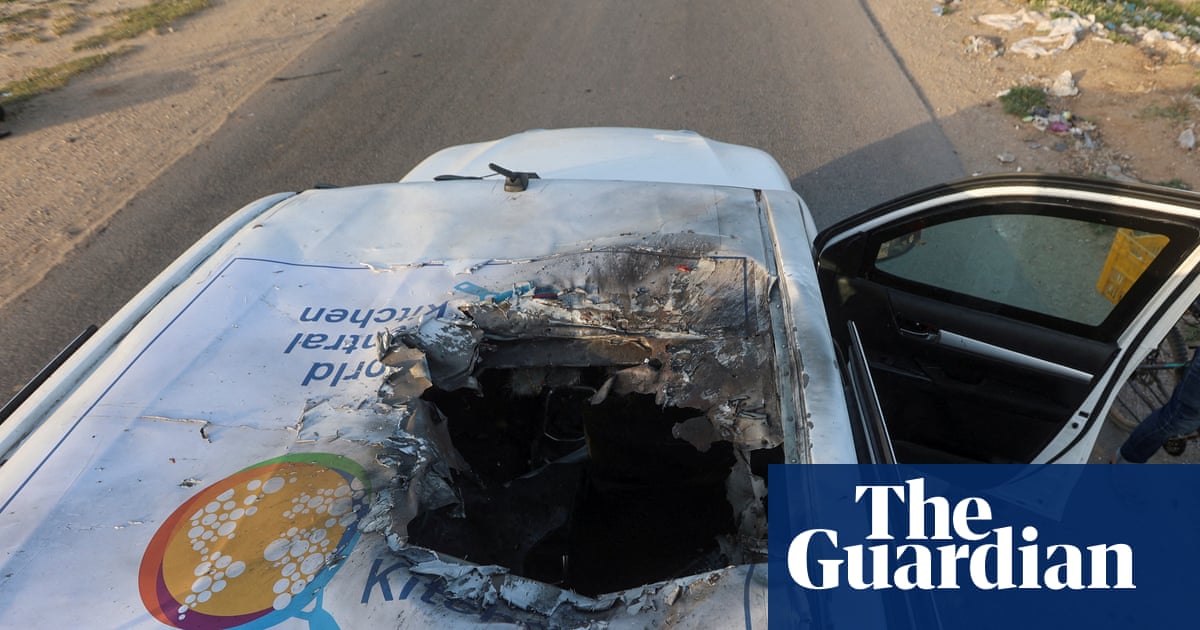
The recent decision by Israeli military authorities not to pursue a criminal investigation into the April 2024 airstrikes that struck a convoy of humanitarian aid vehicles in Gaza has drawn sharp criticism from various nations, including Britain, Australia, and Canada. This attack tragically resulted in the deaths of seven humanitarian workers from the World Central Kitchen (WCK), sparking widespread outrage around the globe.
International Reactions to the Airstrikes
In their joint statement, the three countries condemned the Israeli military’s decision as “shameful,” emphasizing that it falls short of what the victims and their families deserve—justice and accountability. The attack on the WCK convoy is indicative of a broader pattern in Gaza, where numerous incidents have gone without proper investigation or accountability. The statement highlighted the continuous efforts and risks faced by humanitarian workers who provide crucial aid under perilous circumstances.
Despite a fragile ceasefire in the region, Gaza has been labeled the deadliest place to deliver aid, with reports indicating that 186 humanitarian workers have lost their lives in 2025 alone. Australia’s government expressed its outrage, particularly concerning the death of Zomi Frankcom, an Australian among those killed. Relatives criticized the internal review process as insufficient and opaque, voicing their demand for transparent accountability.
Responses from Various Governments
Israel’s ambassador to Australia, Hillel Newman, defended the military’s decision, suggesting that the circumstances might warrant a different interpretation. However, this response did little to assuage the disappointment expressed by other parties, including the Polish government, which also called for cooperation in investigations surrounding the incident. Among the casualties was Damian Soból, a volunteer from Poland, whose family has also sought answers about his death.
In the UK, the Foreign Office publicly expressed its “appalled” and “angry” feelings for the families of the three British citizens—John Chapman, James Henderson, and James Kirby—who were tragically killed in the airstrikes. The incident has prompted significant outcry on various international platforms, emphasizing a need for accountability at a time when humanitarian crises are escalating in the region.
The Aftermath of the Attack
World Central Kitchen, which had been delivering food aid in Gaza amid the ongoing war, quickly asserted that they had coordinated their convoy’s movements with military officials and that the vehicles prominently displayed the organization’s logo. The organization firmly stated that there can be no justification for the attacks, condemning the military’s findings as both inconsistent and deeply offensive.
The Israeli Defense Forces (IDF) claimed that the airstrikes were the result of mistaken identity, asserting that they had confused humanitarian workers for armed operatives. They concluded that the commanders involved did not exhibit reasonable suspicion of wrongdoing despite some degree of procedural error, resulting in disciplinary actions against a couple of officers. Nonetheless, investigations into incidents of this nature rarely lead to significant consequences for Israeli personnel.
Furthermore, the IDF recently acknowledged its troops’ involvement in a tragic incident that led to the death of a five-year-old girl, Hind Rajab, and six of her family members. This acknowledgment comes amidst broader discussions about the Israeli military’s operational procedures during conflicts in territories like Gaza, raising serious ethical questions about accountability and the protections afforded to civilians in war zones.
As investigations into these events continue, the calls for justice and accountability from various nations and organizations are growing louder, underscoring the urgent need for safeguards that protect humanitarian efforts and civilian lives amid ongoing conflicts.