
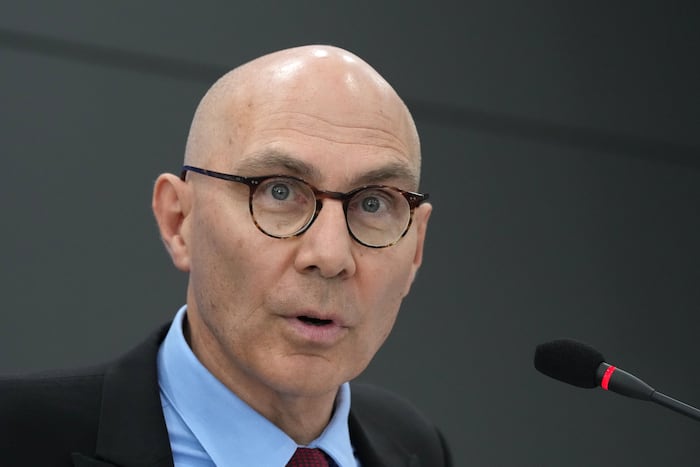
Volker Türk has secured a second term as the United Nations Human Rights Chief, despite opposition from major nations including the U.S., Russia, and Israel. His reappointment reflects the complexities of his role, where advocating for human rights often places him at odds with powerful member states.
Vote Outcome and Controversy
The decision to extend Türk’s term came after a decisive vote by the General Assembly, with a strong majority of 144 countries endorsing his continuation. This outcome, however, was overshadowed by objections from critics who argued that the nomination process lacked transparency and public scrutiny. Notably, the U.S. pushed for a delay in the vote, expressing concerns that the appointment had been rushed and insufficiently reviewed. The opposition underscored a rising tension within the U.N. framework regarding human rights advocacy and political interests.
The Challenges of Human Rights Leadership
Serving as the U.N. Human Rights Chief is inherently fraught with challenges. Türk, an Austrian lawyer, is tasked with vocalizing objections to human rights violations by nations that form the U.N. This sensitive position is amplified by his previous criticisms of Russia’s actions regarding Ukraine and Israel’s military involvement in Gaza. In recent months, Türk has faced backlash from several countries due to his stance on these issues, as well as his criticisms surrounding China’s treatment of its Uyghur population. It’s significant that none of his predecessors managed to complete two full terms since the inception of the role in 1993, underscoring the contentious nature of the position.
Global Reactions to the Reappointment
Reactions from member states to Türk’s reappointment have been mixed. The European Union expressed unwavering support for him, asserting that his leadership has been characterized by integrity and effectiveness. Conversely, the representatives from the U.S. and Russia have raised concerns about allegations of political bias, claiming that his views often align with Western interests in the realm of human rights. Additionally, Israel condemned the reappointment as a lapse in moral judgment by U.N. Secretary-General António Guterres, arguing that it erodes trust in the organization.
The Path Ahead for Human Rights Advocacy
As Türk assumes his new term, the global landscape poses numerous challenges for human rights efforts. Notably, he has faced criticism for not taking a stronger public stance on issues of human rights abuses in China. Detractors argue that his approach lacks the urgency demanded by the severity of the situation. Furthermore, accusations of genocide against Israel regarding its operations in Gaza persist, which adds another layer of complexity to his role. Despite these criticisms, Türk has committed to balancing private engagement with public advocacy in his mission to address human rights breaches on a global scale.
Ultimately, Türk’s tenure reflects the intricate dynamics that define human rights advocacy within the context of international politics. His ability to navigate this complex landscape will likely determine the effectiveness of his upcoming efforts in promoting and protecting human rights across the globe.