
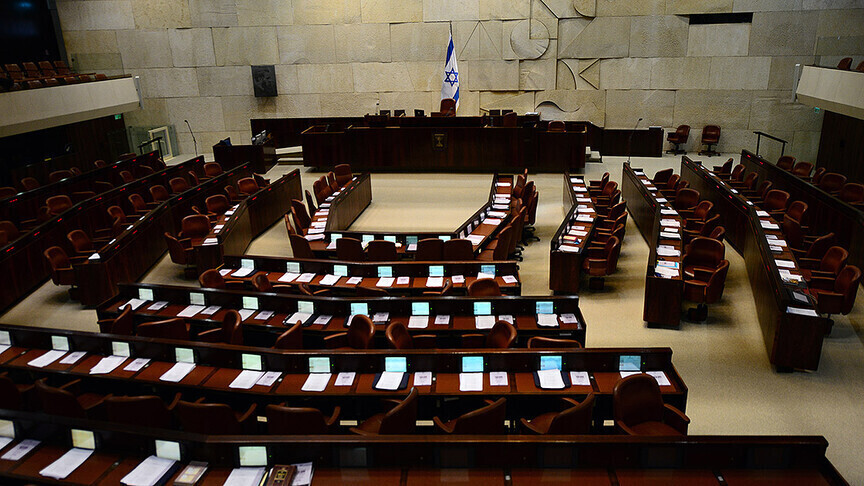
Israel’s parliamentary elections set for October 27 will have significant implications for Prime Minister Benjamin Netanyahu’s future in power. As constituents prepare to cast their votes, the election could reshape the Knesset, Israel’s legislative body, after it was dissolved on July 17. Netanyahu’s current government will remain in place until a new coalition is established.
### The Election Framework
In Israel, the electoral process employs a system of nationwide proportional representation. This means the entire country functions as a single electoral district. Rather than voting for a prime minister directly, voters select closed party lists, which include ranked candidates. For a party to gain representation in the Knesset, it must achieve at least 3.25% of the valid votes. Those that fail to meet this threshold do not gain any seats, thus emphasizing the significance of smaller parties in coalition formation.
The 120 available seats in the Knesset are allocated proportionately among parties that surpass the minimum vote requirement. The Bader-Ofer method aids in distributing the remaining seats after an initial tally based on each party’s vote share. Furthermore, parties can engage in surplus-vote agreements, allowing them to pool unused votes when vying for an additional seat. This threshold is crucial; if any party aligned with either Netanyahu or the opposition falls short, it risks losing multiple seats, affecting the overall balance of power.
### Coalition Formation Dynamics
Forming a government in Israel is not simply about leading the biggest party. The critical factor is whether a candidate can unite a stable coalition. Following the electoral results, Israel’s president will confer with the successful parties. Each faction will nominate a lawmaker to attempt to build a governing majority. The president may award this responsibility to the candidate deemed most likely to be successful, which isn’t always the head of the largest party.
The first candidate has 28 days to negotiate a coalition agreement, potentially extending this period by an additional 14 days. These negotiations typically cover responsibilities within the government, policy decisions, legislative priorities, and budgetary considerations. Should this initial candidate fail, the president can grant another lawmaker the chance to form a government. Repeated failures could trigger another round of elections.
### Historical Context of Coalitions
Coalition politics have defined Israeli governance since its inaugural parliamentary election in 1949. The Mapai party dominated early decades, yet still relied on partnerships with smaller factions. A pivotal moment arrived in the 1977 elections, where Likud, led by Menachem Begin, unseated Labor’s long-standing rule.
Israel did trial a direct electoral method for prime ministers during the late 1990s and early 2000s, but it was scrapped due to continued coalition fragmentation. Netanyahu’s tenure as prime minister has involved repeatedly forming government coalitions, including the recent alliances with far-right factions. This upcoming election represents the first Knesset since 1988 to complete a full four-year term.
### Key Contenders and Smaller Parties
Netanyahu is seeking another term leading Likud, with potential partners comprising far-right factions and ultra-Orthodox parties. His notable adversaries include Gadi Eisenkot, a former military chief heading the centrist Yashar party, and Naftali Bennett with his Together alliance. While they collectively aim to oust Netanyahu, their diverse ideological standings complicate their efforts to establish a cohesive government.
The role of smaller parties is paramount in this election. They could prove to be critical swing votes that finally tip the balance toward a majority government. Both sides are acutely aware that even a slight miss of the 3.25% threshold could result in significant ramifications for party representation.
### The Role of Arab Parties
Arab political factions, notably Hadash, Balad, and Ta’al, have announced plans to present a joint candidacy, aiming to enhance representation for Palestinian citizens, who make up roughly 20% of the populace. However, the absence of Ra’am, which has opted to run separately, indicates that the Arab vote could be split, affecting overall turnout. Historically, these parties have dealt with issues related to internal division, which has diminished their parliamentary influence.
### Polling Insights and Key Issues
Recent polls suggest Netanyahu’s bloc may hold 51 seats, while Eisenkot’s faction could secure 57, with both sides keenly aware of the strategic voting implications. Key campaign narratives will revolve around governmental effectiveness, particularly in response to security concerns and management of international relations, notably regarding Iran.
As the electoral date draws near, discussions about military service exemptions for the ultra-Orthodox community are expected to complicate government formation. With varying opinions on national service equality, Netanyahu must balance the demands of his ultra-Orthodox allies against the perspectives of mainstream Likud voters, all while seeking to solidify his political future amidst intense electoral competition.