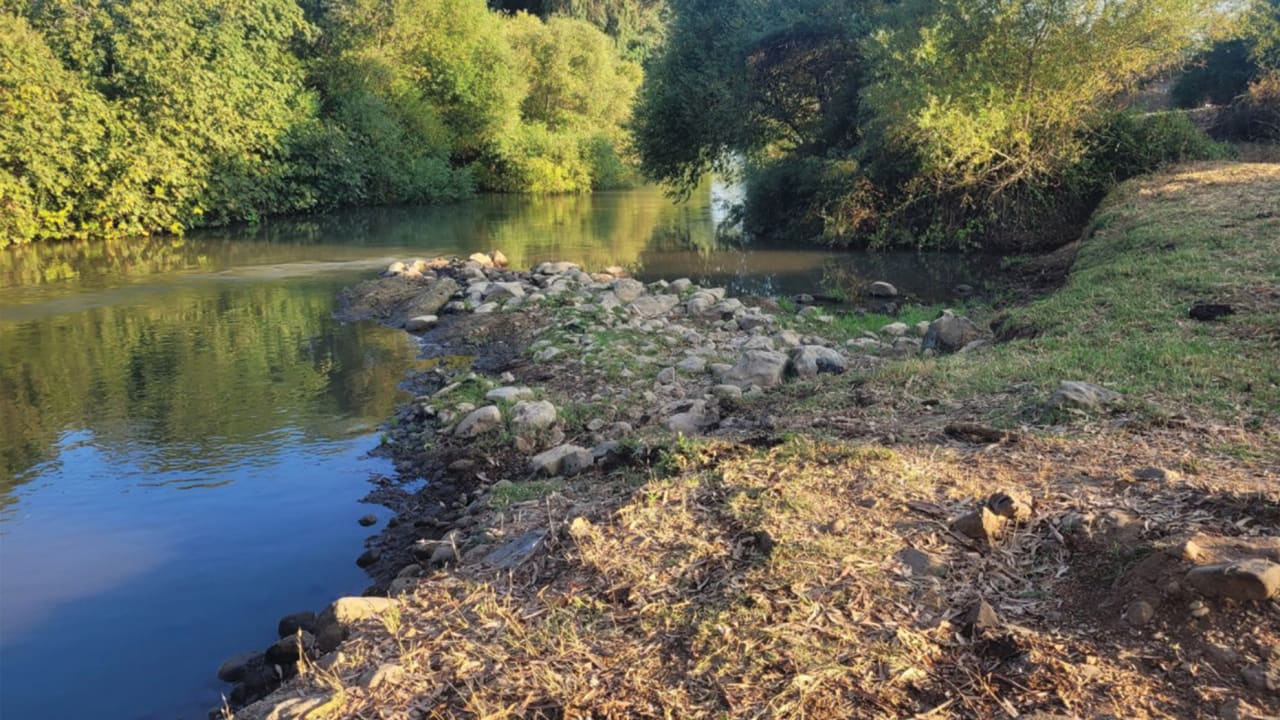
The Hula Valley, specifically the site known as Gesher Benot Ya’aqov, presents a captivating glimpse into a verdant paradise that existed nearly 800,000 years ago. This area, referred to as the “Daughters of Jacob Bridge,” continues to showcase a rich tapestry of natural and archaeological treasures intricately woven into the history of ancient humans and their environment.
Ancient Wildlife of Hula Valley
Thousands of years ago, during the Middle Pleistocene epoch, the Hula Valley thrived with colossal wildlife. Enormous straight-tusked elephants, hippopotamuses, and rhinoceroses meandered through lush forests, marshlands, and waterways. These magnificent creatures thrived in an environment that supported a complex ecosystem of various plant and animal life. In close proximity to these giants lived the earliest humans—hominins who crafted tools and adapted to their surroundings, leaving behind an extraordinary record of their existence along the Levantine corridor.
Archaeological Significance
Located in northern Israel, the Hula Valley has historically served as a crucial link between Africa and Eurasia. Recent archaeological discoveries, including well-preserved elephant teeth and ancient basalt handaxes, provide substantial evidence of both the impressive megafauna and the early hominin toolmakers that called this region home. These findings not only highlight the biodiversity of the area but also reflect the resource-rich environment that sustained both large mammals and early human populations.
Additionally, skeletal remains of various prehistoric creatures, like saber-toothed tigers, giant deer, and aquatic species, indicate that Hula Valley was a sanctuary of life during the Middle Pleistocene. The complex interplay between flora and fauna offers vital insights into the ecosystems that existed during this time and the adaptive strategies employed by early humans to survive.
Recent Discoveries and Their Implications
After extensive research spanning over three decades, archaeologists recently published significant findings in a notable journal. Led by doctoral candidate Hannah Farrell, the research team examined various biological remains, focusing on a giant elephant molar and tusk fragments found alongside early Acheulian stone tools. The elephant, belonging to the species Palaeoloxodon antiquus, serves as a biological archive that reveals essential information about the broader ecosystem shared by large megafauna and early human hunters.
Using advanced techniques like high-resolution CT scanning and pollen studies, the researchers reconstructed the vibrant environment that existed millennia ago. Findings suggest that the substantial water supply from the nearby Hermon Mountain range and the flourishing vegetation, including reeds and willow trees, created a fertile habitat conducive to both early humans and diverse wildlife.
The Hula Valley Today
Presently, the Hula Valley continues to be rich in biodiversity, flourishing with both flora and fauna. Ongoing archaeological projects strive to uncover new evidence that can deepen our understanding of ancient human life and its intricate relationship with the surrounding environment. As these studies progress, they promise to illuminate the adaptive strategies employed by the region’s early inhabitants amidst environmental changes and climatic shifts.
The Hula Valley’s historical and ecological significance makes it a crucial area for ongoing research and understanding of prehistoric life. By piecing together the past, modern scientists aim to comprehend the environmental forces that have shaped humanity, offering invaluable lessons for future generations.