
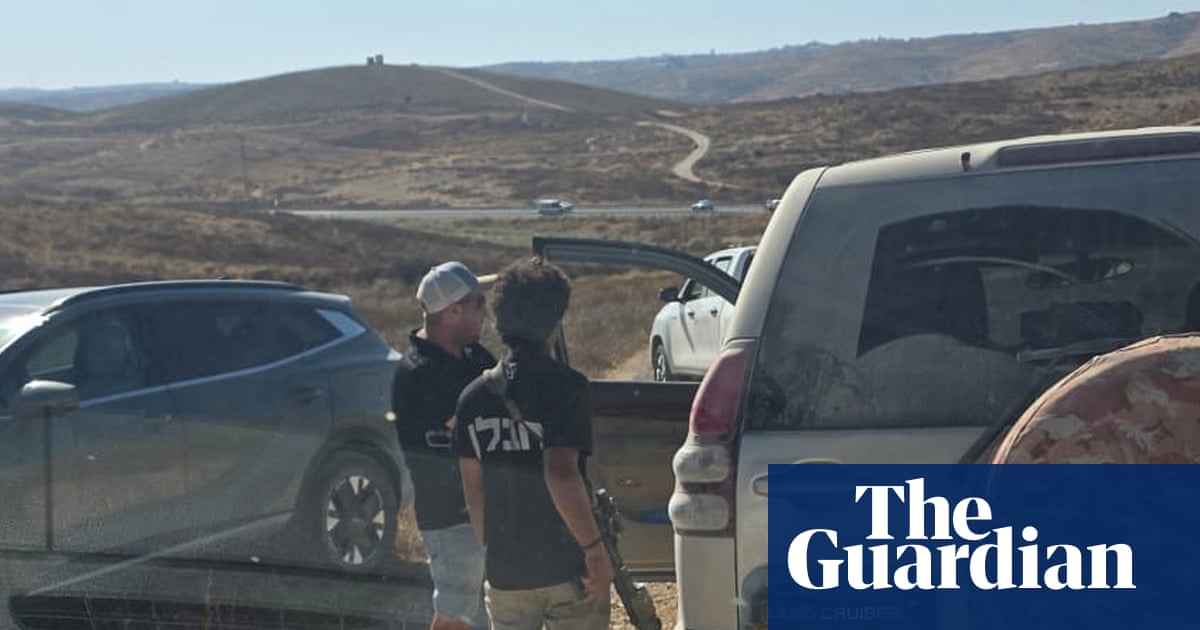
Ro Khanna, a Democratic congressman from California, recently accused the Israeli government and military of dishonesty concerning an incident during his visit to the Israeli-controlled West Bank. He claimed that he was wrongfully detained by armed Israeli settlers and soldiers while trying to navigate through South Hebron hills. His allegations center around a larger narrative regarding the ongoing tensions in the region, including reports of ethnic cleansing against Palestinians.
Details of the Incident
Khanna shared video footage on social media showing armed settlers and IDF soldiers blocking the path of his convoy near the village of Zanuta. This area has seen the displacement of Palestinian families, an issue highlighted by numerous human rights organizations, including Amnesty International. When asked about a public statement from the Israeli Defense Forces (IDF), which claimed that they quickly dispersed the settlers and reopened the blocked road, Khanna rebutted that the military was not truthful. He described the encounter as alarming, involving settlers who were reportedly armed and aggressive, detaining him and his team.
In the NBC News interview, Khanna elaborated on the intimidation he faced, stating, “We were detained for about 20 minutes, fearful for our lives.” He emphasized that while they were held, the IDF did not offer assistance, instead siding with the settlers and prolonging their detention. This confrontation raised serious concerns about the behavior of both the settlers and the military, underscoring a troubling pattern of violence against Palestinian communities.
Response from Israeli Officials
The Israeli government responded to Khanna’s claims with skepticism. Prime Minister Benjamin Netanyahu labeled the armed settlers involved as “juvenile delinquents” rather than representatives of the broader Israeli community. Khanna countered by insisting that an investigation should be initiated, particularly focusing on the actions of the IDF during the incident. He cited specific individuals linked to settler violence as deserving scrutiny, thereby highlighting broader concerns about accountability within the Israeli military and settlement communities.
Khanna argued that every settlement in the occupied West Bank is considered illegal under international law, calling for a more serious dialogue about the impact of Israeli policies on Palestinian civilians. His remarks come amid rising tensions between Israeli settlers and Palestinian residents, a dynamic that has fueled international criticism and drawn attention to the ethical implications of military support for settlers.
Political Fallout and Future Implications
Critics of Khanna, including Israeli Ambassador to the U.S. Michael Leiter, accused him of using the situation as a political stunt rather than a sincere effort to understand the complexities of the region. They suggested that his visit to the West Bank was aimed at generating headlines rather than contributing to a meaningful dialogue on peace and stability. In response, Khanna firmly rejected these claims, reiterating his history of engagement with various groups in the region and condemning acts of violence against both Israelis and Palestinians.
The incident not only raises questions about the treatment of American citizens abroad, particularly amid heightened political sensitivities, but also indicates the growing challenges activists and politicians face when discussing the Israeli-Palestinian conflict. As Khanna continues to advocate for Palestinian rights, it remains essential to monitor how these tensions unfold, particularly as geopolitical dynamics shift in response to broader societal pressures.
In this charged landscape, Khanna’s situation serves as a reminder of the complexities involved in advocating for the rights of marginalized communities. The event underscores a critical need for transparent discussions about human rights violations and the significant impact of military actions on civilians. As the world watches and debates this ongoing struggle, the intersection of politics, ethics, and activism will remain ever more pivotal.