
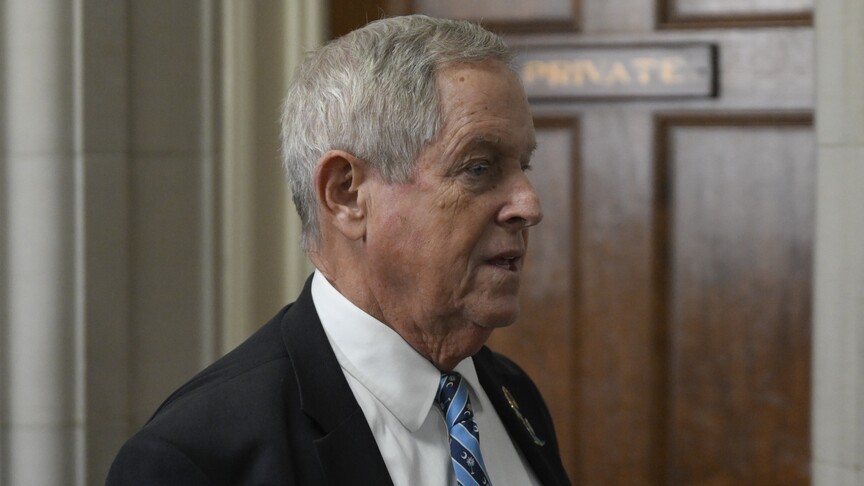
A U.S. congressman recently called for Israel to cease its airstrikes in Syria, emphasizing that such actions should not continue. This statement came during an interview at the United Nations General Assembly in New York, where Congressman Joe Wilson, a Republican from South Carolina, expressed his views.
Calls for an End to Airstrikes
In his remarks, Wilson highlighted his gratitude towards the U.S. President’s envoy, Tom Barrack, for opposing Israeli military actions in Syria. Wilson firmly stated, “It just shouldn’t be done,” underlining the need for an immediate cessation of the airstrikes. When specifically asked if he was urging the Israeli government to halt its military actions, he responded with, “Absolutely.” His advocacy stems from a belief that stability in Syria is crucial for overall regional dynamics. He pointed to efforts by President Donald Trump, who, at the request of Türkiye and Saudi Arabia, worked towards giving Syria an opportunity for recovery. Wilson posited that a stable Syria would ultimately benefit all Middle Eastern nations.
Moreover, he emphasized that the “liberation of Syria,” which he associates with the fall of Bashar al-Assad’s regime in late 2024, is imperative not only for Syria but also for countries like Iran and Lebanon. This perspective reflects a broader geopolitical understanding of how events unfold in one nation can have ripple effects throughout the region.
Support for Türkiye in Defense Matters
Congressman Wilson, who co-chairs the Congressional Caucus on U.S.-Türkiye Relations, articulated the long-standing alliance between Washington and Ankara, citing their cooperative efforts dating back to the Korean War. He voiced appreciation for Türkiye’s leadership role in stabilizing Syria, stating that the country has the potential for peace and prosperity, which would significantly benefit the entire region, especially Türkiye.
Wilson touched on the ongoing discussions between the U.S. and Türkiye regarding Türkiye’s purchase of the Russian S-400 air defense system, which previously led to Ankara’s exclusion from the F-35 fighter jet program. Expressing optimism about the resolution of this dispute, he supported the collaboration of U.S. officials, including Secretary of State Marco Rubio and Defense Secretary Pete Hegseth, in negotiating with Türkiye. Wilson believes such cooperation will promote peace through strength and stability.
When asked if he supports reinstating sales of F-35 fighter jets to Türkiye, his answer was a decisive “Yes.” He additionally urged for the removal of sanctions imposed on Türkiye under the Countering America’s Adversaries Through Sanctions Act (CAATSA). Wilson emphasized the strong bilateral relationship, asserting that both nations aim for mutual benefits in their alliance.
Geopolitical Implications of U.S.-Türkiye Relations
The U.S. had suspended Türkiye from the F-35 program in 2019 due to concerns that the S-400 defense system would compromise the security of the aircraft and be incompatible with NATO operations. Türkiye has consistently defended its stance, suggesting that the two systems can coexist, and has offered to establish a commission to investigate further.
The ongoing sanctions under CAATSA have also affected several Turkish defense entities, creating tensions between the allies. Notably, President Trump expressed a willingness to reconsider the F-35 sales during a meeting with President Erdogan in July, indicating potential changes in the policy landscape.
As geopolitical dynamics evolve, the relationships between the U.S., Türkiye, and Israel will continue to play a critical role in shaping the future of regional stability and security. With calls for dialogue and cooperative solutions, there may be opportunities to mend relations and address the underlying issues affecting all involved parties.