
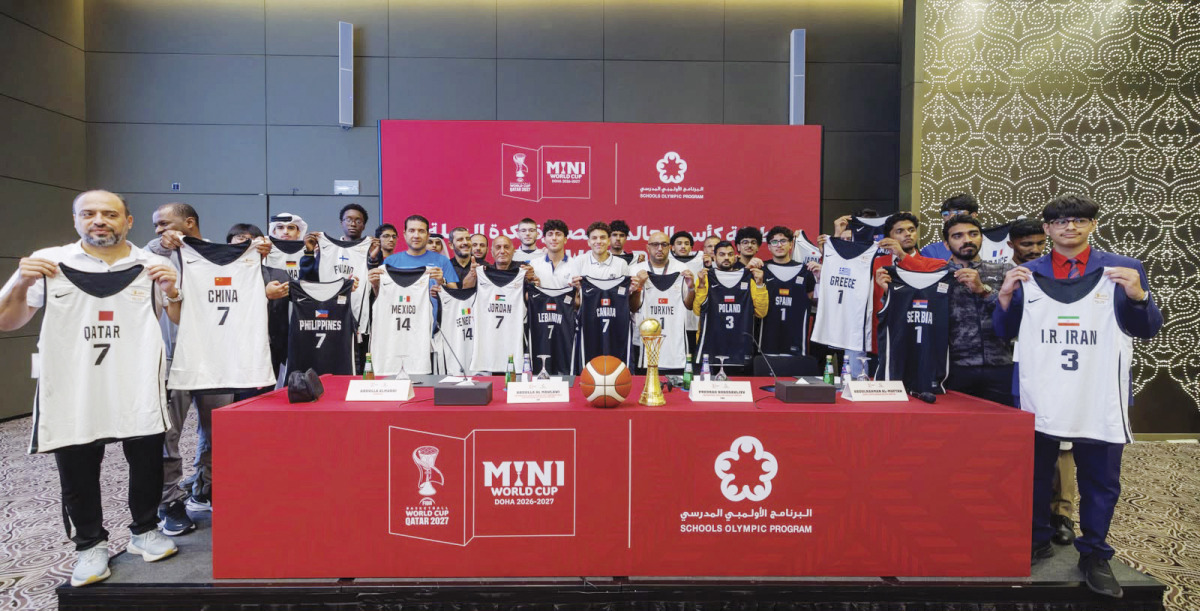
The excitement is building in Qatar as the nation prepares for the 2026-2027 Mini Basketball World Cup. This groundbreaking tournament, organized by the Local Organizing Committee in collaboration with the Qatar School Sports Federation (QSSF), will feature 32 secondary schools competing for glory in what promises to be an innovative development for youth basketball in the region.
Group Allocations for the Mini World Cup
A recent press conference unveiled the group allocations for this inaugural event, marking the first time such a competition will take place in the Middle East. Under the guidance of notable figures like Abdulla Al Mawlawi, the Executive Director of the Communications and Guest Relations Committee, and Predrag Bogosavljev, the FIBA Basketball World Cup 2027 Director, the allocation process was designed to ensure a competitive spirit among participants. Schools were ranked based on their performance in the last edition, allowing for an engaging experience that mirrors the dynamics of professional international matches. For instance, the inaugural season saw the Lebanese School triumphing over the Philippine School with a score of 58-47, setting the stage for intense rivalries and thrilling matchups.
Promoting Sportsmanship and Cultural Exchange
Al Mawlawi emphasized the importance of this tournament not just as a sporting event, but as an opportunity for students to engage in healthy competition and foster sportsmanship. He remarked on how the initiative contributes to the overall development of basketball among youth, promoting intercultural understanding through sports. This opportunity allows budding athletes to showcase their skills while representing various nations, leading to a vibrant exchange of cultures and experiences in a competitive environment.
Additionally, the tournament serves to spotlight emerging talent, a goal that aligns with the overarching mission of FIBA and QSSF. According to Al Mawlawi, the partnership with these governing bodies secures a promising future for basketball in the region. “Our collaboration is essential for nurturing young athletes and providing them the stage they deserve,” he noted.
Building a Lasting Legacy
Bogosavljev also spoke on the significance of creating a lasting legacy associated with the World Cup. He asserted that every sporting event should aim to leave a positive imprint that extends well beyond the event’s conclusion. This perspective aligns with the broader goals of Qatar’s preparations for the FIBA Basketball World Cup set for August 27 to September 12 of next year, the first of its kind in the Middle East.
Furthermore, Al Muftah highlighted the unique blend of sport and education that the Mini Basketball World Cup presents. By introducing students to the rich history of basketball both in Qatar and globally, the tournament aims to deepen their connection to the upcoming World Cup. The competition not only facilitates skill development but also enriches the participants’ understanding of basketball’s role in cultural identity and social unity.
In conclusion, the 2026-2027 Mini Basketball World Cup represents more than just a tournament; it is a vital grassroots initiative that intertwines education, sport, and cultural exchange. As Qatar embarks on this exciting journey, the Mini World Cup stands as a testament to the nation’s commitment to nurturing young talent and promoting unity through basketball.