
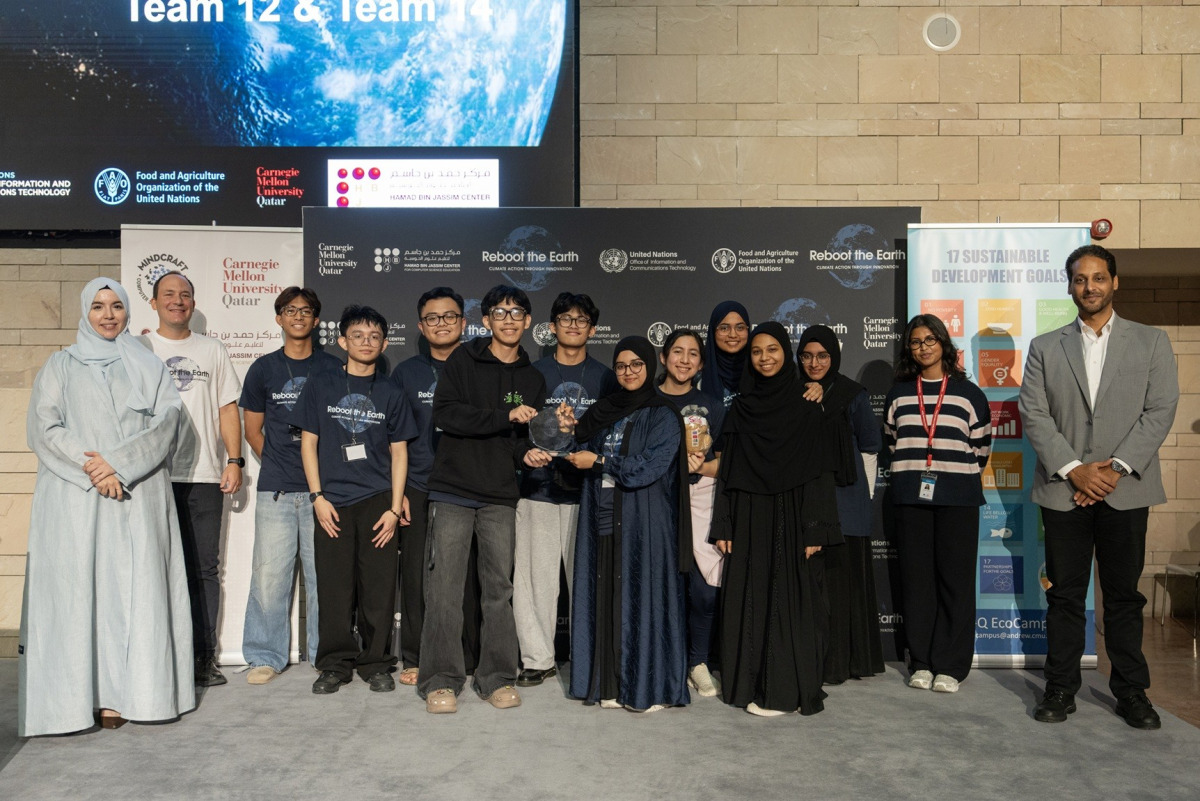
In a groundbreaking event aimed at merging technology with environmental consciousness, over 100 participants convened for Reboot the Earth, a four-day hackathon hosted by Carnegie Mellon University in Qatar (CMU-Q). Organized by the Hamad Bin Jassim Centre for Computer Science Education (HBJ Centre), this initiative was driven by collaboration between the United Nations Office of Information and Communications Technology (UN OICT) and the Food and Agriculture Organisation (FAO).
Collaborative Environment for Innovative Solutions
The Reboot the Earth hackathon is part of a global movement focusing on climate change, emphasizing the importance of sustainable and innovative solutions. This event fosters the creative talents of young minds, empowering them to devise technology-driven answers to pressing global challenges. This year’s theme, “Sustainability and Environmental Innovation,” revolved around two main challenges: identifying an AI solution to assess site and crop suitability, and developing an AI system for cold-chain monitoring aimed at reducing food loss.
With the participation of 22 diverse teams composed of high school students, university attendees, and seasoned industry professionals, the event served as a melting pot of ideas and expertise. During this intense collaboration, attendees engaged in productive brainstorming sessions designed to convert innovative concepts into functional prototypes. Event organizers focused on creating an atmosphere where knowledge, creativity, and teamwork could thrive.
Expert Guidance and Diverse Participation
Bringing together a wealth of knowledge, the hackathon featured contributions from subject matter experts and technical mentors across various sectors. Reputable organizations such as the Qatar Computing Research Institute, UNICEF Office of Innovation, and many universities offered mentorship and guidance throughout the event. The active involvement of these experts ensured that participants not only cultivated their technical skills but also gained insights into real-world applications of their ideas.
By the conclusion of the four-day event, all 22 teams managed to produce and implement viable prototypes addressing the challenges posed. The competition culminated in a final judging round, where two standout teams were declared co-champions. Among the victorious teams were students from the American School of Doha, Philippine School Doha, Qatar University, and the University of Doha for Science and Technology.
A Vision for a Sustainable Future
The Dean of CMU-Q, Michael Trick, highlighted the essence of hackathons in igniting sparks of innovation. “One small spark of an idea has led to every new advancement, invention, or innovation in history. Hackathons encourage intelligent, skillful, and thoughtful people to discover these sparks,” said Trick. He expressed hope that the participants would continue to nurture their ideas to foster technology’s role in enhancing sustainability.
Mithusa Kajendran from the UN OICT echoed this sentiment, stating that the Reboot the Earth initiative offers a unique platform for young innovators to confront some of the most pressing global challenges. “The creativity and dedication demonstrated by these participants give us hope for a sustainable future driven by technological advancement,” she asserted.
In conclusion, Reboot the Earth served as a critical juncture for aspiring technologists and environmental advocates in Qatar, reinforcing the role of innovative thinking in addressing the climate crisis. Through collaboration and mentorship, participants not only showcased their talent but also positioned themselves as key players in the quest for a more sustainable future.