
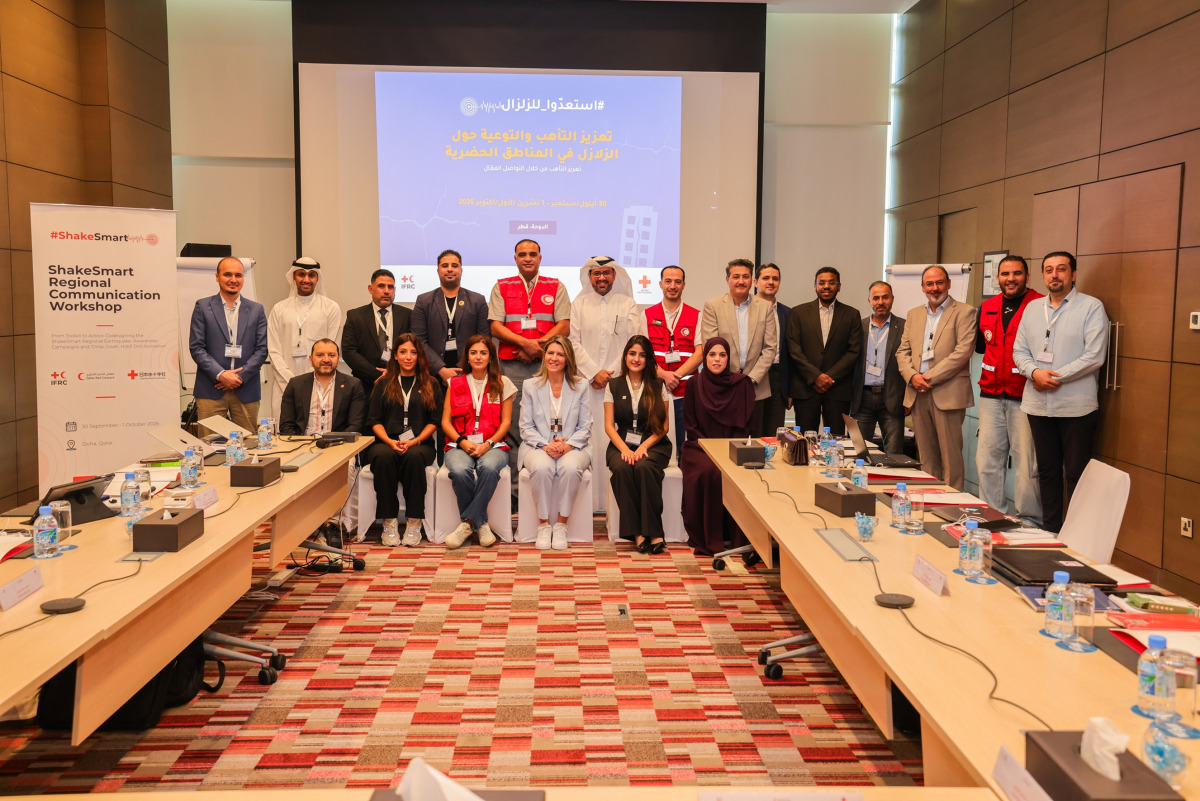
Qatar Red Crescent Society (QRCS) recently organized the ShakeSmart Regional Communication Workshop in Doha, Qatar. This event, supported by the International Federation of Red Cross and Red Crescent Societies (IFRC) and the Japanese Red Cross Society, aimed to enhance urban earthquake preparedness among communication specialists from various National Societies in the Middle East and North Africa (MENA) region.
Strengthening Urban Earthquake Preparedness
The workshop, aptly titled “From Toolkit to Action,” took place over two days and gathered communication focal points to focus on effective risk communication strategies and public awareness regarding urban earthquakes. With urbanization creating denser populations in vulnerable areas, the need for preparedness has never been more critical. The QRCS emphasized that the goal is to turn communication tools into actionable plans that could make a life-saving difference. “Inadequate infrastructure is not the only culprit; the lack of knowledge can also dramatically affect survival rates,” remarked Mohamed Bader Al-Sadah, Assistant Secretary-General for International Relief and Development at QRCS.
The cautionary tale of the 1948 Ashgabat earthquake, which claimed more than 100,000 lives in just seconds, serves as a stark reminder of the potential devastation that earthquakes can inflict. Al-Sadah pointed out that effective preparedness hinges on a community’s understanding of the risks and their capability to respond appropriately. The workshop aimed to fill the gaps in knowledge and inspire preventive action, emphasizing that “From Toolkit to Action” represents a commitment to transforming theoretical frameworks into practical, culturally relevant applications.
Utilizing the ShakeSmart Initiative
At the heart of the workshop was the ShakeSmart initiative, designed to provide localization of communication toolkits and educational materials. Participants learned to adapt these resources to meet the specific needs of their communities, ensuring that messaging resonates with diverse cultural contexts. Practical exercises focused on developing targeted awareness campaigns and operationalizing the ‘Drop, Cover, and Hold’ drill, three essential steps proven to save lives during seismic events.
This initiative signifies more than just paper plans; it is a concerted effort to cultivate a culture of safety and preparedness within communities. Al-Sadah highlighted that the emphasis is not solely on drafting plans but on building resilient communities equipped to protect themselves in emergencies.
Addressing Current Risks and Vulnerabilities
Cristhian Cortez, IFRC MENA Deputy Regional Director, participated via video call, underscoring the urgency of the situation. Recent earthquakes in Syria, Türkiye, and Morocco serve as stark reminders of the persistent risk that seismic events pose to communities in the region. Various challenges such as urbanization, displacement, and climate-related hazards compound these vulnerabilities, making effective risk communication essential. “While we cannot prevent earthquakes, we can minimize their impact,” Cortez stated.
He reinforced the importance of community education in recognizing hazards and understanding appropriate actions to take before, during, and after an earthquake. This is crucial for mitigating the risks associated with natural disasters in a region already facing numerous adversities.
In summary, the ShakeSmart workshop was not just an event but a critical step in enhancing seismic preparedness in the MENA region. By focusing on clear communication and effective public awareness campaigns, QRCS and its partners aim to foster resilient communities capable of responding to the challenges posed by earthquakes.