
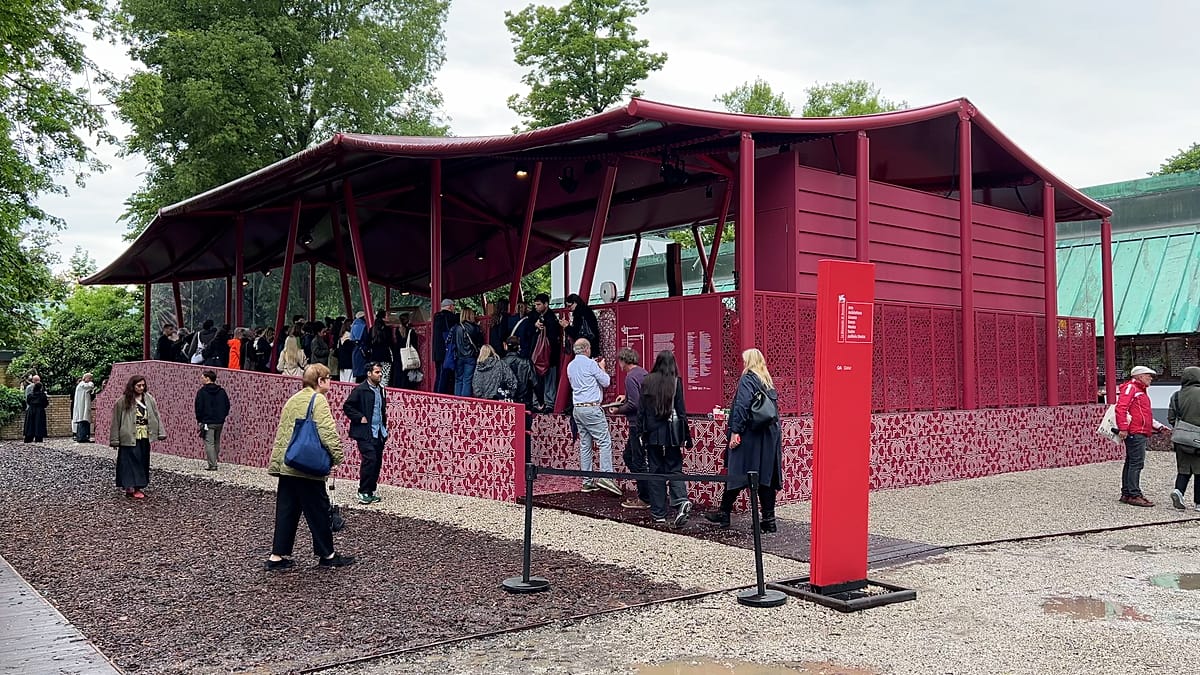
The Venice Biennale exhibition featuring Qatar prominently showcases the rich cultural heritage of the Arab world. Upon entering, visitors are greeted by a monumental sculpture named “Jerrican,” crafted by the talented Kuwaiti-Puerto Rican artist Alia Farid. This towering structure not only serves as an impressive artistic piece but also has deep roots in the traditions of the Gulf region, symbolizing the ancient practice of offering water to those traversing the desert.
Art as a Reflection of Community
Farid’s work extends beyond a mere visual experience; it provokes thoughts on modernity and how it reshapes communal values and rituals. She articulates, “I’m thinking about how modernity sort of reconfigures community and ritual.” Her creation encapsulates a legacy where water was once offered as hospitality to weary travelers, blending historical significance with contemporary dialogue. The exhibition itself occupies the future site for Qatar’s permanent pavilion in the Giardini, setting the stage for a vibrant cultural exchange involving artists, musicians, and chefs hailing from various parts of the Arab world and its diasporas.
Inside this dynamic space, guests are invited to immerse themselves in a multitude of performances, film screenings, and culinary delights inspired by the diverse flavors of the Middle East. Such interactive elements ensure that visitors engage with the exhibition on multiple levels beyond mere observation.
Exploring History Through Culinary Experiences
Culinary artist Fadi Kattan, a Palestinian chef, plays a crucial role in curating the exhibition’s food program. He emphasizes the historical significance of Venice as a cultural hub from the 13th to the 15th century, where the flow of spices from the Arab world shaped European tastes. Kattan highlights, “From the 13th to the 15th century, all spices that came to Europe came through the Arab world into Venice.” This historical context reinforces the narrative that the Arab presence remains strong even centuries later.
The beverages served during the exhibition also illustrate the blending of cultures, featuring ingredients like sumac, zaatar, and fenugreek that reflect contributions from various countries in the region. Qatari chef Noof Al Marri emphasizes the power of food to weave narratives across generations. “We can bring all people together at one table and share, and everyone is happy,” she notes. This overarching message resonates throughout the pavilion, underscoring the role of culinary arts in bridging cultural divides and fostering connections.
A Gathering Space for Cultural Exchange
The exhibition design promotes an environment where visitors are encouraged to sit, eat, and engage in conversation instead of merely passing through. Co-curator Ruba Katrib remarks on the lively atmosphere, stating, “People are talking, they’re drinking juices, they’re eating food, they’re listening to music, they are watching the film, and they’re hanging out here.” This focus on creating a space for communal interaction defines the pavilion’s mission as a dynamic gathering location.
The alluring soundscape and the vibrant exchanges within this space foster an environment of shared experiences, illustrating the organizers’ vision for a fluid, evolving exhibition. This setup transforms the art showcase into a living organism, shaped by both artworks and the interactions of visitors, making it a true celebration of culture and connection across the Arab region.