
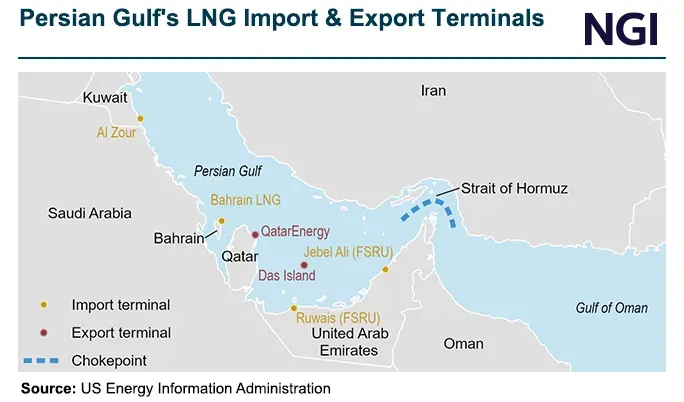
ExxonMobil’s CEO, Darren Woods, recently announced that approximately 3% of the company’s global liquefied natural gas (LNG) production could be out of commission for up to five years. This situation arises from significant damage sustained by two liquefaction trains located in Qatar, raising concerns over future supply stability in the global LNG market.
Impact of Qatar’s LNG Supply Disruption
The ongoing issues in Qatar threaten to tighten the supply of LNG in an already volatile market. As one of the leading producers of LNG globally, any significant disruption can create ripple effects across numerous economies that rely heavily on these energy resources. The damaged liquefaction trains are integral to Qatar’s export capabilities, and their extended downtime could limit the availability of LNG, leading to increased prices for consumers and industries dependent on natural gas.
Strategic Significance of the Strait of Hormuz
The situation is further complicated by geopolitical tensions surrounding the Strait of Hormuz, a critical chokepoint for LNG cargoes. Should any disruption occur in this maritime passage, it would directly affect the transportation of LNG from Qatar and neighboring regions. The combination of decreased production capacity and potential shipping constraints amplifies the risks faced by global LNG supply chains. This scenario highlights the necessity for robust energy security strategies for countries dependent on imported natural gas.
Repair Timelines and Future Outlook
ExxonMobil anticipates that the repairs required for the damaged liquefaction trains may extend from three to five years. This protracted repair timeline raises questions about how the company and its counterparts can compensate for the lost production during this period. In addition, the LNG market is becoming increasingly competitive, with emerging producers vying for a place in international markets. The extended outage may benefit these competitors, potentially altering market dynamics and supplier relationships.
Global LNG Market Consequences
As industries and nations strive to mitigate the impacts of this supply disruption, we may witness shifts in trade patterns and energy procurement strategies. Countries that are heavily reliant on Qatar’s LNG may need to seek alternative suppliers, which could lead to increased competition for available resources in the global market. Furthermore, consumers might bear the cost of these developments as prices fluctuate, reflecting the inherent instability brought on by the current events.
In conclusion, the damage to Qatar’s liquefaction trains underscores the vulnerability of the global LNG supply chain. With geopolitical tensions and repair-related delays, the industry faces significant hurdles ahead. As companies navigate this challenging landscape, the outlook for LNG production and pricing remains uncertain.