
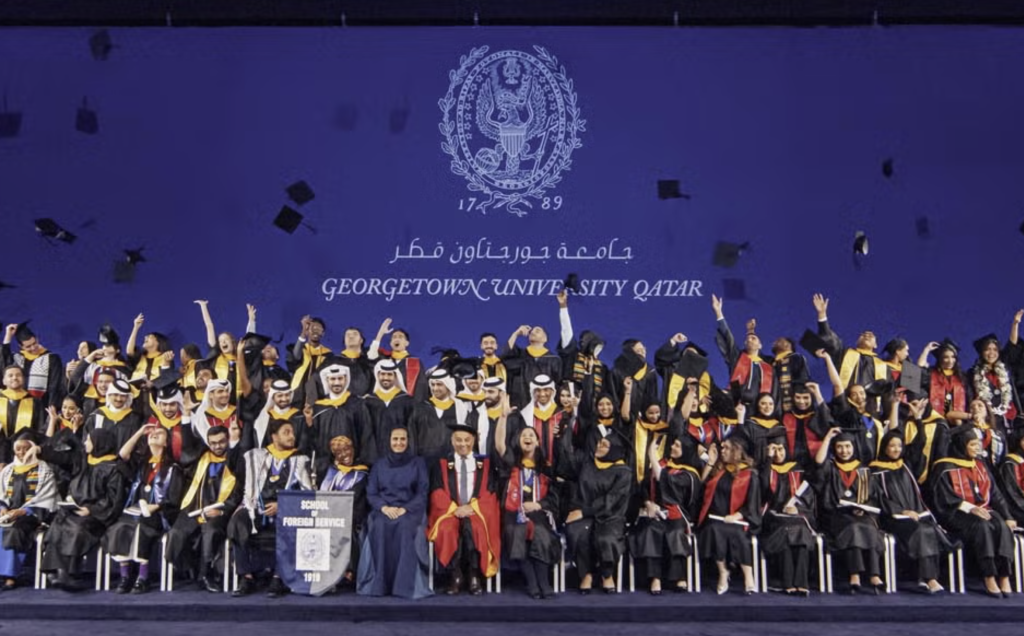
A recent contract between Georgetown University’s Bridge Initiative, focused on addressing Islamophobia, and Qatar raises significant concerns about academic independence and foreign influence in U.S. higher education. The agreement mandates Georgetown to consult with Qatari officials regarding speaker selections and event themes related to these discussions, igniting debates over the implications of such arrangements.
Details of the Contract
The agreement involves a grant totaling $630,000 from Qatar’s foreign ministry, allocated to Georgetown’s Bridge Initiative—a project dedicated to studying Islamophobia. This contract, initiated by Georgetown University’s vice president for advancement in June 2024, specifies that the funds will be delivered in three installments over a period spanning 2024 to 2026. To receive this financial assistance, the university must consult a Qatari government entity known as the Islam and Muslims Initiative when selecting themes and speakers for Islamophobia-related events held in Washington, D.C.
Controversial Speakers and Themes
Georgetown’s Bridge Initiative has previously hosted or supported individuals aligned with Qatar’s interests, including Dalia Mogahed, an advisory board member, and Omar Suleiman, an outspoken critic of Israel. Suleiman has made statements that many consider inflammatory regarding the conflict in the region, while Mogahed has defended Hamas’s actions under international law, stating that resistance against occupiers is permissible. The contract outlines that the Initiative will organize conferences focused on the “Globalization of Islamophobia,” proposing to work closely with Qatari officials to determine suitable speakers and themes.
The Implications of Foreign Funding
The contract further exemplifies Qatar’s significant financial influence over U.S. universities, as it emerged as the largest foreign benefactor of American higher education in 2022, providing substantial funding—over $1.2 billion in 2025 alone. Reports have indicated that these financial ties come with expectations for compliance with the cultural norms, religious convictions, and political expectations of the Qatari state. Notably, critiques of the Qatari government and its policies are criminalized under Qatari law, which naturally raises alarms about academic freedoms and the integrity of educational institutions operating under such conditions.
Concerns about Academic Integrity
Many experts question how such funding can affect the objectivity and credibility of academic programs, particularly when foreign entities like Qatar have the power to influence topics of discussion and even the selection of speakers. Georgetown’s reliance on funding from such a source may compromise its ability to discuss sensitive issues surrounding Islamophobia and Middle Eastern politics freely. The partnership with Qatar could lead to a form of censorship, where topics considered unfavorable or critical of the Qatari government are suppressed, thus limiting the necessary discourse on these vital issues.
As these developments unfold, it’s clear that the intersection of foreign funding and educational autonomy poses a significant challenge for U.S. institutions. The implications of such partnerships require careful examination to maintain academic integrity and ensure that educational institutions remain robust arenas for debate, free from foreign influence and pressures.
In conclusion, while addressing Islamophobia is an essential initiative, the manner in which it is funded and controlled raises significant ethical questions. The Georgetown Bridge Initiative’s collaboration with Qatar could create a concerning precedent, shaping a future where educational discourse is dictated by external interests rather than a commitment to unbiased scholarship.