
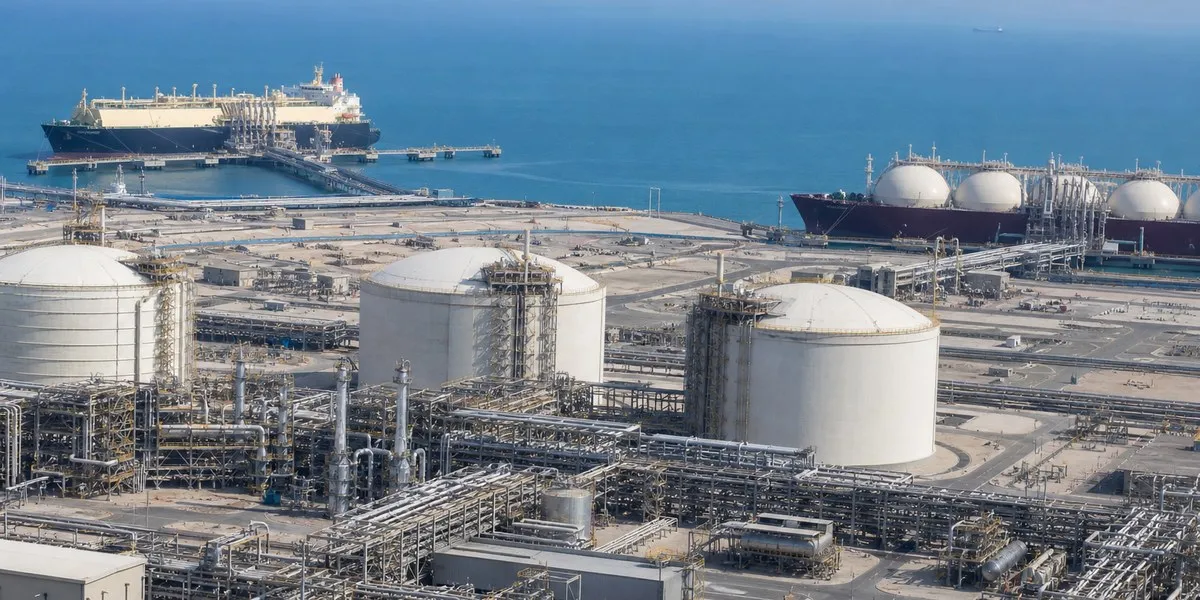
The ongoing situation in the Strait of Hormuz poses significant challenges for Qatar’s liquefied natural gas (LNG) production expansion efforts. The blockade and rising tensions are preventing essential equipment from arriving in Qatar, threatening the timeline for the ambitious energy projects set to launch in the coming years.
Impact on Qatar’s LNG Production
QatarEnergy’s CEO, Saad al-Kaabi, has voiced concerns that the first production line of the North Field East project is on track to become operational in the first half of 2027, but future lines will depend heavily on the reopening of the Strait of Hormuz and adhering to the production schedule for the North Field South project in 2028. The current geopolitical climate has raised doubts about the stability of vital shipping routes, thereby increasing uncertainty for the LNG sector in Qatar.
In addition to the impact of shipping delays, Qatar has recently encountered physical damage to its production capabilities. On March 18, Iranian missile strikes targeted the industrial city of Ras Laffan, resulting in the shutdown of two of Qatar’s 14 LNG production lines. This suspension translates to a loss of approximately 17% of the nation’s export capacity, equating to an estimated $20 billion in annual revenue. Expert assessments suggest that these lines will remain offline for three to five years, significantly impacting Qatar’s LNG supply during this critical expansion phase.
Future Expansion Plans
To bolster its LNG output, QatarEnergy had set ambitious plans. By early 2026, they aimed to boost production capacity from 77 million to 142 million tonnes annually by 2030. Projected to cost around $83 billion, this initiative involves partnerships with industry giants such as ExxonMobil, ConocoPhillips, Shell, TotalEnergies, and Eni. This expansion is critical, as it is expected to supply an impressive 40% of new LNG volumes to the global marketplace.
Moreover, Qatar is looking at alternative supply routes to mitigate the impacts of the Strait of Hormuz situation. The Golden Pass plant in Texas, co-owned with ExxonMobil, is set to become a vital component of QatarEnergy’s supply strategy. The second production line at this facility is scheduled to launch in the latter half of 2026, with a third line expected to be operational by the first half of 2027. Once all lines are active, the plant’s capacity is projected to reach 18 million tonnes per year, further diversifying Qatar’s LNG supply avenues.
Furthermore, while some LNG tankers have managed limited passages through the strait recently, the frequency of shipments has significantly decreased. Satellite data indicates that only a couple of vessels have navigated the area, which previously saw around three LNG cargoes transit daily prior to the escalating conflict.
Alternative Transportation Routes
In light of these challenges, al-Kaabi has dismissed the notion of using a pipeline as an alternative transport method to the Strait of Hormuz. He explained that LNG cannot be transported in liquefied form via pipeline without the construction of additional facilities for liquefaction, which would be economically unviable. This insight further underscores the complexities and interdependencies within the global LNG supply chain, illustrating the need for stability in key maritime routes like the Strait of Hormuz.
As the situation develops, Qatar’s energy strategies will need to remain adaptable, with careful monitoring of geopolitical conditions and market demands essential for the success of its LNG production ambitions.