
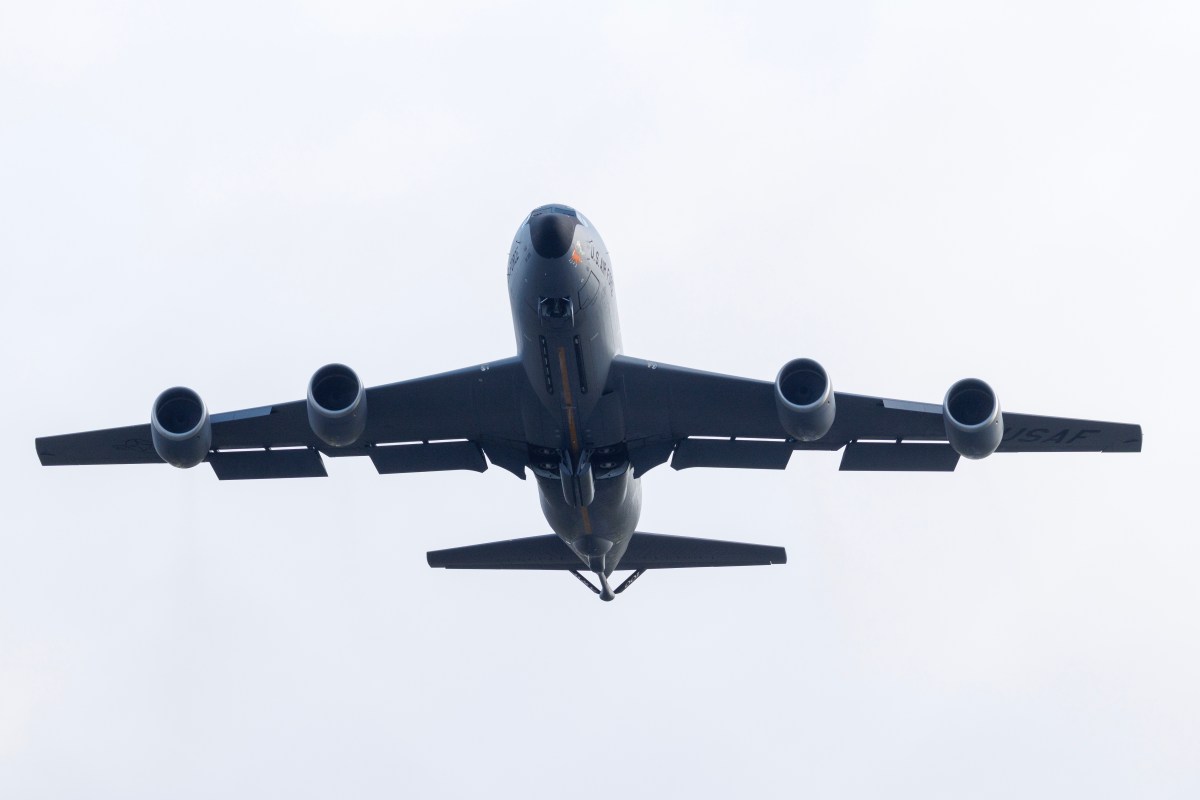
On Tuesday, a U.S. military refueling aircraft experienced an in-flight emergency while operating near Qatar, as indicated by Iranian state media and flight-tracking information. This incident raises concerns amid a delicate ceasefire between the United States and Iran, a situation complicated by recent hostilities and ongoing efforts to navigate the Strait of Hormuz, a vital artery for global energy transport.
Details of the Refueling Aircraft Incident
According to reports from Iran’s semi-official Fars news agency, a U.S. Air Force KC-135 Stratotanker issued a “7700” emergency code shortly after taking off from Al Dhafra Air Base in the United Arab Emirates. This signal, which is commonly reserved for general emergencies, suggests the aircraft was in some distress. Fortunately, a U.S. defense official later confirmed that the aircraft landed safely, with no immediate signs that the event was the result of hostile actions.
Flight-tracking records indicated that the plane had been flying over the Persian Gulf when it declared the emergency and disappeared from tracking screens. Often characterized as a “flying gas station,” the KC-135 stratotanker plays a crucial role in military operations, providing mid-air refueling capabilities to extend the operational range of bombers and fighters.
The Context of U.S.-Iran Relations
This incident unfolds as military officials reaffirm that the fragile ceasefire with Iran remains intact. Just a day prior, the United States accused Tehran of launching new attacks in the Strait of Hormuz and targeting sites within the United Arab Emirates. During a Pentagon press conference, Secretary of Defense Pete Hegseth emphasized that the truce has not been compromised, despite escalating tensions in the region.
Continuing military activities by the U.S. aim to maintain the security of the strategic waterway, essential for transporting global energy resources. Recently, the U.S. forces intervened by sinking six small Iranian boats that posed a threat to commercial shipping vessels, indicating the high stakes involved in the area.
Understanding the KC-135 Stratotanker
The KC-135 Stratotanker has been a foundational element of the U.S. Air Force’s aerial refueling capabilities since its introduction in the 1950s. Developed by Boeing, these aircraft are designed to extend the range of military operations by enabling in-flight refueling for bombers and fighters. Over 730 units have been produced, and they have played active roles in various conflicts from the Vietnam War to engagements in the Middle East.
Notably, the aircraft is operated by several entities within the military, including active-duty units, the Air National Guard, and the Air Force Reserve. These tankers are typically manned by a small crew and have undergone upgrades to enhance their functionality. Some advanced variants of the KC-135 continue to serve, even as the Air Force begins transitioning to the newer KC-46 Pegasus model.
The Destination of the Distress Signal
As the KC-135 filed its distress signal, it was functioning over the Persian Gulf after departing from Al Dhafra Air Base. Flight-tracking information shows that the aircraft flew in a holding pattern before it began descending as it passed over Qatar. Details regarding its final destination have not been made public, and the military has not confirmed whether it was conducting a specific refueling mission at the time of the emergency.
In light of these developments, both civilian and military sectors remain on high alert, as the risk of conflict escalation continues to loom amid ongoing geopolitical tensions in the region. As more information emerges, the implications for U.S. military operations and international shipping routes will become clearer.