
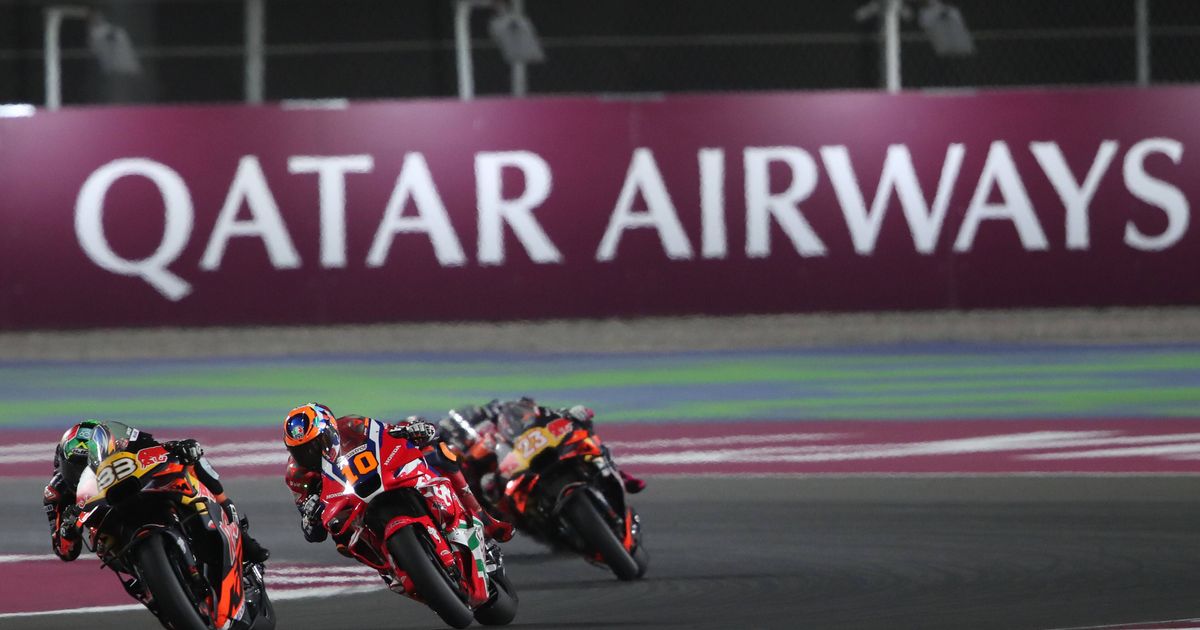
Doubts have intensified regarding the future of motorsport events in the Middle East, particularly following recent discussions among MotoGP riders about forming a union and potential legal actions due to rising concerns about the upcoming Qatar Grand Prix.
Riders Express Concerns over Safety
According to sources, MotoGP riders convened in secret during the Australian GP to assess the viability of racing at the Lusail circuit, especially amid escalating tensions in the region. Reports indicate that approximately two-thirds of the riders have cast a vote against participating in the event. The ongoing conflict in the Middle East, particularly with the backdrop of U.S.-Israeli military operations planned after the American midterm elections, has raised alarms. The situation’s severity is further compounded by recent evacuations ordered by the U.S. State Department for diplomatic staff and families in Saudi Arabia due to orbital assaults led by Houthi rebels.
The implications of this unrest are significant for MotoGP’s decision-making processes. Sources suggest that the riders may pursue collective legal representation to contest any decisions made by their teams or the racing championship that could compel them to race under potentially hazardous circumstances. Such developments have underscored a sense of helplessness among participants regarding their influence in operational decisions.
The Push for a Riders’ Union
One prominent voice in this movement is Enea Bastianini of Tech3 KTM, who emphasized the necessity of establishing a riders’ union: “We have talked, and it is important for everyone to talk together. For our future, it is essential. Although we started this union initiative two years ago, we haven’t finalized it, and having a unified voice gives us some power. Currently, the teams and MotoGP organizers wield significant influence, while the riders seem to have little.”
Bastianini highlighted a critical point, stating, “Our sport would not exist without us, yet there’s an imbalance in power dynamics that needs addressing. A compromise is necessary to ensure that all parties are considered.”
F1 Drivers Voice Similar Concerns
In a parallel situation within Formula 1 (F1), FIA President Ben Sulayem has assured that the season’s concluding races in Qatar and Abu Dhabi will proceed as planned. However, Carlos Sainz, a driver for Williams and part of the Grand Prix Drivers’ Association, expressed skepticism regarding the certainty of these events. He noted that ongoing developments in the region and the upcoming U.S. elections could shift the landscape significantly.
Sainz remarked, “Although they appear very optimistic about moving forward, I find it hard to share that conviction right now due to multiple unpredictable factors.” He did express a commitment to adhere to the directions given by the sport’s administration, acknowledging their greater experience in global political matters. His team later issued a clarification, asserting their trust in the FIA and F1 to prioritize safety amid the uncertainties that lie ahead.
In summary, the concerns voiced by both MotoGP and F1 drivers reflect a larger trend in motorsport: key participants are increasingly advocating for greater authority and representation in a rapidly evolving landscape. As tensions continue to escalate in the Middle East, the motorsport community must navigate these challenges carefully. While the promise of thrilling races remains, ensuring the safety and well-being of all involved is paramount.