
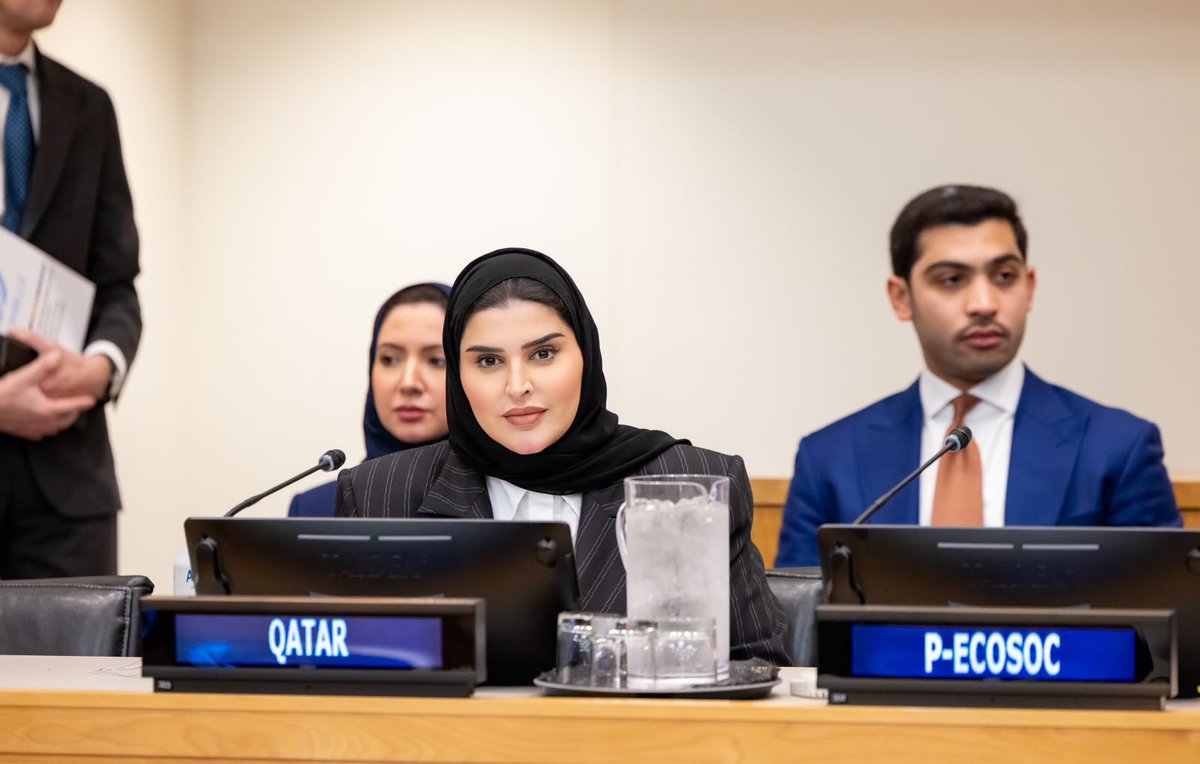
Qatar is advocating for a robust global response to bolster the world’s least developed countries (LDCs) amid a convergence of economic, climate, and food crises that exacerbate existing structural challenges. This call to action was articulated by HE Dr. Maryam bint Ali Al Misnad during the recent ministerial meeting focused on LDCs, which took place alongside the 81st session of the United Nations General Assembly in New York.
Qatar’s Commitment to LDCs
The Minister of State for International Cooperation stressed that aiding LDCs transcends mere international solidarity; it is about investing in sustainable growth, peace, and global stability. HE Al Misnad reaffirmed Qatar’s dedication to enhancing the development prospects of LDCs through multilateral cooperation and synergistic partnerships. This commitment was notably highlighted during the Fifth United Nations Conference on the Least Developed Countries (LDC5), which Qatar hosted in March 2023. At this conference, HH the Amir Sheikh Tamim bin Hamad Al-Thani pledged $60 million aimed at facilitating the objectives of the Doha Program of Action. This funding includes $10 million earmarked for program activities, alongside a substantial $50 million dedicated to strengthening resilience in LDCs.
In support of these commitments, HE Al Misnad shared that Qatar is actively translating its pledges into tangible partnerships. One notable instance was in September 2025 when the Qatar Fund for Development signed agreements totaling $21 million with the UN Office of the High Representative for the Least Developed Countries, Landlocked Developing Countries, and Small Island Developing States. These agreements focus on building resilience in LDCs and establishing effective food-storage mechanisms.
Addressing Development Gaps and Challenges
During her address, HE Al Misnad emphasized the critical need for heightened global cooperation to bridge the financing gaps experienced by LDCs. This includes expanding concessional financing options and mobilizing both domestic and international resources. Furthermore, she underscored the importance of developing innovative financial instruments tailored to the unique situations faced by these vulnerable nations. To enhance their resilience against economic, climate-related, and food crises, she highlighted that ongoing investments in education, healthcare, social protection, and skill development are imperative.
The minister made it clear that sustainable graduation from the LDC category should be viewed as an enduring developmental journey. This approach aims to safeguard existing advancements while ensuring that nations do not revert to their previous status. A critical event worth noting is the high-level midterm review of the Doha Program of Action, set for March 25 to 27, 2027. This review will provide a platform to evaluate progress, identify gaps, and rejuvenate both political and financial commitments for the remaining duration of the program.
The Broader Implications of Global Stability
In her remarks, Al Misnad also addressed broader geopolitical issues, such as the closure of the Strait of Hormuz. She pointed out that prolonged disruptions in this region could have far-reaching consequences beyond energy security and global trade, thereby impacting food security and supplies particularly in developing regions. Additionally, the minister noted how the interruption of fertilizer supply chains has adversely affected agricultural output, calling for urgent restoration of navigation through the strait in accordance with international law and UN Security Council Resolution 2817 (2026).
Ultimately, HE Al Misnad emphasized that the success of the Doha Program of Action is a shared responsibility. She urged development partners worldwide to amplify their efforts, bolster international solidarity, and channel greater resources and investments into the world’s least developed countries. Qatar remains steadfast in its mission, collaborating with its partners to implement transformative strategies aimed at fostering more inclusive, equitable, and sustainable development.