
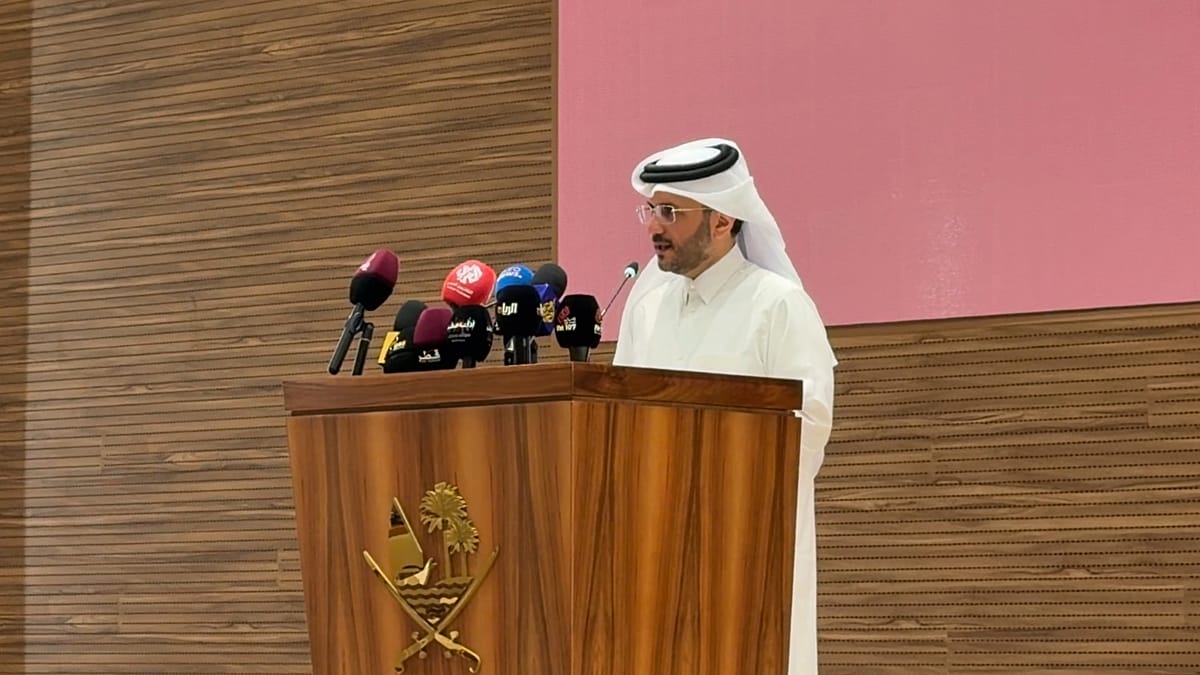
On Tuesday, Qatar confirmed that an Iranian delegation visited Doha to retrieve the remains of one of its pilots, linking back to a troubling incident from March. Tehran continues to assert that three pilots, who vanished after their aircraft entered Qatari airspace and were subsequently downed, are still unaccounted for within Qatar.
The Response from Qatar
In a statement, Dr. Majed Al Ansari, spokesperson for Qatar’s Foreign Ministry, indicated that a funeral was held following the repatriation of the pilot’s body. He emphasized that Iran had not accepted Qatar’s invitation for a technical team to evaluate the search-and-rescue operation surrounding the pilot’s disappearance. “We have invited them to send a technical team so that they can review all the details of the search-and-rescue operation,” Al Ansari stated, expressing frustration over Iran’s lack of response. He asserted that dialogue remains crucial and invited further cooperation to clarify circumstances.
Iranian officials accused Doha of hindering their attempt to investigate the situation. These claims have been met with stern rebuttals from Qatar, which maintains that channels for communication remain open. “We are here, we are open,” Al Ansari reiterated, dismissing media speculation about the accusations leveled against Qatar. He characterized Iran’s remarks as “false” and implied they serve to address domestic issues within Iran rather than reflect the reality of the situation.
Details of the Incident
The controversy traces back to March 2, when Iranian military jets entered Qatari airspace amidst increasing tensions following U.S.-Israeli strikes on Iran. Iran alleges that these planes were engaged in a military mission targeting a U.S. base in the region. In contrast, Qatar maintains that the aircraft posed a threat to its sovereignty, compelling the nation’s defense forces to react. According to Al Ansari, attempts to reach the pilots were unsuccessful, which led to Qatar taking defensive action to safeguard its citizens.
Qatar’s search-and-rescue teams worked diligently following the incident but officially concluded the operation on April 6. Afterward, they attempted to reach out to Iran to facilitate the handover of the remains and extend another invitation for an Iranian team to assess the search operations. However, the continued hostilities in rhetoric from Iran surprised officials in Doha, indicating a breakdown in trust and communication.
Commitment to Sovereignty and Dialogue
Al Ansari reaffirmed Qatar’s stance on sovereignty, asserting that any future threats to the nation will be met resolutely. “Iran is not going anywhere, and we are not going anywhere,” he declared, stressing the importance of mutual respect among nations. Despite the tensions, Qatar continues to prioritize diplomatic solutions, particularly in light of the ongoing conflict.
He indicated that the nation remains engaged in discussions regarding the reopening of the Strait of Hormuz, although little progress has been reported as of late. Qatar hopes that agreements can be established that might facilitate a broader ceasefire and resume negotiations between the U.S. and Iran, but Al Ansari noted the parties are currently “far” from such an agreement.
As tensions remain high, the situation between Qatar and Iran illustrates the challenges of navigating diplomatic relationships amidst regional conflicts. The developments highlight the need for ongoing dialogue to address grievances and foster peace in a volatile area.