
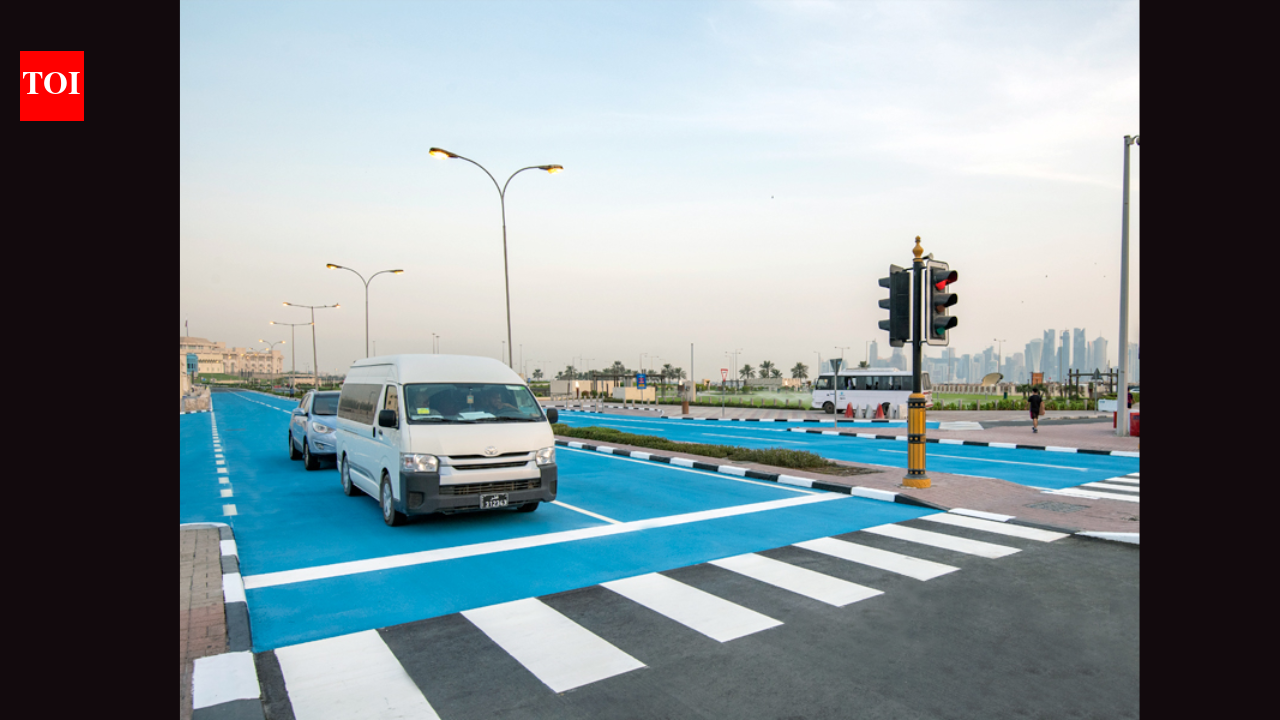
The Public Works Authority, known as Ashghal, has undertaken an innovative initiative in Qatar by testing cool pavement technology on select roadways. This project, revealed on August 19, 2019, targets reducing the oppressive heat often experienced in urban areas. By applying a specialized asphalt-cooling material, Ashghal aims to mitigate the heat absorption of conventional road surfaces and evaluate its effectiveness over an 18-month observation period.
The Rationale Behind the Blue Roads Initiative
The cool pavement pilot involves the application of this asphalt-cooling material on specific stretches of Abdullah bin Jassim Street, adjacent to Souq Waqif. The material has been tested along both vehicle lanes and pedestrian paths in front of Katara, the Cultural Village, covering regions of up to 200 meters. The goal is straightforward: to determine the efficacy of the new material and consider its potential for broader implementation across Qatar’s road network. If successful, this initiative could lead to significant advancements in urban infrastructure in the region.
The Duration and Methodology of the Study
The study is designed to last 18 months, during which Ashghal and a partnered Japanese company, Oriental, will gather data to assess the cooling material’s performance. To facilitate this, specialized sensors will monitor how effectively the new coating reduces asphalt temperatures compared to traditional asphalt surfaces. These insights will be crucial when evaluating the overall success of the pilot project, potentially paving the way for widespread use of cool pavements in Qatar.
Understanding Asphalt’s Heat Absorption Properties
Conventional asphalt is notorious for its ability to absorb substantial amounts of sunlight, reportedly capturing between 80% and 95%. This characteristic significantly contributes to the urban heat island effect, elevating local temperatures. The innovative cool pavement technology aims to combat this issue by reflecting ultraviolet rays and absorbing significantly less solar radiation. The new coating can reflect about 50% of sunlight, a compelling figure considering the extensive reach of asphalt in urban settings. The design of this coating includes multiple layers that work synergistically to limit heat absorption, providing a more temperature-neutral surface.
Enhancing Road Safety with Cool Pavements
In addition to temperature regulation, the cool pavement initiative may bolster road safety. Ashghal has reported that a protective material applied to ground markings can enhance their durability and visibility, reducing wear from vehicle contact. Research indicates that light-colored pavements not only improve reflectivity for streetlights and car headlights but also enhance visibility for drivers. Additional benefits include a decrease in heat-related health issues and a reduction in smog formation, contributing to a more sustainable urban environment.
As Qatar continues to grapple with extreme temperatures, initiatives like these showcase the potential to innovate urban infrastructure. By harnessing cool pavement technologies, the region aims to foster energy efficiency and improve the quality of life for its residents. With ongoing observations and research, Ashghal’s efforts could inspire similar projects worldwide, setting a precedent for enhancing urban living conditions in the face of climate challenges.