
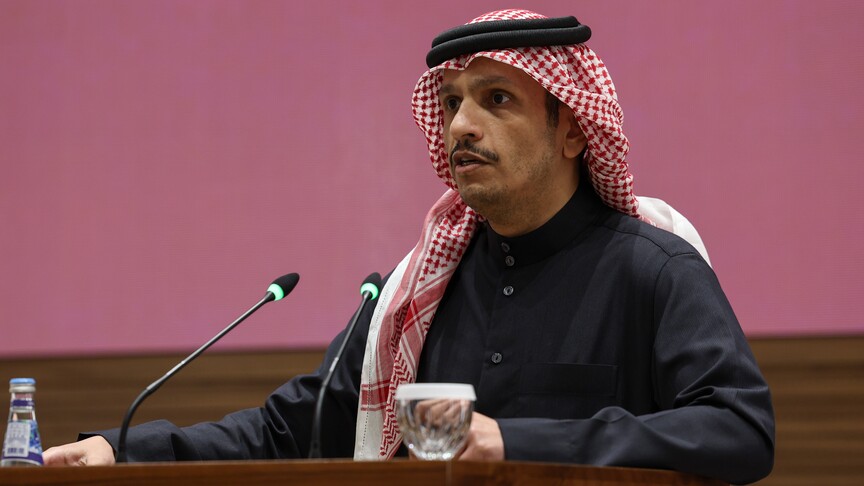
Qatar’s Prime Minister, Sheikh Mohammed bin Abdulrahman Al Thani, has expressed serious concerns regarding the potential use of the Strait of Hormuz as leverage in geopolitical discussions. During a recent phone conversation with Iranian Foreign Minister Abbas Araghchi, Sheikh Mohammed emphasized the importance of maintaining peace and stability in the region.
Concerns Over the Strait of Hormuz
In a statement issued by the Qatari Foreign Ministry, it was noted that the two officials discussed ongoing efforts to foster regional security and stability. Sheikh Mohammed conveyed that using the Strait of Hormuz as a “bargaining chip” could have dire consequences, deepening already existing crises and jeopardizing the essential interests of nations in the area. The Strait of Hormuz is a crucial maritime route, and any attempts to manipulate access could lead to heightened regional tensions.
Call for Cooperation and Peace
The Prime Minister reaffirmed Qatar’s commitment to supporting initiatives aimed at reaching a comprehensive resolution to ongoing conflicts. He urged all involved parties to engage positively in mediation efforts, underscoring the need for collaborative efforts to achieve lasting peace. According to the Foreign Ministry, Sheikh Mohammed insisted that freedom of navigation is a core principle that must be upheld without compromise.
The Importance of International Law
In his remarks, Sheikh Mohammed highlighted the necessity of adhering to international law and the norms of good neighborliness. He pointed out that prioritizing the interests of the region and its people is vital for de-escalation and strengthening both regional and international stability. The Prime Minister’s stance is a call for unity, encouraging all nations to work towards a peaceful resolution that prioritizes diplomatic channels over military action.
Escalating Tensions in the Region
Recent developments in the region have intensified tensions, primarily following a series of strikes by the US and Israel against Iranian targets earlier this year. In retaliation, Iran launched attacks against Israel and its Gulf allies, which included temporarily closing the Strait of Hormuz. Although a ceasefire was reached on April 8 through mediation by Pakistan, subsequent talks in Islamabad did not yield a sustainable agreement. In light of these events, former US President Donald Trump extended the ceasefire indefinitely.
In summary, Sheikh Mohammed bin Abdulrahman Al Thani’s communication with Iran serves as a critical reminder of the delicate balance required for stability in a tumultuous region. His call for respect towards maritime rights and international law, along with an emphasis on cooperation, is essential in fostering long-term peace. As regional tensions continue to mount, diplomatic dialogue remains the cornerstone for ensuring that the Strait of Hormuz—and indeed the Middle East at large—remains a pathway for peace rather than a source of conflict.