
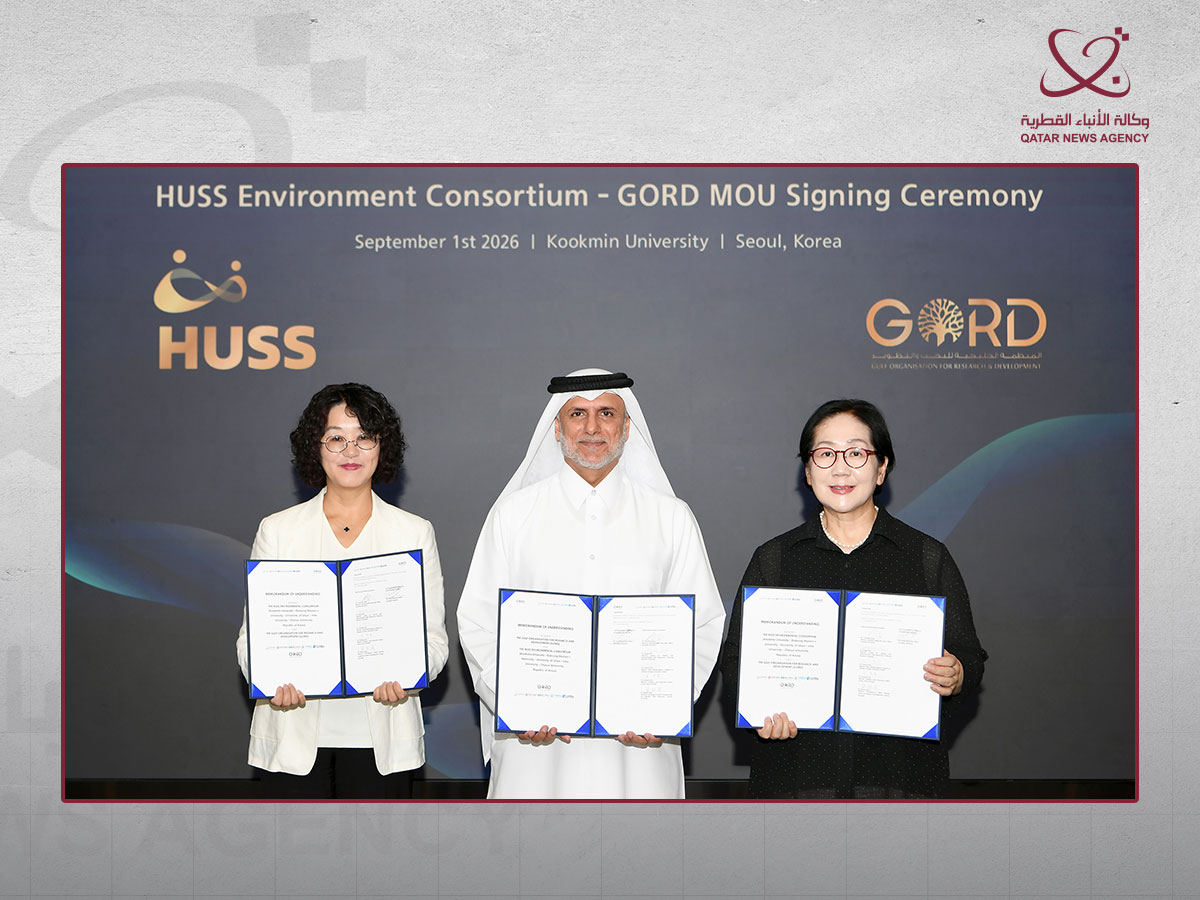
Seoul recently witnessed a significant development in academic cooperation with the Gulf Organisation for Research and Development (GORD) formalizing a strategic partnership through a Memorandum of Understanding (MoU) with the HUSS Environmental Consortium in South Korea. This collaboration aims to enhance university education by introducing the Global Sustainability Assessment System (GSAS) modules into their formal curricula, paving the way for promoting sustainability research and climate education.
Collaboration Among Universities
The HUSS Environmental Consortium is comprised of five notable institutions: Kookmin University, Duksung Women’s University, University of Ulsan, Inha University, and Chosun University. By consolidating their efforts under a single MoU with GORD, these universities can foster a unified approach to address pressing environmental challenges. The core objective of this partnership focuses on seamlessly integrating GSAS modules into existing academic structures, thereby enabling GORD’s sustainability education to become an integral component of South Korean higher education.
Furthermore, the agreement facilitates the organization of collaborative activities such as lectures, workshops, and seminars aimed at enhancing understanding of climate change and global carbon markets. Not merely a theoretical endeavor, this initiative emphasizes applied learning, enabling students to engage in real-world scenarios related to sustainability practices and policies.
A Multi-University Approach to Climate Education
The MoU signifies a new phase in GORD’s academic evolution, transitioning from bilateral collaborations to a coordinated framework that encompasses multiple universities. This innovative model is crucial for embedding climate-focused programs into formal education, allowing GORD’s sustainability curriculum to serve as a practical benchmark for leading universities across East Asia. In addition to developing educational content, the partnership will explore professional capacity building in areas such as Nature-based Solutions, climate finance, and Environmental, Social, and Governance (ESG) criteria.
The collaboration not only highlights the importance of interdisciplinary education but also creates pathways for executive education, certification programs, and internship opportunities for students at GORD. By fostering these avenues, the partnership seeks to train a new generation of climate professionals well-equipped to tackle global sustainability issues.
Research and Innovation in Climate Solutions
In addition to educational advancements, the agreement encompasses joint research on emerging climate technologies and international carbon markets. Through implementing pilot projects and case studies, the partnership aims to explore effective Nature-based Solutions and establish a strong foundation for international carbon mechanisms. This will also facilitate the exchange of knowledge among students, researchers, and experts from both countries, enhancing the collective impact on climate and sustainability initiatives.
This partnership exemplifies the importance of connecting academic frameworks with industry and government sectors. By establishing specialized climate professional programs and promoting public-private partnerships, the collaboration aims to enrich both academic and professional landscapes in sustainability and carbon markets.
Dr. Yousef Alhorr, Founding Chairman of GORD, emphasized the significance of this partnership, stating that South Korea’s academic environment offers a robust platform for developing the interdisciplinary skills required to address the complexities of climate and sustainability challenges. Through integrating GORD’s practical expertise into university education, this collaboration seeks to create substantial links between academic learning, industry practices, and real-world applications.
Professor Yoonhee Kang of Kookmin University echoed this sentiment, highlighting the imperative to prepare students to effectively respond to the climate crisis by extending education beyond traditional avenues. The partnership aims to bridge gaps in interdisciplinary education, ultimately empowering students to translate their academic knowledge into impactful climate action.
In conclusion, the MoU between GORD and the HUSS Environmental Consortium marks a pivotal moment for sustainability education in Asia, building on over two decades of collaborative efforts to enhance institutional capacities and promote sustainable development practices in higher education.