
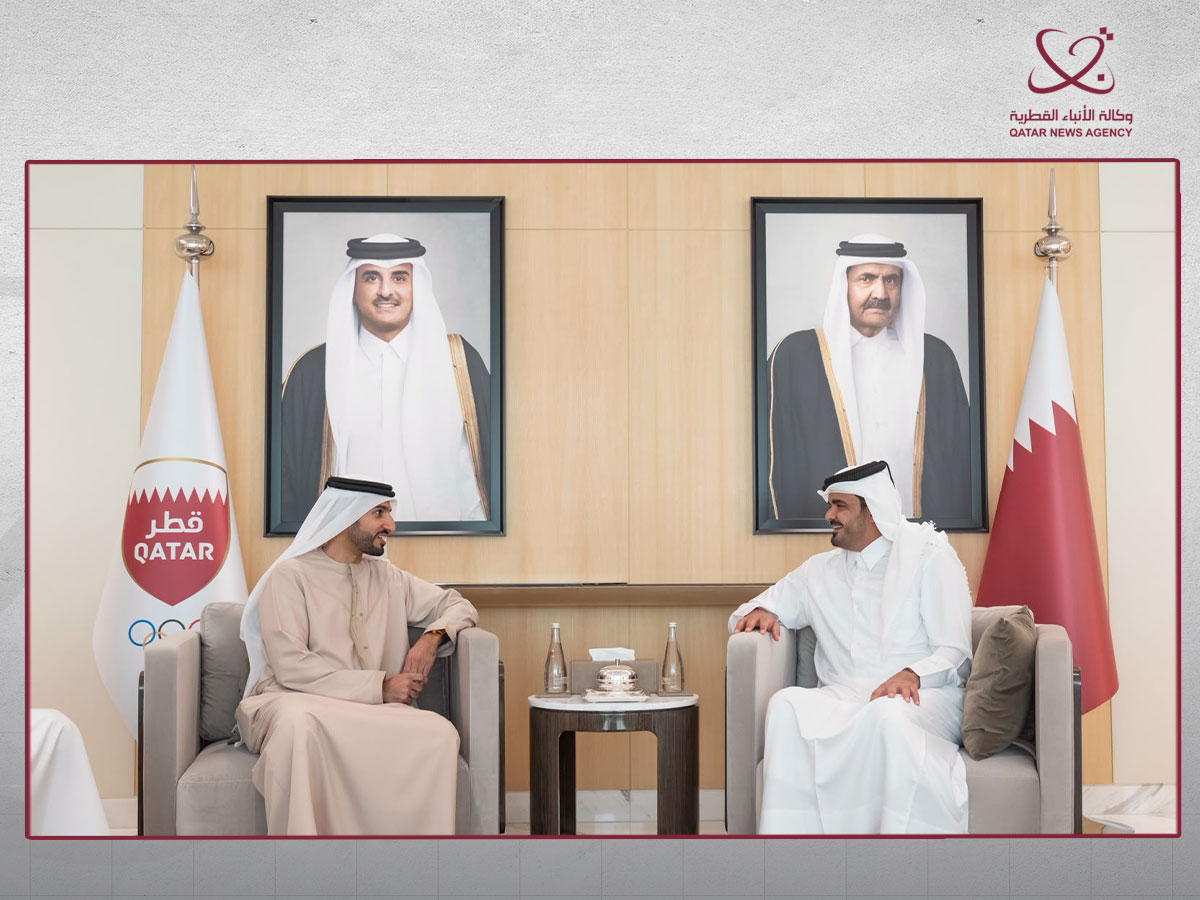
On September 13, Doha witnessed significant discussions in the realm of sports diplomacy. The President of the Qatar Olympic Committee (QOC), Sheikh Joaan bin Hamad Al-Thani, held meetings with key figures, including the Vice President of the UAE Olympic Committee and the British Ambassador to Qatar. These discussions aimed to strengthen ties and promote collaboration among nations in the field of sports.
Strengthening Ties with the UAE
During a meeting with Sheikh Rashid bin Humaid Al Nuaimi, the Vice President of the UAE Olympic Committee, Sheikh Joaan focused on fostering cooperation between Qatar and the United Arab Emirates. Both leaders recognized the potential benefits of closer ties, emphasizing shared interests in sports development. The exchange underscored the importance of collaboration in hosting international sports events and enhancing training programs, fostering a spirit of unity in the Gulf region.
The two leaders also discussed strategies for promoting youth engagement in sports, an area where both countries have shown commitment. By pooling resources and expertise, Qatar and the UAE can develop initiatives aimed at inspiring the next generation of athletes, ensuring a legacy of sportsmanship and healthy competition. This alignment not only bolsters bilateral relations but also contributes to broader regional stability and cooperation.
Collaboration with the United Kingdom
The second meeting involved HE Neerav Patel, the British Ambassador to Qatar. Conversations revolved around enhancing the partnership between Qatar and the United Kingdom in the sports sector. Given the UK’s rich history in sports management and governance, both parties explored avenues for collaboration that could lead to improved infrastructure, training, and athlete well-being.
Shared objectives included organizing exchanges for coaches and athletes, which would provide invaluable experiences and perspectives. Discussions also touched upon major sporting events that the UK has hosted and how Qatar could leverage these experiences to prepare for its own future events. Enhancing ties not only benefits athletes but also promotes cultural exchange and mutual understanding through sports.
Broader Implications for Sports Development
Both meetings highlighted crucial aspects of international cooperation beyond just formal agreements; they emphasized the need for ongoing dialogue and partnership in sports management. As nations unite for shared objectives, they contribute to a vibrant sports culture that can lead to positive outcomes, from grassroots development to elite performance.
The focus on sports as a unifying force underscores its significance in diplomatic relations. Successful collaborative efforts can pave the way for innovative training methodologies and competitive frameworks, ultimately nurturing talent on both regional and international stages. Through such initiatives, Qatar, the UAE, and the UK can enhance their reputations in the global sports arena while fostering goodwill among their populations.
Continued engagement in these discussions will not only refine the strategies for sports development but also pave the way for new opportunities. The commitment demonstrated by Sheikh Joaan and his counterparts reflects a forward-thinking approach to international partnership in sports, ensuring that future generations benefit from a collaborative, nourished sporting environment.