
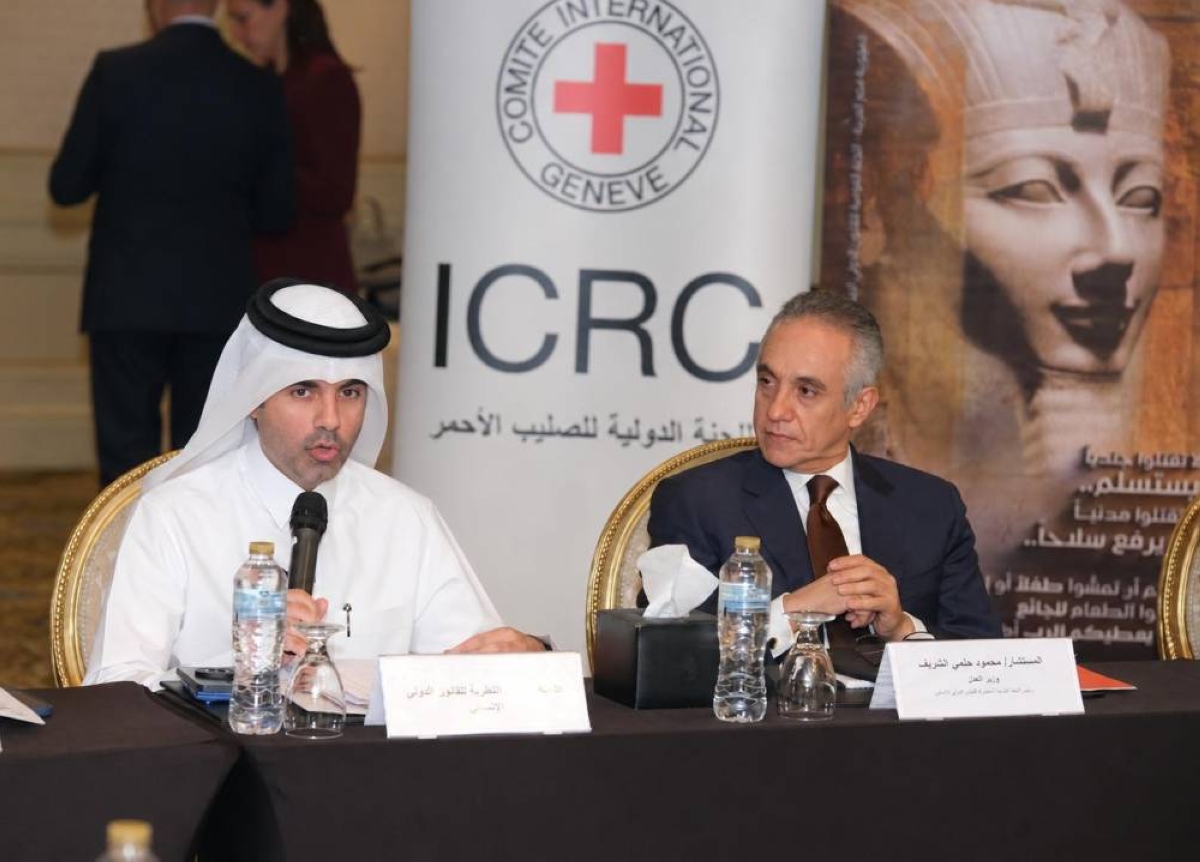
The State of Qatar is currently engaged in a significant workshop focused on the implementation of international humanitarian law (IHL) at the national level. Taking place in Cairo, this event seeks to address pressing issues in humanitarian law, with discussions set to conclude today.
Collaboration Among Arab Nations
This workshop has united heads and members of national committees on international humanitarian law from various Arab nations, alongside representatives from the Ministry of Justice of the Arab Republic of Egypt and the International Committee of the Red Cross (ICRC). The event emphasizes the critical need for collective action in enhancing humanitarian practices and frameworks across the region.
Leading the Qatari delegation is HE Saeed bin Abdullah Al Suwaidi, Undersecretary of the Ministry of Justice and Chairman of the National Committee for International Humanitarian Law. Al Suwaidi, in his opening remarks, articulated that adherence to international humanitarian law extends beyond legal duty; it is fundamentally a moral obligation that necessitates the establishment of robust national systems capable of transforming international commitments into actionable policies and legislation.
Addressing Modern Warfare Challenges
Al Suwaidi underscored the urgency of adapting to the rapid changes in warfare tactics and technologies, particularly those linked to artificial intelligence. He stressed the importance of safeguarding cultural property and medical services, highlighting the need for ongoing development of national resources aimed at enhancing IHL compliance and implementation. This evolving landscape necessitates persistent adaptation and innovation in how nations approach humanitarian law.
Moreover, Al Suwaidi emphasized the need for a paradigm shift within national committees. He advocated transforming these bodies from mere overseers of treaties into influential centers for expertise and collaboration among governmental, military, medical, and academic sectors. This new role is essential for fostering a more integrated and holistic approach to humanitarian law.
Future Directions and Legislative Measures
The workshop proceedings have delved into current challenges confronting international humanitarian law, aiming to bolster political commitment among participating countries. Discussions have also focused on evaluating the work of national committees as they prepare for a more informed approach in the coming years, particularly in 2025 and 2026.
Participants engaged in dialogues about critical legislative measures necessary for the protection of ICRC emblems and cultural heritage during conflicts. Additionally, they explored avenues for strengthening collaborations with academic institutions, which are vital for the dissemination of humanitarian law principles and the development of effective national implementation tools. With a comprehensive strategy in place, the Arab permanent committee aims to encourage deeper bilateral cooperation while crafting a unified response to emerging humanitarian challenges.
In summary, the workshop serves as a pivotal platform for fostering cooperation and enhancing the efficacy of international humanitarian law across Arab nations. As discussions wrap up, the collective aim is to transform theoretical frameworks into concrete actions, ensuring that humanitarian obligations are not only recognized but actively upheld.