
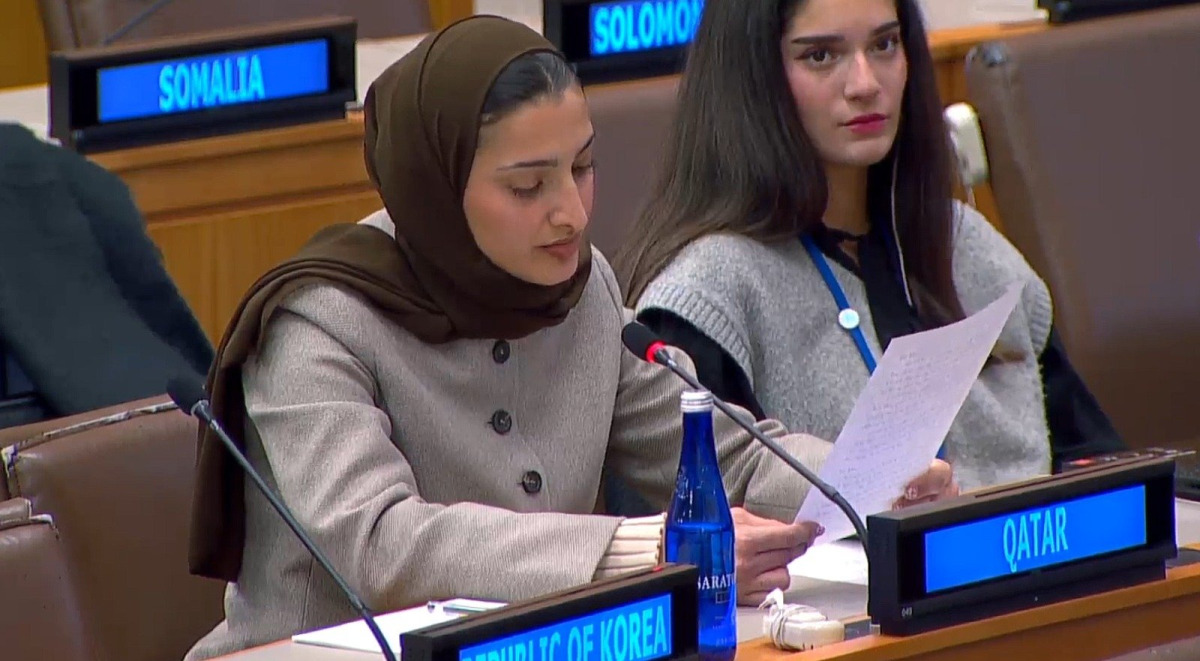
The State of Qatar has reiterated its dedication to fostering a robust culture of human rights rooted in the principles of rule of law, transparency, justice, and human dignity. This affirmation was conveyed by Amina Abdullah Salat, Third Secretary at Qatar’s Permanent Mission to the United Nations. Her remarks were made during the 81st session of the UN General Assembly’s Third Committee, which discussed the critical topic of “Promotion and Protection of Human Rights.”
Commitment to Human Rights Frameworks
Salat emphasized that the respect, promotion, and protection of human rights are essential tenets of Qatar’s national policy. These values are enshrined in a comprehensive constitutional and legislative framework that guarantees fundamental rights and freedoms for all individuals. Highlighting Qatar’s significant actions, she mentioned the country’s ratification of the International Covenant on Civil and Political Rights, along with the International Covenant on Economic, Social and Cultural Rights on May 21, 2018. This move signifies Qatar’s commitment to international obligations while bolstering the protection of basic human rights and freedoms.
Qatar National Vision 2030
The importance of human rights is also reflected in the Qatar National Vision 2030, which prioritizes major issues such as health, education, environmental sustainability, and the empowerment of women and children. Currently, the country is engaged in consultations for the National Human Rights Action Plan 2026–2030. Chaired by the Minister of State for International Cooperation, Maryam bint Ali bin Nasser Al Misnad, this plan aims to meet community needs and aspirations and convert human rights principles into practical policies that inform decision-making and planning.
Advancing Rights for All
Salat also highlighted Qatar’s commitment to ensuring the rights and full inclusion of persons with disabilities. The issuance of Law No. 22 of 2025 on the Rights of Persons with Disabilities by HH the Amir Sheikh Tamim bin Hamad Al-Thani exemplifies the country’s dedication to meeting international standards. Additionally, Qatar’s recent election to the Human Rights Council for the 2025-2027 term reflects global confidence in its commitment to championing human rights on both national and international stages.
Qatar’s various international initiatives further illustrate its proactive approach. For instance, the Human Rights Council Resolution A/HRC/RES/60/19—co-sponsored with Costa Rica—addresses the protection of women and children’s rights during and after conflict, focusing on the need for justice, remedies, and reparations for victims. Furthermore, Qatar is home to the United Nations Human Rights Training and Documentation Centre for South-West Asia and the Arab Region, which continues to respond to regional needs and promote human rights.
Financial and Diplomatic Efforts
Salat also discussed Qatar’s financial contributions to enhance global human rights efforts, including USD 3 million earmarked for the Office of the UN High Commissioner for Human Rights from 2019 to 2021, along with an additional USD 1.75 million for the 2024-2026 period. In relation to existing conflicts, she supported the adoption of Human Rights Council Resolution A/HRC/RES/61/1, which condemns violations of international law by the Islamic Republic of Iran against multiple nations in the region.
In her closing remarks, Salat emphasized Qatar’s commitment to diplomatic solutions in the face of escalating tensions. She underscored the nation’s intention to collaborate with partners to bridge divisions and work toward a peaceful resolution. Through its ongoing dedication to human rights and international collaboration, Qatar aims to build a future where dignity and justice flourish for all.