
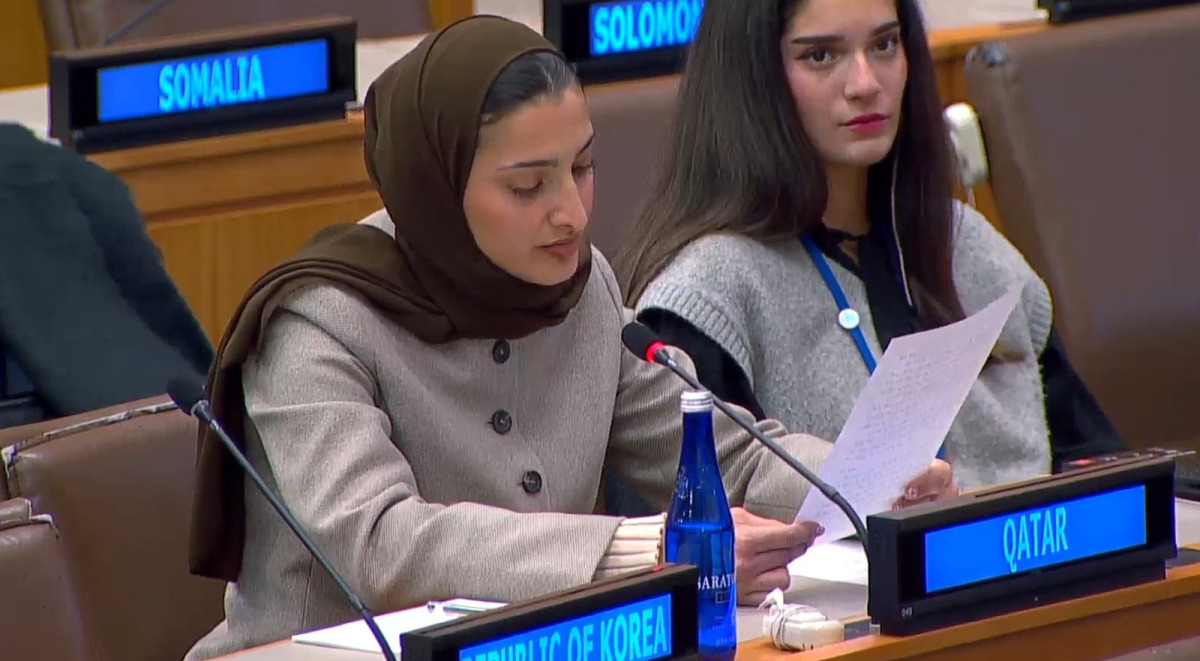
The State of Qatar has reiterated its dedication to fighting drug trafficking, upholding integrity, and enhancing global transparency and anti-corruption measures. This commitment was highlighted during the 81st session of the UN General Assembly’s Third Committee, where Amina Abdullah Salat, Third Secretary at Qatar’s Permanent Mission to the UN, made a significant statement on key agenda items related to crime prevention and international drug control.
Qatar’s Partnership with the UNODC
Salat emphasized Qatar’s collaboration with the United Nations Office on Drugs and Crime (UNODC), particularly in establishing the UNODC Regional Center for Combating Cybercrime in Doha. This center aims to bolster worldwide initiatives aimed at preventing and tackling cybercrime through innovative and integrated strategies. Qatar’s proactive measures in this domain highlight its commitment to not just national but also global security.
Ratification of the UN Convention Against Cybercrime
In 2025, Qatar signed the UN Convention against Cybercrime, and by February 2026, it became one of the first nations to ratify this crucial agreement. This swift action reflects Qatar’s determination to lead by example in the realm of international legal frameworks designed to combat evolving cyber threats. Salat’s remarks reinforced the importance of such treaties in fostering a safer digital environment.
Active Participation in Global Crime Prevention Initiatives
The engagement of Qatar in international crime prevention was further underscored by its participation in the 15th UN Congress on Crime Prevention and Criminal Justice, held in Abu Dhabi from September 26 to October 1, 2026. This commitment exemplifies Qatar’s broader strategy to engage in dialogue and cooperation with global partners to remain at the forefront of crime prevention initiatives.
Promoting Good Governance and Rule of Law
Salat drew attention to Qatar’s long-term efforts in promoting good governance and the rule of law, citing Doha’s hosting of the 13th UN Congress on Crime Prevention and Criminal Justice in 2015. The outcomes of this event culminated in the adoption of the Doha Declaration, which aimed to integrate crime prevention and criminal justice into the UN’s wider agenda. This initiative was designed to address socioeconomic challenges while bolstering the rule of law both at the national and international levels.
Additionally, Salat remarked on Qatar’s role in hosting the 11th Conference of the States Parties to the UN Convention against Corruption in December 2025. This gathering culminated in the adoption of the Doha Declaration 2025, which focused on enhancing international cooperation and leveraging technology, including artificial intelligence, to prevent and combat corruption. Qatar’s leadership in these efforts highlights its commitment to maintaining integrity and transparency on a global scale.
In summary, Qatar’s active involvement in international discourse concerning crime prevention, cybercrime, and anti-corruption underscores its role as a key player in global governance. Through collaborations with the UN and hosting significant events, Qatar aims to foster a culture of transparency and integrity in both regional and global contexts. This commitment not only enhances Qatar’s standing on the world stage but also contributes positively to the global fight against crime and corruption.