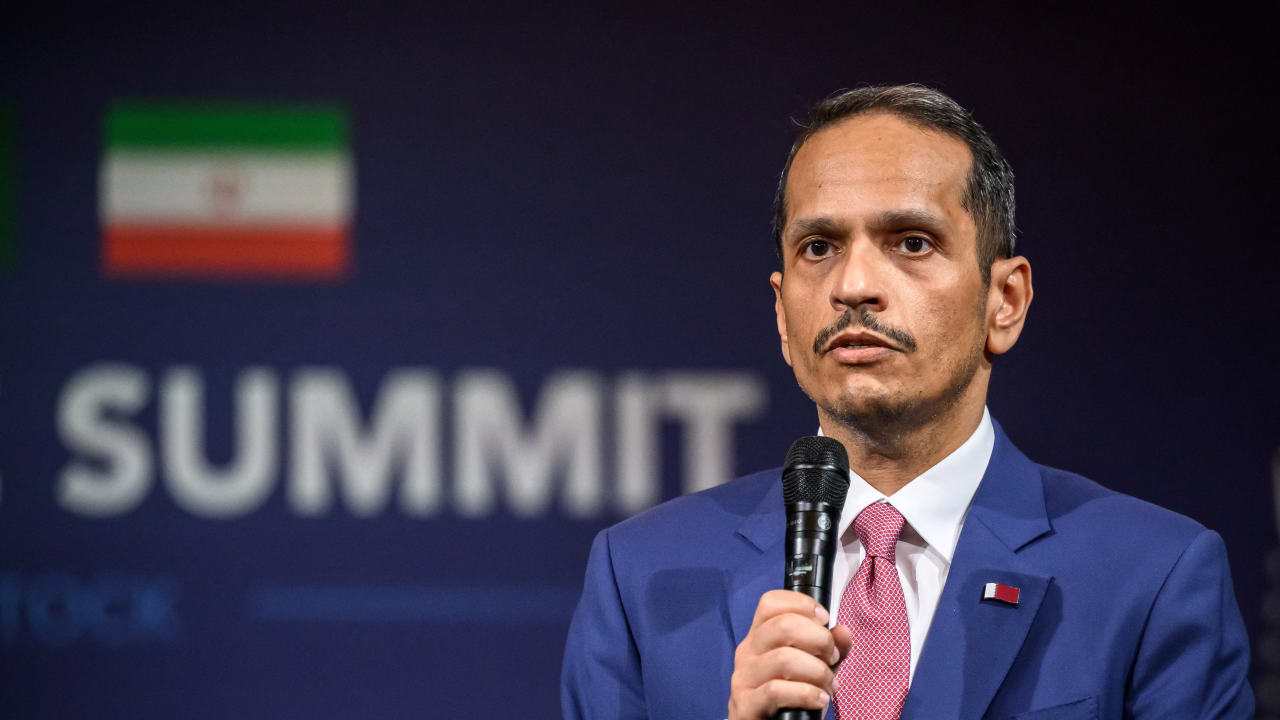
On Monday, Qatari Prime Minister and Foreign Minister Sheikh Mohammed bin Abdulrahman bin Jassim Al Thani voiced strong concerns regarding Israel’s actions in Lebanon and their adverse effects on negotiations in a conversation with Al Jazeera. He acknowledged the United States’ significant role in facilitating progress in these discussions.
### Recent Developments in Iran Negotiations
Sheikh Mohammed made these remarks following the latest round of negotiations in Switzerland involving Iran. He noted an alarming trend where certain groups appear intent on obstructing the negotiation process. “Despite these challenges, we have observed a commitment from both involved parties to achieve a resolution. Unfortunately, the current situation isn’t an isolated incident; Netanyahu’s actions have historically escalated tensions in the region,” he stated. The Prime Minister also condemned the recent violence in Lebanon, where over 100 lives were lost during a ceasefire, declaring such escalation unacceptable and indicating that any disturbances would substantially undermine negotiation efforts.
### Call for Respecting Sovereignty
The Prime Minister emphasized the necessity of ending the occupation of Lebanese territories and respecting Lebanon’s sovereignty. “It is imperative that the ongoing military operations in Lebanon cease immediately,” he added, reinforcing Qatar’s view that regional stability hinges on respecting national boundaries and human rights.
### Support from the United States
In the same discourse, Sheikh Mohammed commended the United States for its active involvement in responding to Israeli military actions in Lebanon. He expressed gratitude for America’s efforts, insisting that their role is crucial in curbing violence and fostering an atmosphere conducive to negotiations.
### The Palestinian Statehood Focus
Additionally, the Prime Minister expressed hope that ongoing negotiations would pave the way for the emergence of a Palestinian state. “We aspire that dialogue encompasses Palestinian interests, culminating in a state that acknowledges their rights,” he said, underlining Qatar’s commitment to Middle Eastern stability and justice.
### Qatari and Pakistani Collaboration
During his interview, Sheikh Mohammed reflected on Qatar and Pakistan’s collaborative efforts in addressing the complexities surrounding current negotiations. He acknowledged the necessity of employing diplomatic levers to extinguish regional conflicts, stating that the priority remains extinguishing hostilities and achieving a peaceful resolution. He described ongoing work with Pakistani partners to formulate a framework that bolsters the conversation between the involved parties.
### Challenges in Negotiation Dynamics
Discussing the ongoing challenges in negotiations, he stated that while there is a political will among parties to engage constructively, complexities persist, particularly surrounding issues in Lebanon and the Strait of Hormuz. Moreover, he highlighted the significance of a Memorandum of Understanding (MoU) designed to ensure structured dialogue marked by both technical and political elements.
### Outlook on Regional Stability
Lastly, the Prime Minister maintained an optimistic outlook for the region’s future post-negotiations, asserting that agreements between the U.S. and Iran will have far-reaching implications beyond their borders. He expressed a desire for heightened collaboration among Gulf nations, urging for a collective understanding and strategy that ensures lasting stability in the region. “Our goal is a secure and peaceful Gulf Cooperation Council environment, founded on trust,” he concluded, underscoring a unified vision for dialogue and cooperation with Iran.