
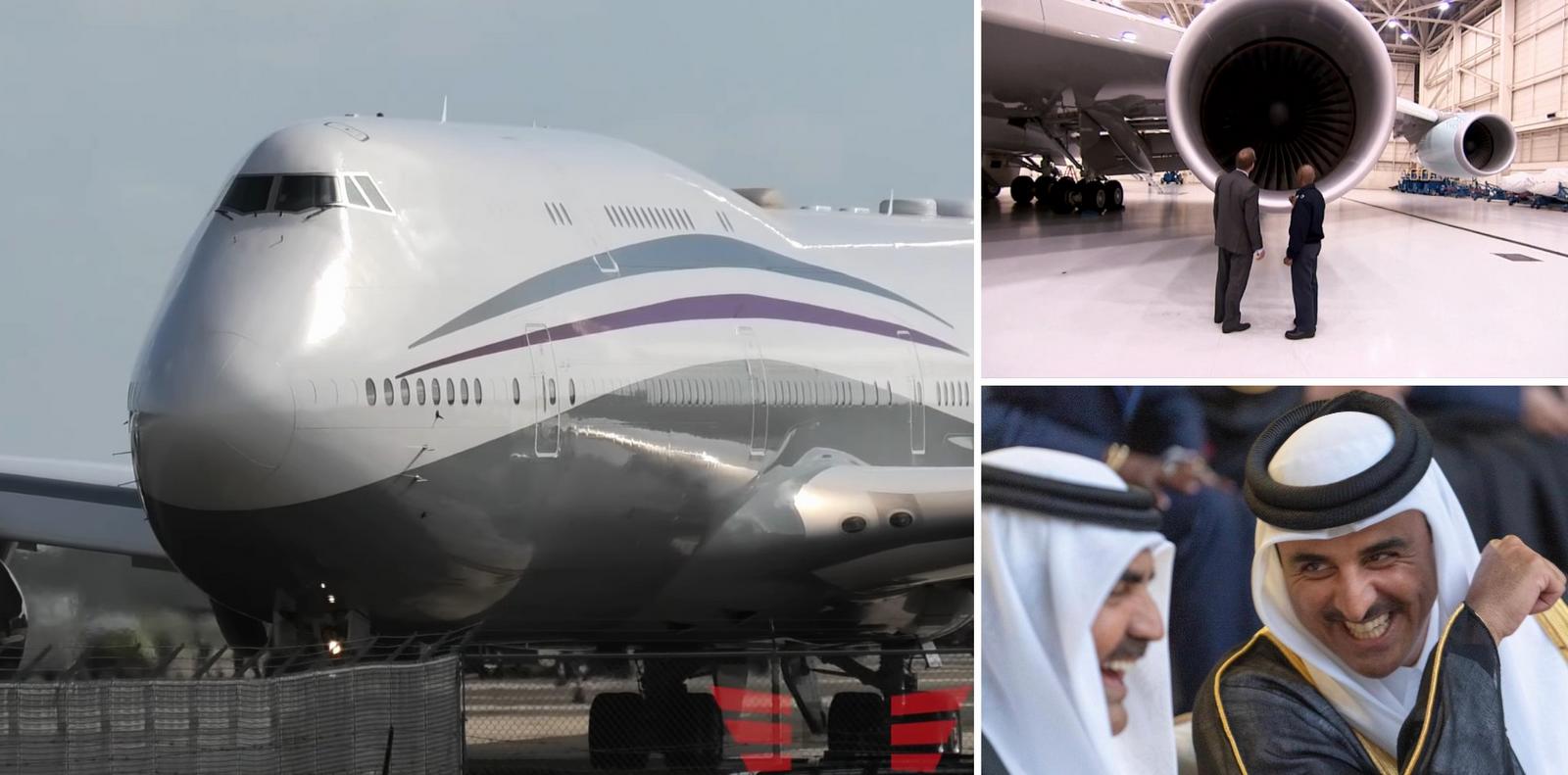
The upcoming Air Force One jets represent a significant advancement in presidential aviation, necessitating a complete structural overhaul to accommodate their size and weight. With a financial commitment exceeding $320 million, the United States military is constructing a new facility specifically tailored for these aircraft. While the current VC-25A fleet, which has been in service since George H. W. Bush’s presidency, is based on the Boeing 747-200B, the new VC-25B jets will be derived from the much larger Boeing 747-8 Intercontinental.
Transforming Air Force One’s Infrastructure
The shift from the existing VC-25A to the VC-25B isn’t merely a matter of introducing a newer model; it involves creating a completely new operational ecosystem designed for enhanced functionality. The Air Force’s building initiative, the Presidential Aircraft Recapitalization Complex, is a robust aviation facility constructed to provide proper support for the VC-25B fleet. Initial budget estimates for this project earmarked roughly $250 million, which ultimately ballooned to approximately $322 million due to escalating construction costs and additional required features.
The complex will not serve simply as a larger shelter for the new aircraft. Instead, it represents an integrated operating ecosystem built explicitly around the needs of presidential air travel. This sophisticated facility includes a two-bay hangar, dedicated taxiways, parking aprons, and maintenance support areas, making it a highly specialized infrastructure for the unique demands of Air Force One operations.
Operational Capabilities and Emergency Preparedness
Given that Air Force One operates as a flying command center equipped with secure communication systems and advanced defensive capabilities, the new infrastructure will need to exhibit readiness and resilience akin to the aircraft themselves. Typical aircraft hangars will not suffice; the facility is designed to operate as an independent node that can support some of the most sensitive aircraft in the U.S. military arsenal.
Furthermore, the infrastructure includes extensive refueling systems, communications frameworks, and emergency power backups. These enhancements are crucial for maintaining operational integrity, especially in scenarios requiring immediate governmental response in case of an emergency.
The Impact of the VC-25B Delays
Despite the construction of the new facility, delays in the VC-25B program have raised questions about interim solutions. The recent introduction of a Qatar-gifted Boeing 747-8 has added complexity to the situation. This aircraft has reportedly been modified for use as an interim Air Force One while the official VC-25Bs face ongoing delays, possibly extending into 2028. Interestingly, this interim solution could also utilize the specialized infrastructure that was built specifically to accommodate the larger jets.
The construction project has already caused significant logistical changes at Joint Base Andrews. Parts of the base have undergone relocations to make room for the new complex, including adjustments to the golf course and various facilities. These modifications reflect a commitment to adapt the existing infrastructure to meet the looming demands of the upcoming aircraft.
In conclusion, the scope of the Air Force One replacement program transcends merely introducing new jets; it encompasses a comprehensive redesign of operational facilities. As the United States military prepares for the arrival of these state-of-the-art aircraft, the scale of the initiative showcases the complexities inherent in ensuring that Air Force One remains a symbol of national security and resilience.