
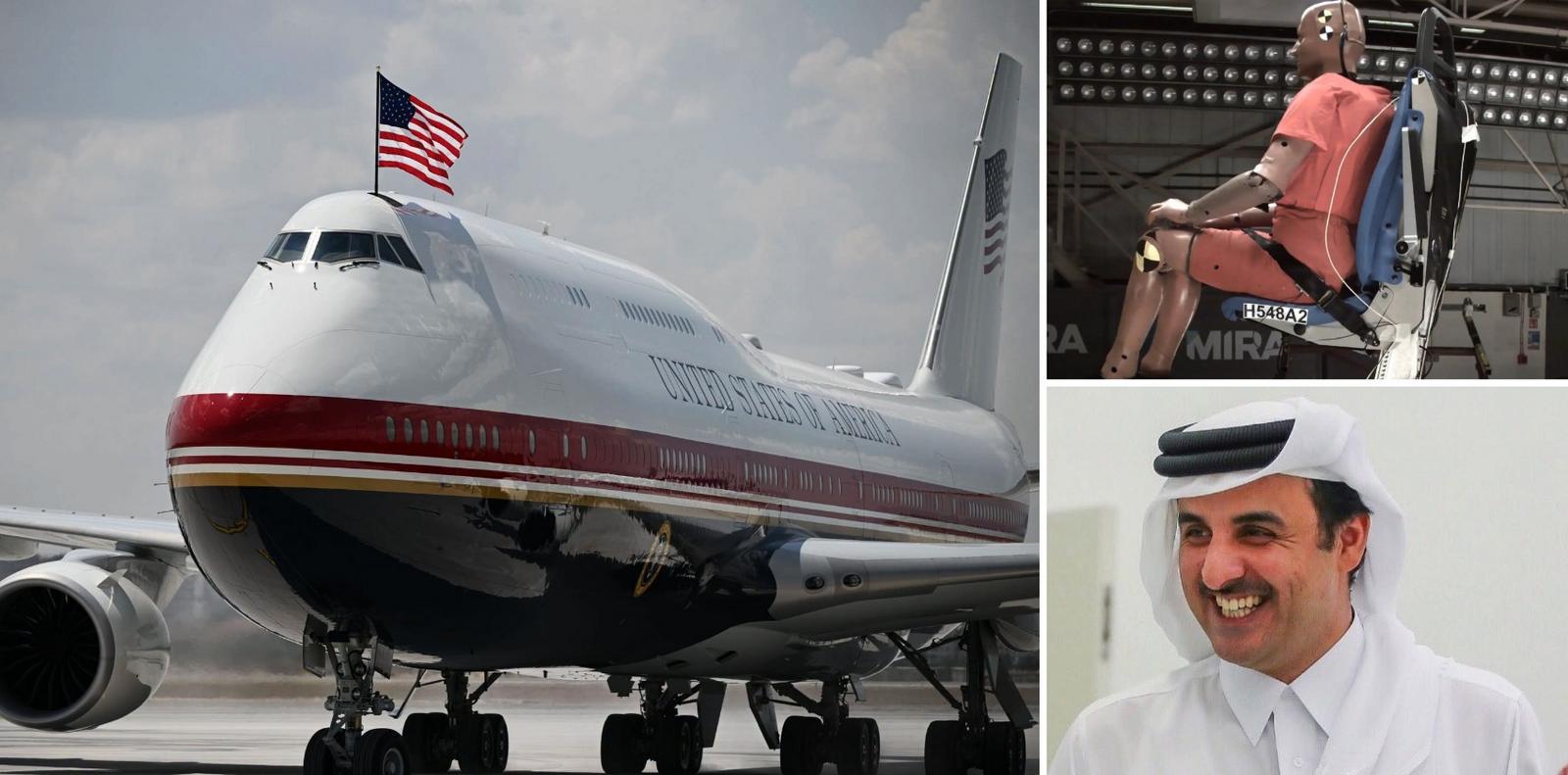
The Boeing 747-8, now serving as the latest Air Force One, has gained considerable attention for its extravagant interior after being donated to the United States by Qatar. With its opulent design resembling a royal palace more than a typical long-haul aircraft, the plane features spacious living areas, private offices, bedrooms, and dining spaces across approximately 4,500 square feet. Instead of conventional airline seating, the cabin boasts plush leather sofas and lounge-style seating, earning it the nickname “flying mansion.”
A Palace in the Sky
Originally crafted for Qatar’s royal flight, the aircraft’s interior design was the brainchild of celebrated French design firm Cabinet Alberto Pinto. The extensive four-year design and construction process resulted in a space that feels more like a luxury penthouse or a superyacht than a standard Boeing 747. Guests enter through a sophisticated foyer characterized by curved walls, leading to an upper-deck living room featuring a large corner sofa, shelves brimming with books, and a sizable television. On the main deck, three full-sized sofas form the centerpiece of a grand lounge, surrounded by leather recliners, meeting spaces, dining areas, and private offices. The presidential suite, thoughtfully located in the nose section under the cockpit, includes its own bedroom, a private sitting area, and an en-suite bathroom.
FAA Approval for Unique Seating Arrangements
The necessity for regulatory approval from the Federal Aviation Administration (FAA) stemmed not from the luxuriousness of the furnishings but rather from their unconventional arrangement. Several of the aircraft’s sofas are positioned side-facing, meaning that occupants sit across the cabin instead of facing forward, a layout rarely seen in transport aircraft. As a result, the FAA determined that this unique configuration required special certification, which led to weeks of deliberation before the approval became effective on July 1, coinciding with the aircraft’s first presidential trip.
To validate the unique interior, the FAA issued Special Conditions No. 25-891-SC, imposing additional engineering requirements specifically tailored for the side-facing seating. The Swiss completion specialist AMAC, which had previously gained European certification for the royal interior, sought FAA validation through a Supplemental Type Certificate.
A Rigorous Certification Process
The certification process extended well beyond evaluating the sofas themselves. Regulators meticulously assessed how the surrounding environment could impact passengers in these lounge areas. This included conducting evaluations on representative walls, armrests, cabinets, and other furniture. Interesting methods were employed, such as using automotive-style side-impact test dummies alongside traditional aviation dummies to simulate the unique conditions introduced by the residential seating layout. Multi-person sofas also needed to demonstrate that occupants would remain adequately separated during safety evaluations. In-depth assessments of shoulder restraints and seat attachments were integral to meeting strict performance standards.
Although the aircraft has been certified to accommodate up to 89 passengers and 14 crew members, the FAA documentation does not disclose how many side-facing seats are present. Moreover, some of the lavish chairs and sofas visible in photos might not be permitted for use during all phases of flight. For instance, dining chairs and certain types of seating may only be cleared for occupancy once the aircraft reaches cruising altitude.
Though the Boeing 747-8 is already in active service, its transformation remains a work in progress. Officials have indicated that the aircraft will be returning to Texas for further upgrades and enhancements in areas such as communication, security, and mission systems before it resumes its role as a temporary Air Force One. This remarkable aircraft, tailored for high-profile travel, showcases a unique blend of luxury and functionality, embodying an unprecedented level of opulence rarely seen in commercial aviation.