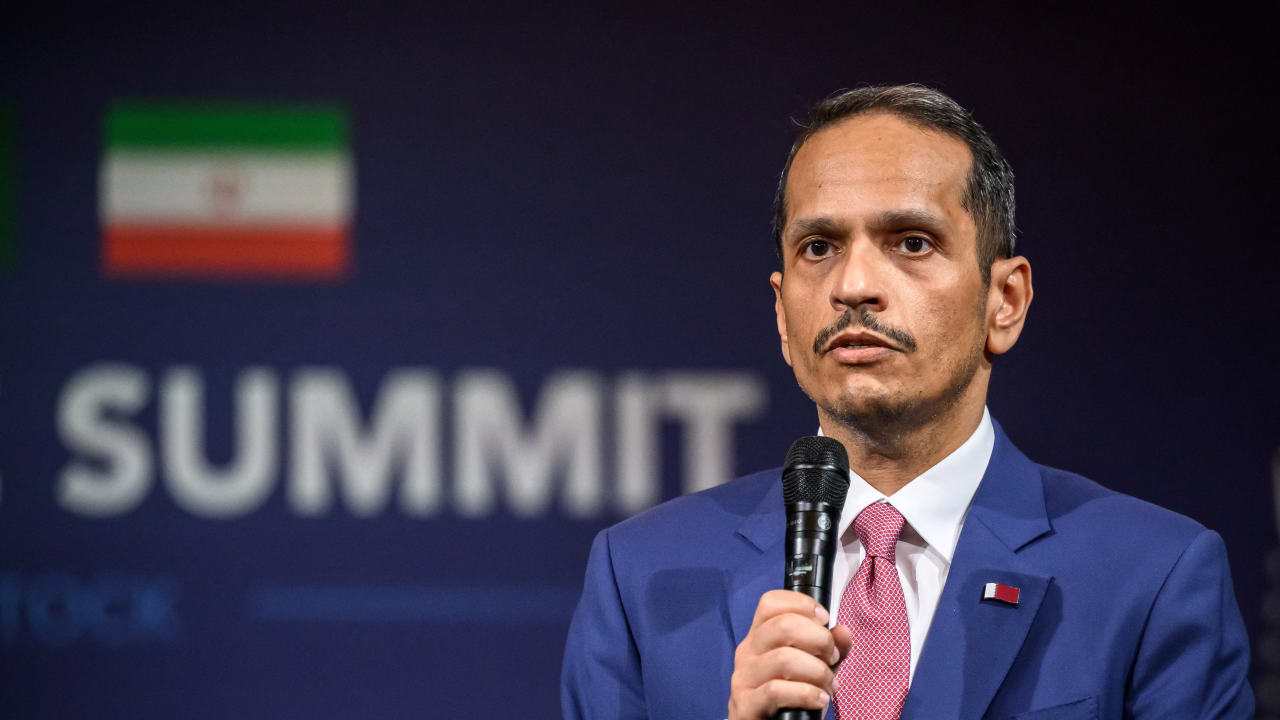
In a recent interview with British journalist Piers Morgan, Qatari Prime Minister Sheik Mohammed bin Abdulrahman Al Thani made pointed remarks about Israeli Prime Minister Benjamin Netanyahu. During this conversation, he refuted claims regarding Qatar’s purported influence in the U.S. and its financial contributions to Gaza, while also highlighting Doha’s role in mediation efforts between Iran and the United States.
Accusations of War Crimes
When directly questioned by Morgan, Al Thani did not hesitate to label the actions in Gaza as war crimes. He responded affirmatively when asked if he considered Netanyahu a war criminal, stating, “Of course, what’s been committed in Gaza is war crimes. And whoever is responsible for this is a war criminal.” This strong condemnation not only focused on Israeli actions but also addressed the October 7 attacks, which he characterized as a massacre needing accountability.
Countering Claims of Manipulation
The Qatari Prime Minister disputed Netanyahu’s accusations from a recent speech at the United Nations, where the Israeli leader suggested that Qatar had been diverting billions toward American universities to sway public opinion. Al Thani suggested that Netanyahu was attempting to “gaslight the public,” deflecting criticism of Israeli military actions by blaming Qatar for negative discourse around Israel’s conduct in Gaza. He clarified that Qatar’s financial involvement in American universities was primarily aimed at supporting their campuses in Qatar, with about 95% of spending allocated for that purpose.
Qatar’s Humanitarian Efforts in Gaza
Al Thani provided insights into his country’s ongoing financial aid to Gaza, stating that these efforts were coordinated with both Israel and the United States. He emphasized that the monthly assistance of $30 million was carefully structured, aimed at ensuring that funds did not inadvertently support Hamas’s military wing. He noted how funds were earmarked for essential services, like purchasing fuel from Israeli sources for Gaza’s electricity and providing financial assistance to families.
Moreover, he detailed a collaborative framework involving the U.S., Israel, and the United Nations that governed this assistance, asserting that lists of recipients were vetted by Israeli security agencies to ensure transparency.
Challenges in Mediation and Regional Dynamics
Al Thani elaborated on the complexities of Qatar’s mediation role, especially following the events of October 7. He recounted efforts to broker a deal for the release of hostages held by Hamas, only to be met with resistance from Israeli officials who insisted that no conditions be tied to such an exchange. The Qatari leader expressed frustration over the lack of responsiveness from Israel, which he described as counterproductive to potential peace efforts.
Lastly, he touched upon the recent military conflicts involving Iran, revealing that Qatar was given only a brief warning before the initiation of hostilities. He stressed that Qatar values its strategic partnership with the U.S. but cannot ignore its geographical realities with Tehran, highlighting that being neighbors is an enduring reality.
This interview underscores the nuances in Middle Eastern diplomacy, particularly regarding Qatar’s role as both a mediator and a target of accusations, as well as the urgent need for dialogue to address deep-rooted tensions in the region.