
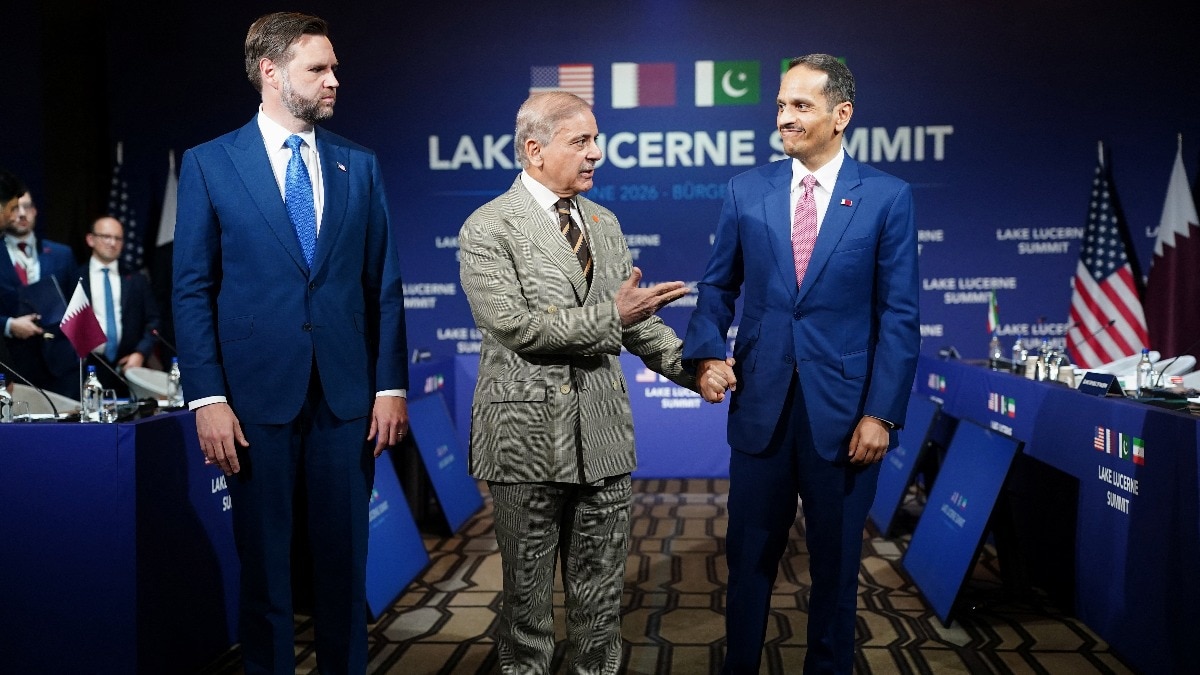
The recent peace talks between the U.S. and Iran in Switzerland commenced with a striking diplomatic moment that caught the attention of many. As high-profile participants gathered at the Burgenstock resort to discuss pivotal issues, an unexpected interaction unfolded, highlighting the complexities and sensitivities of international negotiations.
Key Participants and Awkward Exchanges
The opening day of negotiations saw the U.S., Iran, Qatar, and Pakistan convene for a critical dialogue following the Islamabad Memorandum of Understanding (MoU). During this session, Qatar’s Prime Minister, Sheikh Mohammed bin Abdulrahman Al Thani, notably walked past U.S. Vice President JD Vance without a greeting. This moment stood out, as Qatar has historically been a steadfast ally of the U.S., acting as a mediator in various regional disputes, including those involving Iran.
The diplomatic scenario drew more attention when Sheikh Mohammed bypassed Vance to engage warmly with Pakistan Prime Minister Shehbaz Sharif and Army Chief Asim Munir, opting for handshakes and embraces instead. This behavior raised eyebrows and led observers to question the underlying dynamics of U.S.-Qatar relations, particularly in the context of their ongoing partnership in Middle Eastern security matters.
Iran’s Tough Stance Ahead of Talks
Simultaneously, Iran’s representatives were portrayed as maintaining a tough posture before negotiations. The Iranian delegation, led by Foreign Minister Abbas Araqchi and chief negotiator Mohammad Bagher Ghalibaf, notably declined to participate in a planned joint photo opportunity with U.S. officials. This decision seemed to underline Iran’s reluctance to show cooperation, especially given the backdrop of escalating tensions.
In a noticeable twist, footage later captured Araqchi entering the room to warmly greet Sharif with a handshake before leaving swiftly. Iranian state media framed the refusal to join the photo session as a strategic move rooted in the nation’s diplomatic strategy. In contrast, U.S. officials contested this narrative, asserting that Iran had initially agreed to appear for media coverage, complicating perceptions of the negotiations.
Initial Challenges in Negotiations
As the talks progressed, the atmosphere became tense. Iranian media reported that Tehran’s delegation departed the venue after approximately 80 minutes, citing a “difficult phase” in the discussions. These challenges were reportedly exacerbated by U.S. President Donald Trump’s latest warnings directed at Iran, signaling that significant hurdles remain in securing a comprehensive agreement.
The meetings in Switzerland mark the first round of dialogue under a recently established 14-point agreement, which includes provisions for a 60-day ceasefire and a framework for future negotiations. However, lingering issues, such as Iran’s stockpile of highly enriched uranium and other nuclear concerns, pose substantial obstacles.
As this diplomatic effort unfolds, the initial exchanges reveal a significant amount of underlying tension and the challenges that accompany high-stakes international negotiations. Both the U.S. and Iran must navigate not only their historical complexities but also the involvement of other key nations, such as Qatar and Pakistan, to create a constructive path forward. The outcomes of these discussions could have lasting implications for peace and stability in the region.