
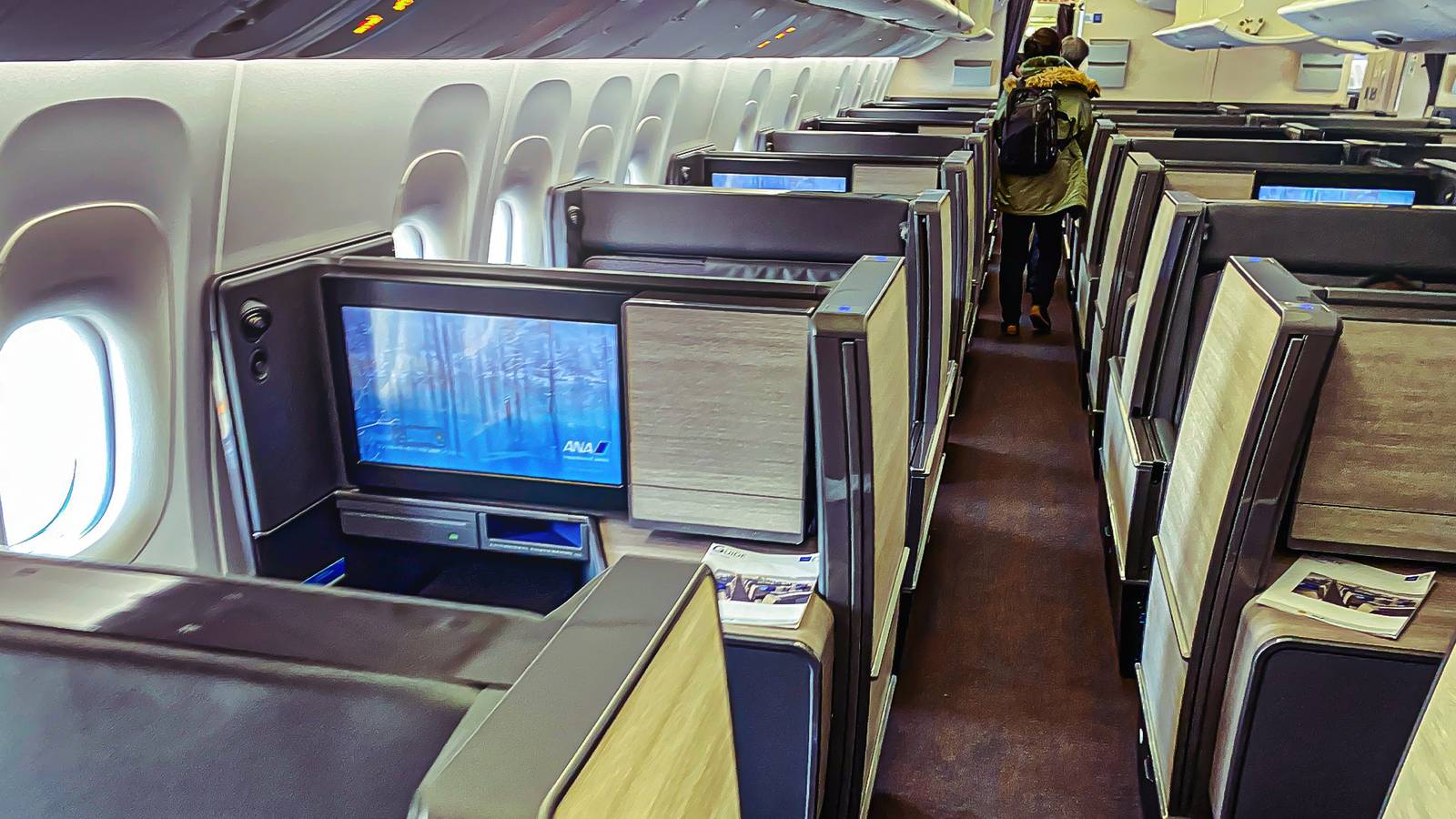
In the competitive landscape of international business class aviation, Qatar Airways’ Qsuite has long set the benchmark. This product is renowned for its innovative features, including sliding privacy doors and versatile seating configurations. However, All Nippon Airways (ANA) recently made headlines by unveiling a transformative cabin design on its Boeing 777-300ER, shifting the emphasis from mere enclosure to a sense of expansive personal space.
Innovative Design Inspired by Tradition
The foundation of ANA’s business class suite, dubbed “The Room,” draws from Japanese architectural concepts prioritizing harmony between functionality and perceived space. Renowned architect Kengo Kuma spearheaded the design effort, ensuring the focus was on comfort rather than simply wider seating. The result? A living area where the seat breadth has nearly doubled traditional sizes, an innovation that rivals the offerings in many first-class cabins. This analysis delves into how these advancements stack up against Qatar Airways’ Qsuite, especially focusing on seat dimensions and overall travel experience.
At the heart of The Room’s design lies its remarkable seat width—38 inches (96.5 cm)—achieved through an ingenious staggered layout that interlocks forward and rearward-facing seats, as noted by Aviation Wire. This contrasts with Qatar Airways’ Qsuite, which offers a narrower seating area of just 21.5 inches (54.6 cm). The spacious environment and visual aesthetics resonate with traditional Japanese design, which emphasizes warm wood tones and low-glare finishes, enhancing the overall passenger experience.
Enhanced Personal Space and Comfort
While many Western airlines focus on seated or fully reclined positions, ANA recognizes the desire among travelers for increased versatility. Japanese culture values comfort in diverse postures, including sitting cross-legged or adjusting positions easily during long flights. Passengers often describe The Room as functioning more like a spacious couch than a conventional airplane seat, enabling activities like working on laptops or dining without feeling constrained by seat or armrest dimensions.
The innovative bedding developed with Nishikawa Corporation takes this comfort to another level. The air-layer mattress pad distributes weight evenly, offering a gratifying sleep experience. Although Qatar’s Qsuite delivers excellent service and comfort, the narrower structure can limit natural movement, compelling passengers to maintain more rigid sleeping positions.
A Comparison of Target Audiences
When assessing both airline’s business class offerings, it becomes clear they cater to different passenger demographics and expectations. Qatar Airways, operating primarily out of Doha Hamad International Airport, focuses on a diverse clientele, including families and couples, necessitating a flexible, modular seating arrangement ideal for both relaxation and socialization. The Qsuite’s design thrives on this versatility, accommodating shared dining or coupled sleeping arrangements.
On the other hand, ANA caters predominantly to high-yield corporate travelers specifically navigating transpacific routes. The design ethos here emphasizes optimizing every inch for individual space, allowing seamless transitions between working and resting without unnecessary complexity. By forgoing the bulk of modular elements, ANA maximizes lateral space for the individual traveler, making it especially appealing to those who prioritize productivity on long flights.
Future Innovations on the Horizon
Both airlines continually refine their business class offerings. ANA’s latest suite, The Room FX, expands on The Room’s principles, introducing more expansive dimensions and features that further enhance passenger experience. Meanwhile, Qatar Airways is poised to launch an updated version of the Qsuite, set to debut on the A350-1000 fleet.
As both airlines push the envelope on customer experience, travelers can expectSeat width and individual comfort to remain critical differentiators. With ANA increasingly gaining traction in the premium market, the aviation landscape now displays a remarkable evolution, showcasing how a dedication to comfort and innovative design can reshape the flight experience. As the industry progresses, it will be fascinating to see how these fierce competitors continue to adapt and redefine luxury in the skies.