
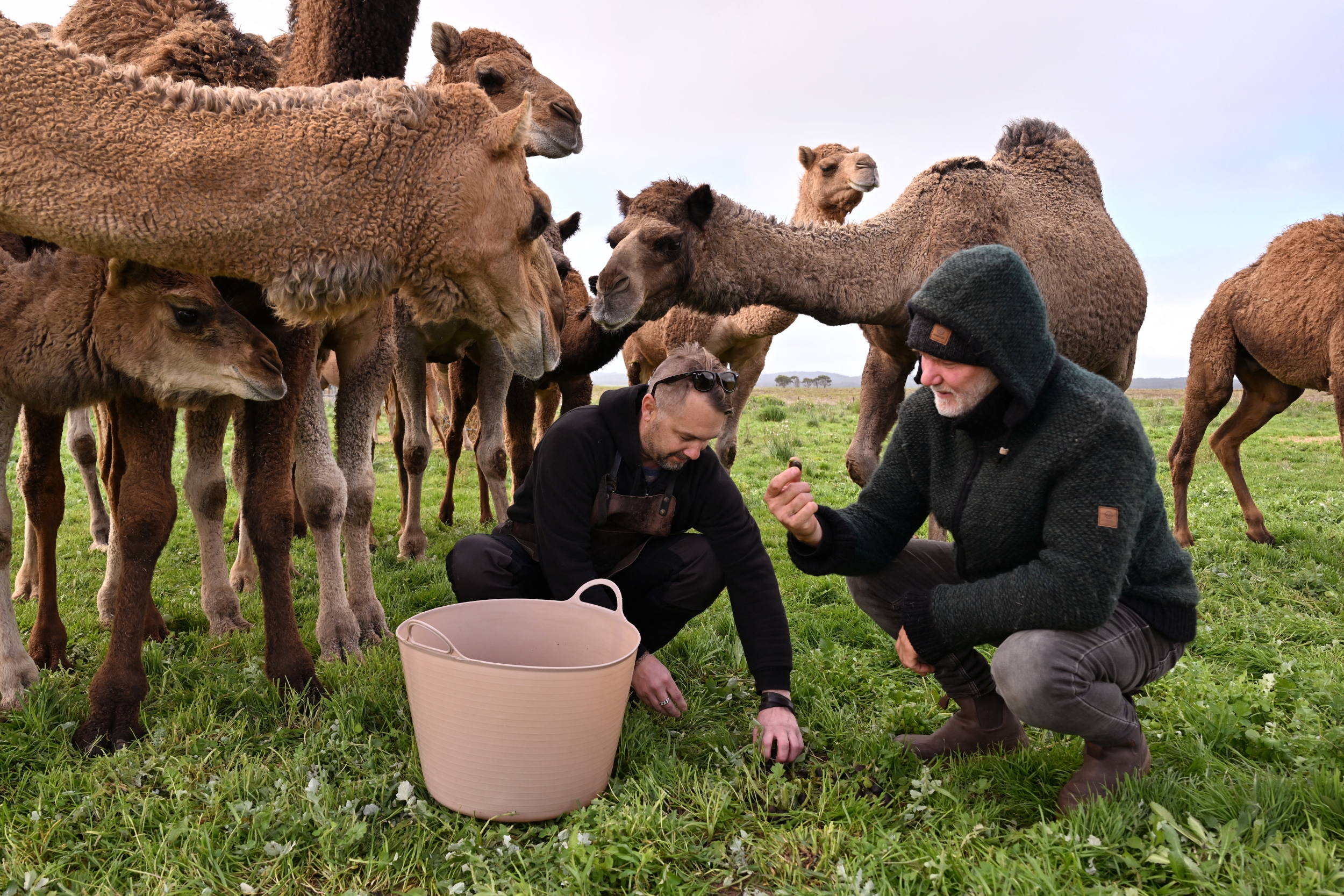
A recent case in Qatar has shed light on a rare infectious disease known as camelpox, marking the country’s first documented instance in a human. This case serves as a crucial reminder of the interconnectedness of wildlife and human health, making it vital for various professionals to be informed.
Initial Symptoms and Diagnosis
A 30-year-old man recently visited a health care center in Qatar, complaining of painful sores on his arms that had developed five days prior. Despite being otherwise healthy and working on a camel farm, the details of his employment became significant when medical experts examined his condition. Upon assessment, it was revealed that he had been handling camels without protective gloves, heightening the suspicion of camelpox infection. Medical professionals from Hamad Medical Corporation identified his symptoms as characteristic of cutaneous camelpox. By the time he presented for care, one sore had deteriorated into an ulcerated lesion, indicating a more severe manifestation of the disease.
Laboratory Findings and Diagnostic Challenges
Diagnostic testing confirmed the presence of an orthopoxvirus, a family of viruses that includes smallpox and camelpox. However, the tests did not specify the exact species, leading to some ambiguity in diagnosis. The medical authors emphasized that the patient’s exposure to infected camels, combined with the observable symptoms, strongly indicated camelpox. Nevertheless, the absence of species-level identification posed challenges in understanding the broader implications of such infections.
The Nature of Camelpox Virus
Camelpox is a double-stranded DNA virus and represents a close relative of the variola virus, responsible for smallpox. Despite this genetic kinship, the disease dynamics are quite different, as camelpox primarily affects camels and is confined to regions where these animals are raised, such as Africa and the Middle East. Infections in humans are exceedingly rare and usually linked to direct contact with infected camels. Medical literature highlights that while human cases are typically mild and self-limiting, serious outcomes can occasionally occur, particularly in vulnerable populations like young animals and pregnant females.
Implications for Public Health and Safety
While most individuals may never encounter camels, especially in places like the United States, this case emphasizes the importance of updating diagnostic protocols to differentiate between species. The incident underscores that individuals returning from regions with a high density of camels or related activities may present with symptoms mimicking other orthopoxvirus infections, making accurate history-taking pivotal for proper diagnosis. Furthermore, the importance of occupational safety measures—such as the usage of gloves—cannot be overstated. Enhanced surveillance in both animal and human health sectors is essential, alongside better diagnostic tools that can pinpoint specific viral species.
Ultimately, this case serves as a pressing reminder of the One Health approach, which advocates for addressing health issues that arise at the intersection of humans, animals, and the environment collaboratively. Proper training and precautions in handling potentially infected animals are imperative for protecting both livestock workers and the broader community. As this event emphasizes the interconnectedness of global health, it highlights that vigilance and knowledge-sharing can mitigate risks linked to zoonotic diseases.